

To uncover the origin of SARS-CoV-2 we need to understand SARS-1, which emerged when the world was obsessed with terrorism. Most just assume it was natural, not worth revisiting. It's too long ago and barely affected us in the west. Until 2019, when its sequel dropped.

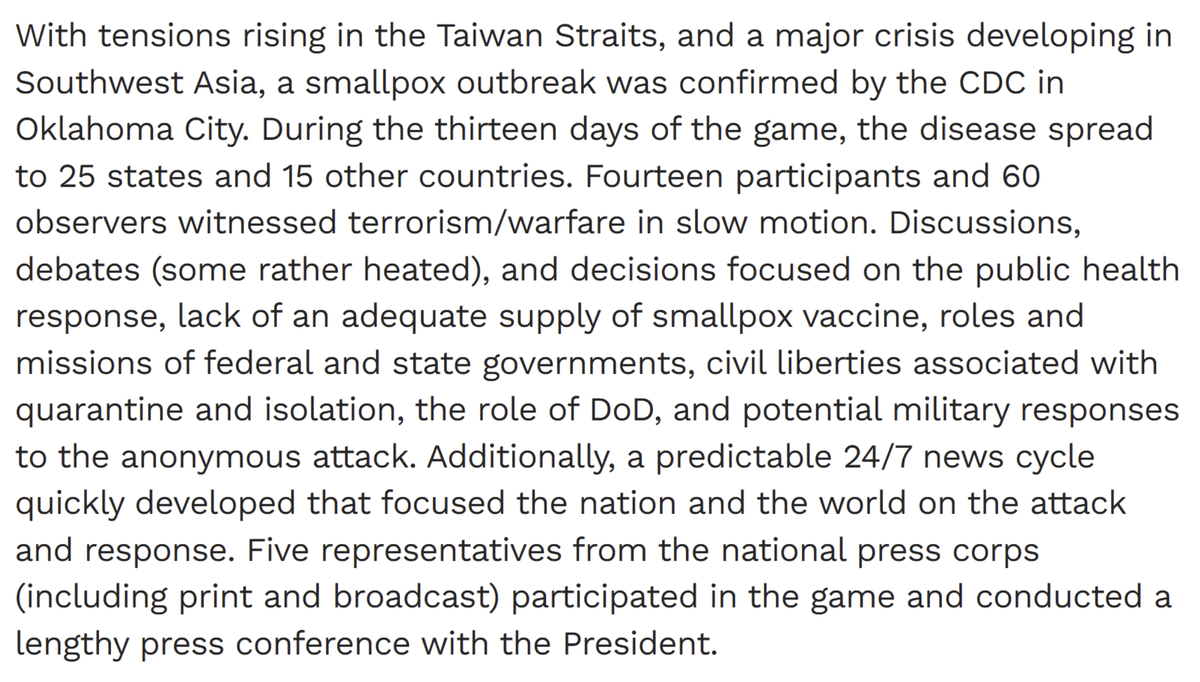
Even before 9/11 there was heightened interest in bioterrorism. In June 2001, CSIS and JHU ran "Operation Dark Winter", which simulated a terrorist attack on the US with smallpox. The CDC was stockpiling smallpox vaccines and training responders to prepare for an attack.
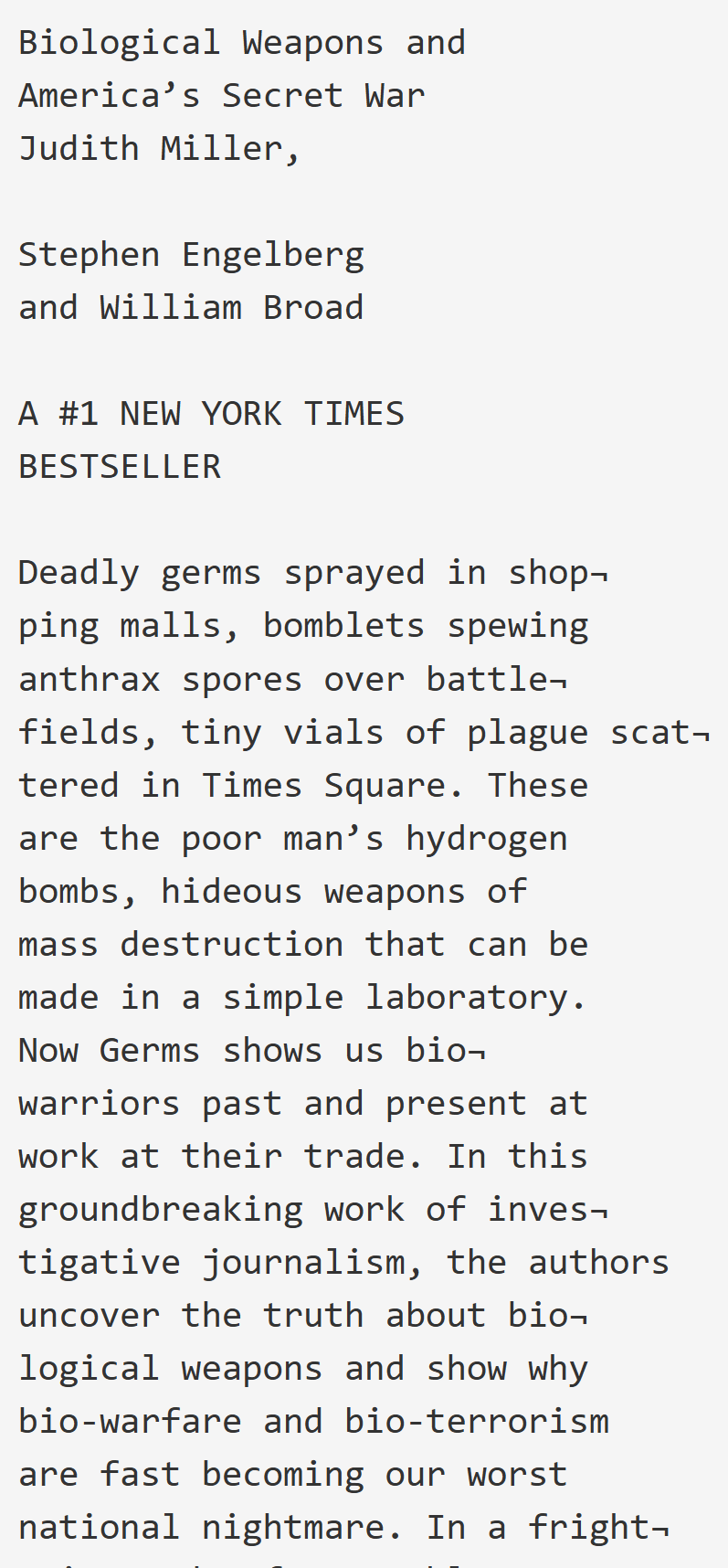
A book about biowarfare by New York Times journalists was released on October 2nd, 2001, the same day as the first anthrax victim was hospitalized. A major theme of the book was how the US was unprepared for an inevitable bioterrorist attack. They got lucky with the timing, it quickly became a best-seller.
In 1999, Ken Alibek, the former deputy head of USSR bioweapons program (who had defected to the US in 1991), published “Biohazard”. The extent of the Soviet program, and advancement of their weapons, had been gravely underestimated by the US. Alibek also claimed scientists from the program were being recruited by other countries, and potentially trans-national terrorist networks.

Alibek described Soviets experiments to genetically engineer novel bioweapons in various ways e.g. by making them express peptides from human regulatory proteins or by combining gene fragments from different viruses.
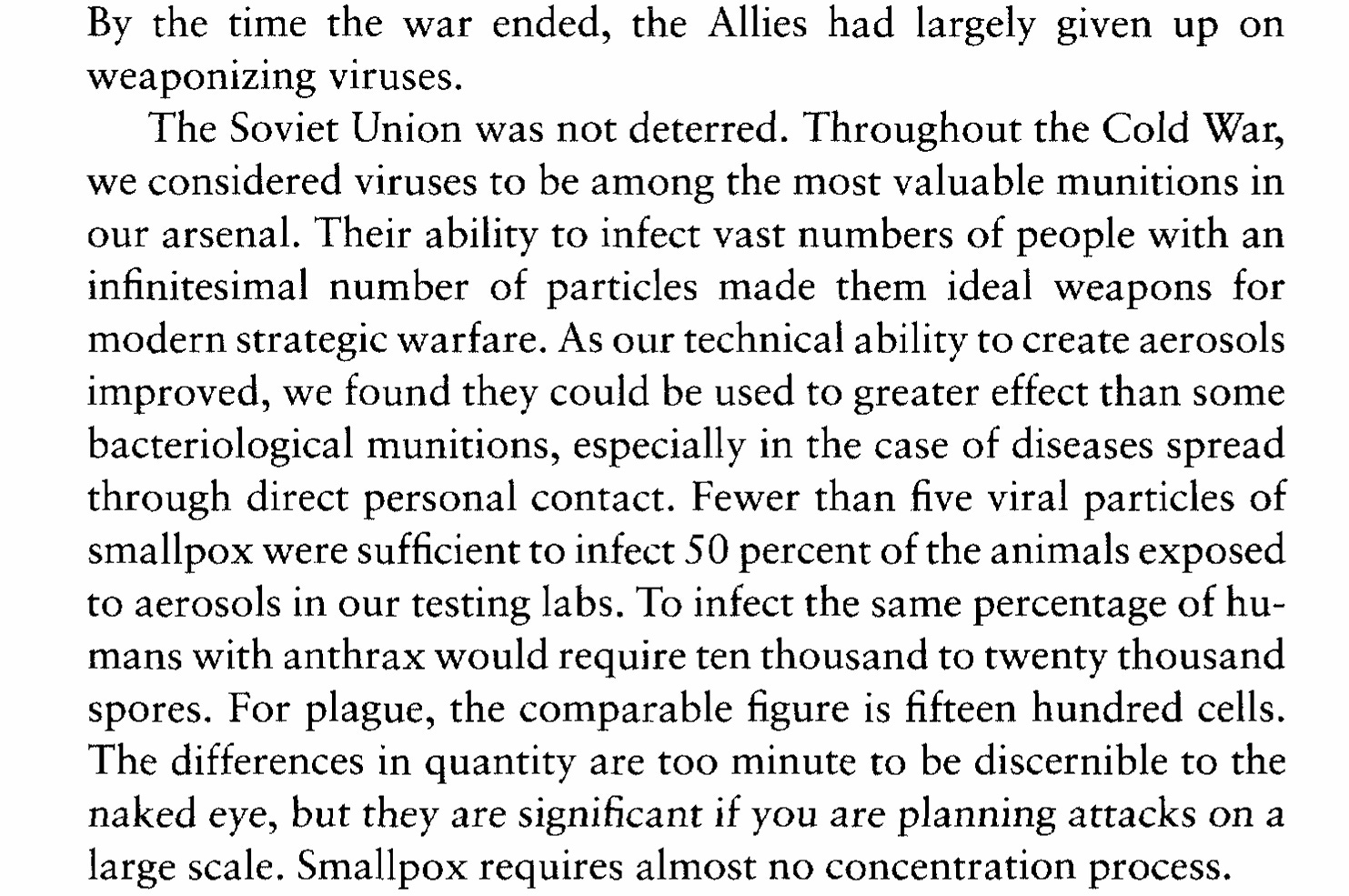
Another area of intensive research was aerosolization. Bioweapons need an effective delivery system. The USSR developed aerosolization technology on many scales - from low-flying cruise missiles capable of infecting entire cities, to miniaturized gadgets.

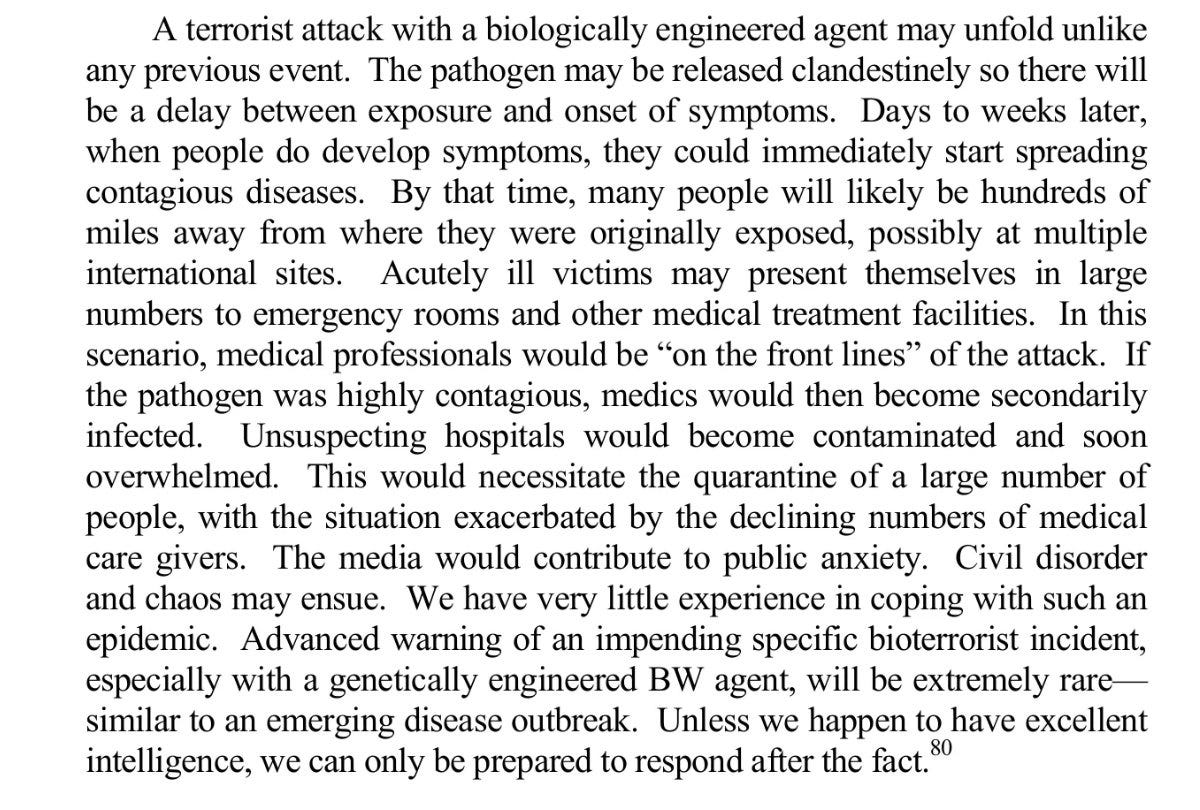
In April 2002, US counter-proliferation expert Colonel Michael Ainscough predicted a possible terrorist attack with a genetically engineered bioweapon. He depicted a scenario in which the unknown pathogen had a delayed onset of symptoms. This allowed it to spread quietly unnoticed. It could be carried internationally by unwitting airline passengers. Hospitals would become paralyzed as healthcare workers became infected. Diagnosis would be difficult for a novel pathogen with no tests available.
This is uncannily similar to the way SARS would soon play out.
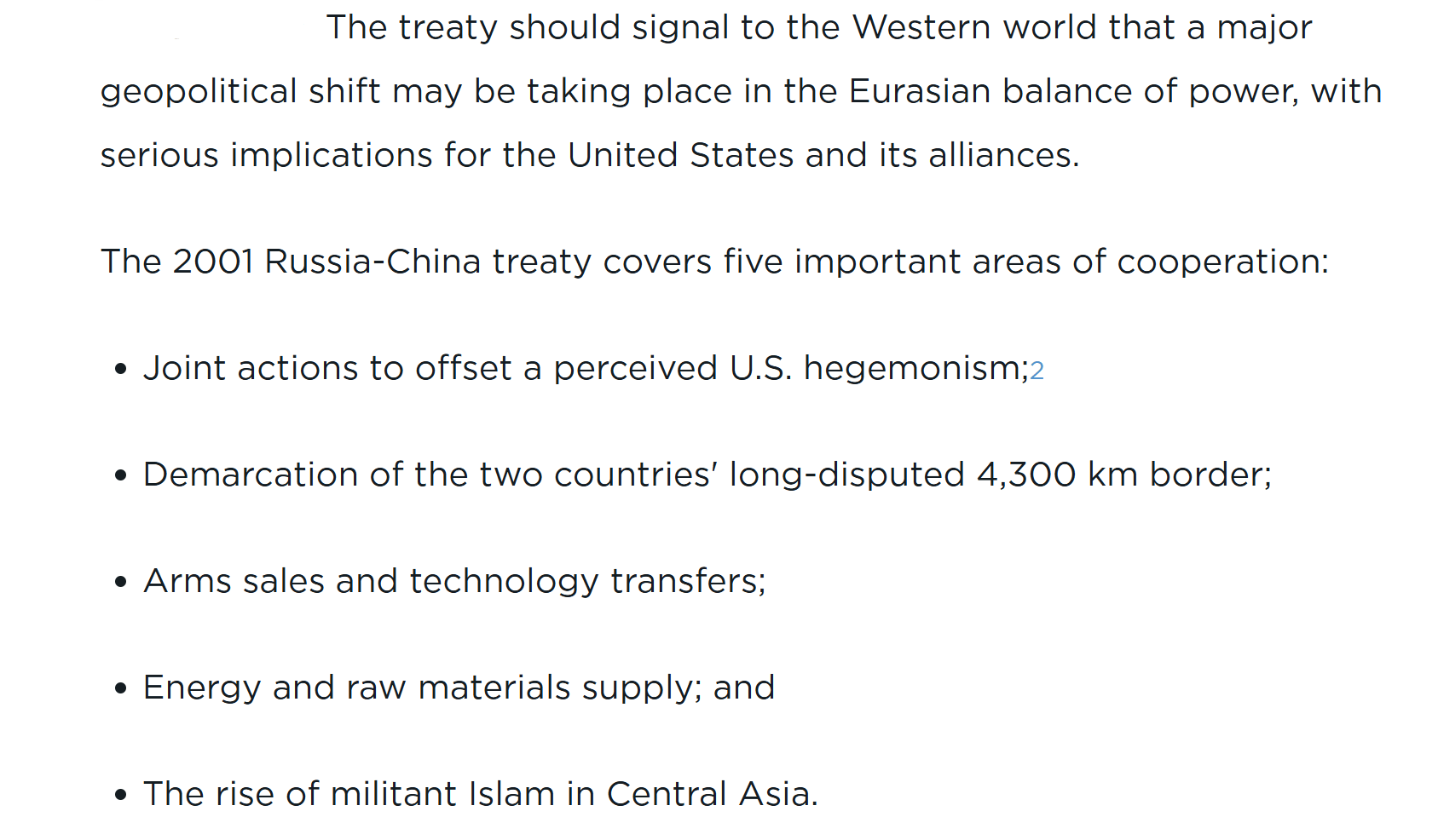
In the wake of the 1996 Taiwan Straits crisis - which resulted in a huge loss of face for the PLA - China raised military spending, purchasing most weaponry from Russia. The 2001 Treaty of Friendship brought China and Russia still closer. The focus shifted to military technology transfer and joint weapons development.
Military aspects of the “Treaty of Friendship” were negotiated by China’s Defense Minister Chi Haotian.
Chi had fought in World War 2 in Shandong peninsula where up to 200,000 died from cholera - which has been attributed to Japanese biowarfare attacks. In the Korean War he received the top award for valor, involved in a successful attack against a far better equipped US regiment at Chosin. He was primarily a “political officer” responsible for indoctrinating troops with CCP ideology. He rose to be head of the PLA at the time of the Tiananmen Square massacre, gaining a reputation as a hard-liner for pushing a harsh crack-down in the aftermath. In 1993 he was appointed defense minister.
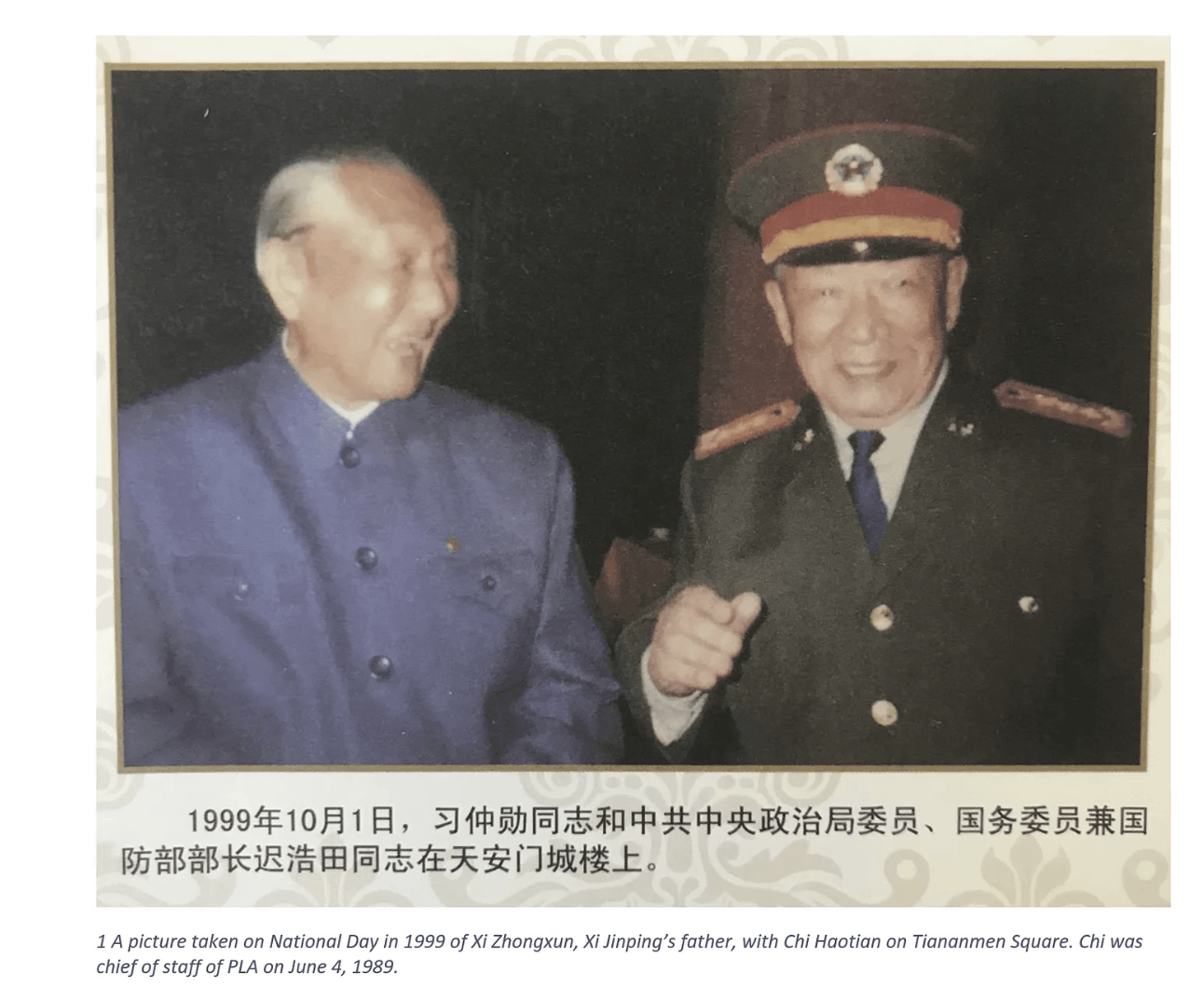
During the Korean War, North Korea, China and Russia conspired to make fraudulent accusations that the US was using bioweapons against them and their civilian populations. Their collusion was revealed in documents released after the USSR dissolved, and others from China which have been leaked by former officials. But such claims still circulate within the PLA and are widely believed - partly due to Chi Haotian.
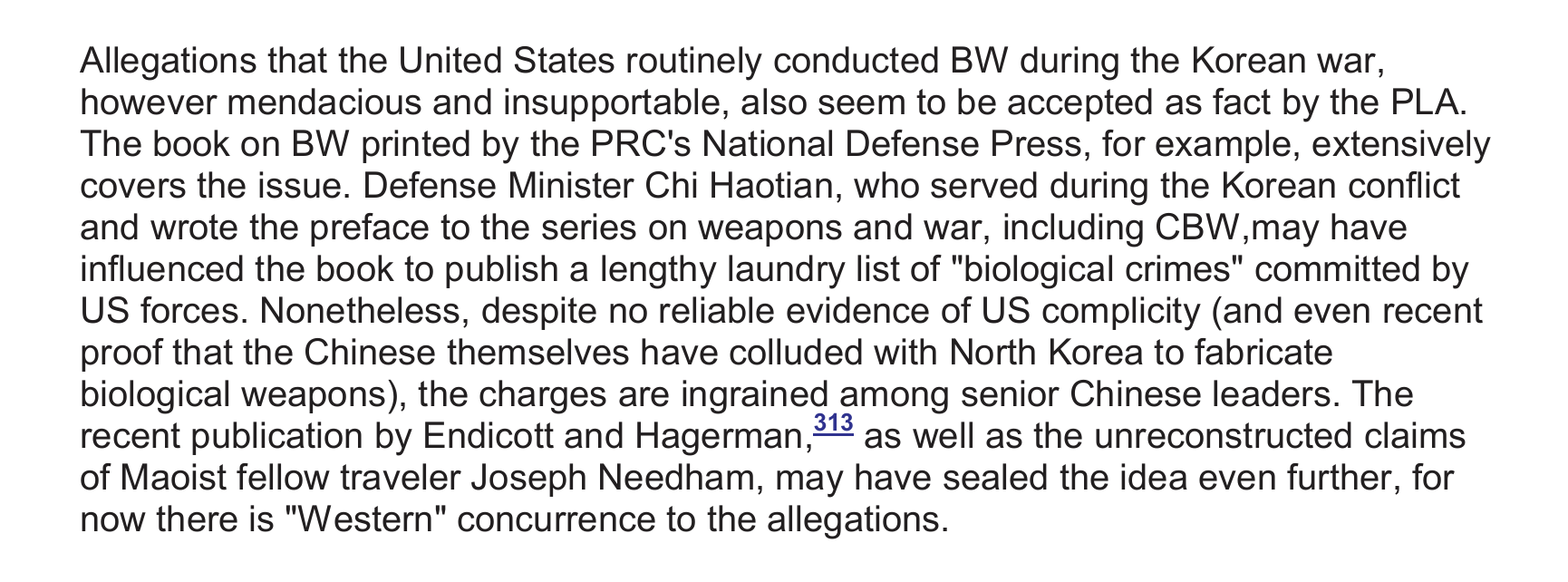
Most alarmingly, a secret speech attributed to Chi before his retirement in 2003, promotes the use of bioweapons to “clean up America” so it may become a lebensraum for Chinese people (although he advises against using the term).
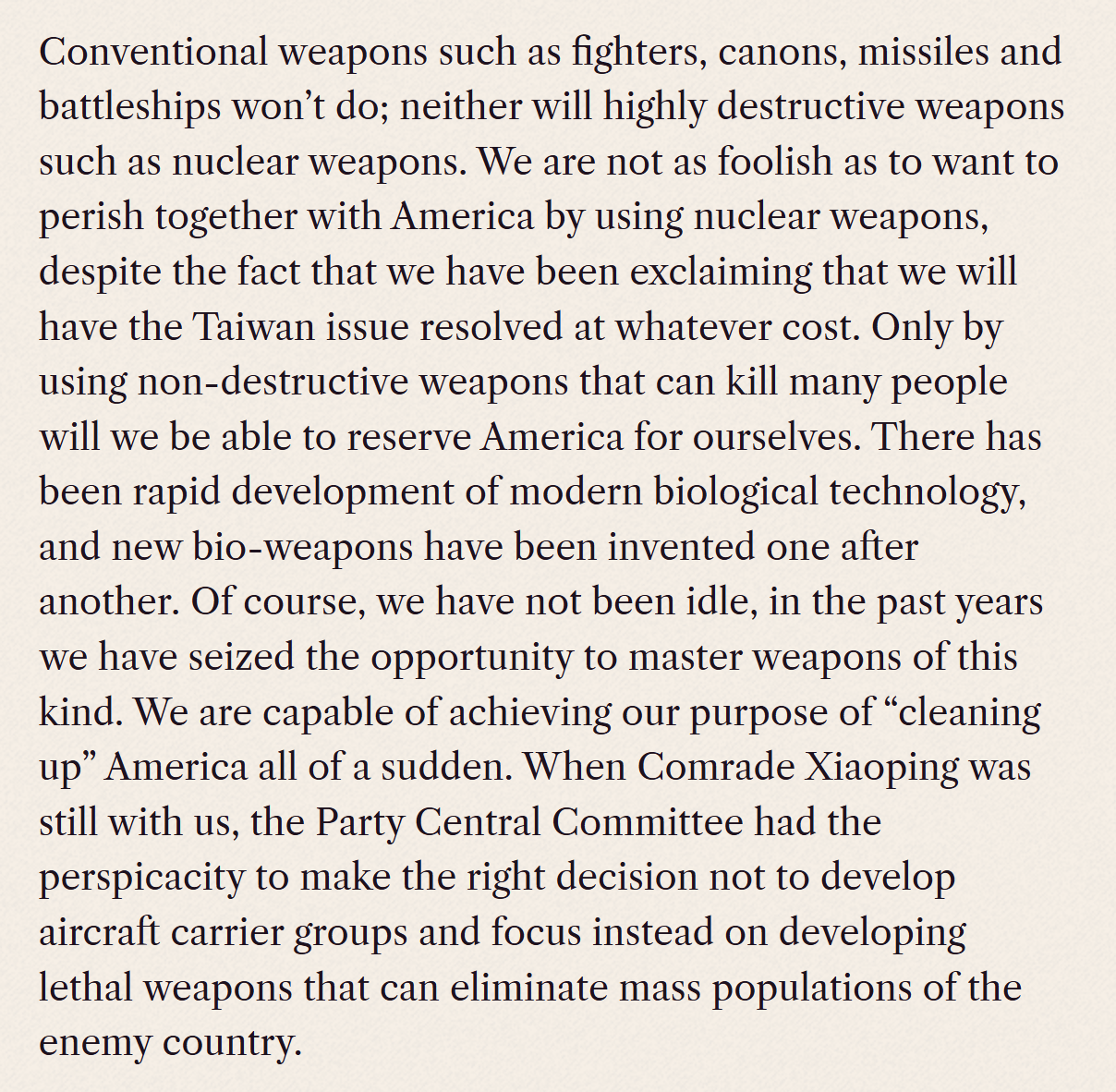
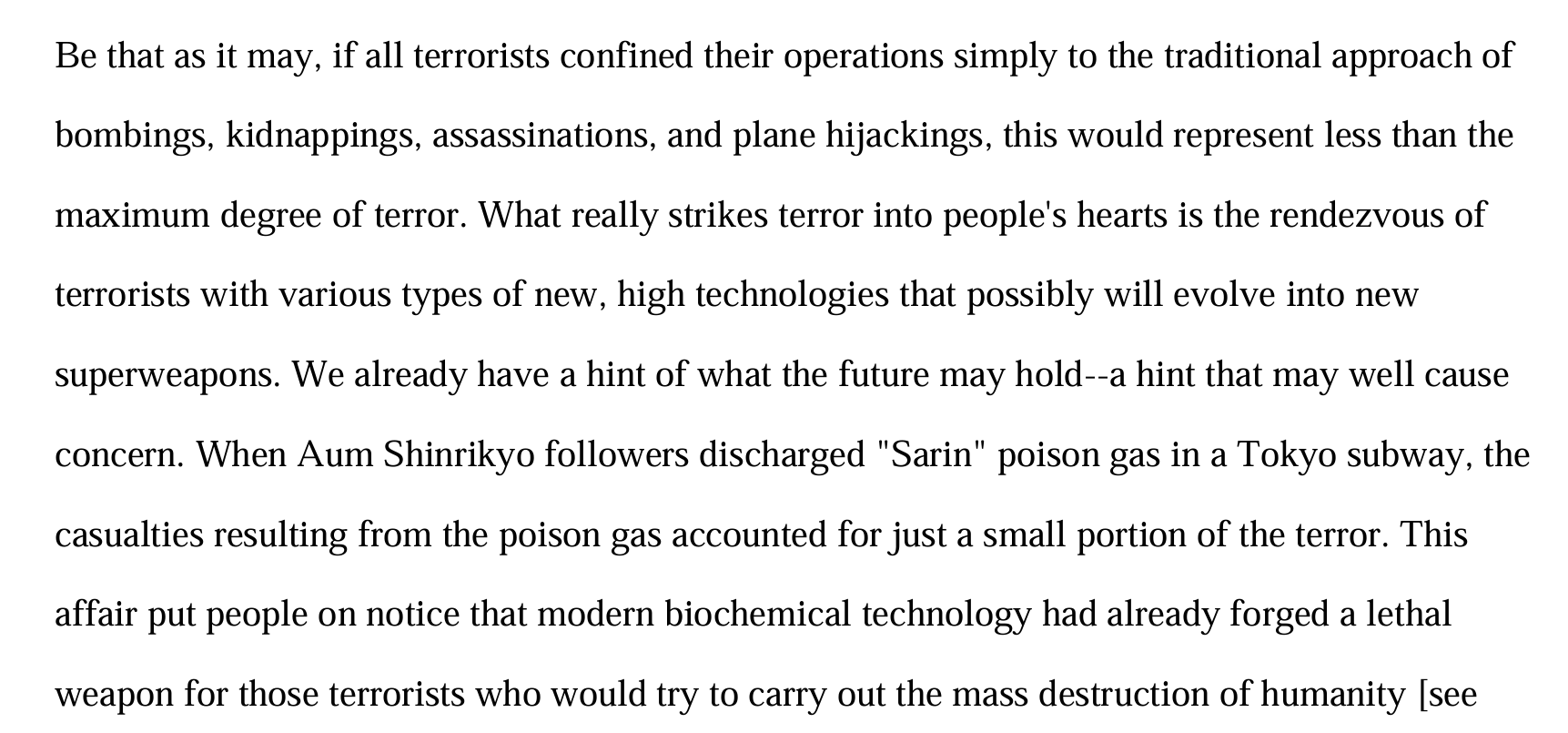
The 1999 PLA manual Unrestricted Warfare recognized the US remained militarily unassailable and looked to unconventional tactics pioneered by a variety of non-state actors - including terrorists, hackers, financial speculators - to strategically weaken the west. Al-Qaeda and Aum Shinrikyo were recognized for their “achievements” in the domain of terrorism.
In October 2002, Russia put its aerosolization expertise to use against Chechen terrorists who were holding over 900 hostages in the Nord-Ost theater in Moscow. The agent used wasn't a real gas, but an aerosolized fentanyl derivative (which is solid at room temperature). Unfortunately, 40 hostages died from its effects.

With dark humor, Alibek relates a conversation with a KGB colleague about developing miniaturized gadgets for aerosolizing viruses for the purpose of assassination.
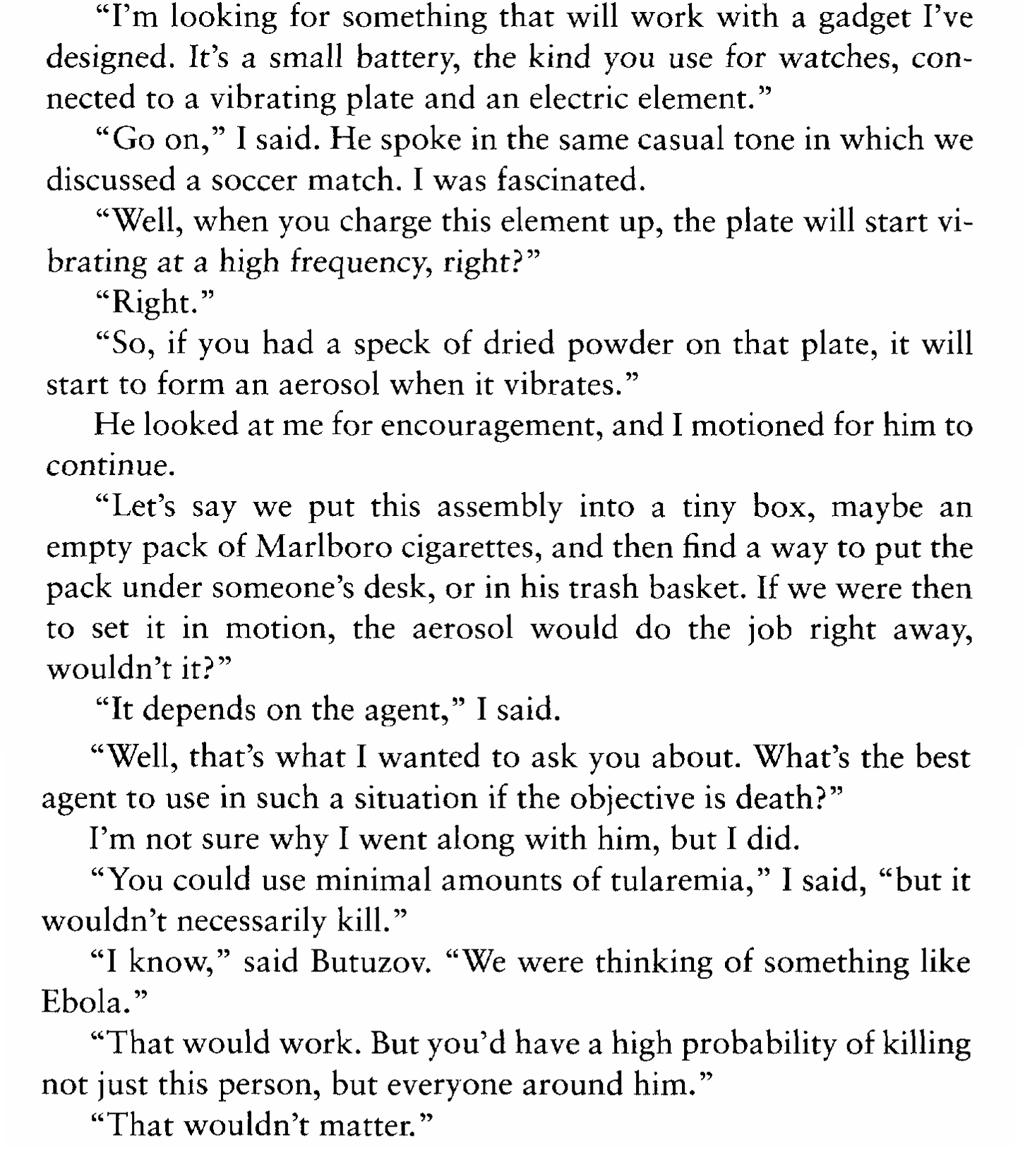
Using an agent in the form of dry powder adds some complexity, but aerosolizing liquids is straightforward - even with cheap consumer gadgets. Ultrasound nebulizers (such as those used to dispense a room fragrance, humidify, or create a decorative mist effect) are ideal, but even a basic atomizing spray bottle or can, might be effective. Aum Shinrikyo, when attacking the Tokyo subway, used sarin unheated, in plastic bags which they pierced before alighting from trains. The high volatility of sarin was sufficient even at room temperature. The Russians developed more complex hybrid techniques whereby volatile liquids would vaporize and carry fine solid particles in suspension.
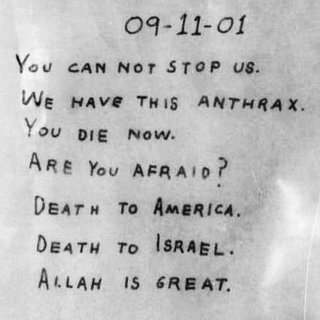
Cynics claimed bioterrorism was over-hyped by the Neocons to build support for the Iraq invasion they had long planned. Just a week after 9/11, anthrax-laced letters were sent to US media outlets. They reference the date 9/11 and contain crude Jihadist tropes in an apparent attempt to misattribute. Though only 5 deaths resulted, the attacks stoked disproportionate panic, causing social and economic disruption.
Some even claimed the letters may have been a “false flag” plot. Doubts remain over the quality of scientific evidence the FBI gathered against their “lone wolf” suspect.
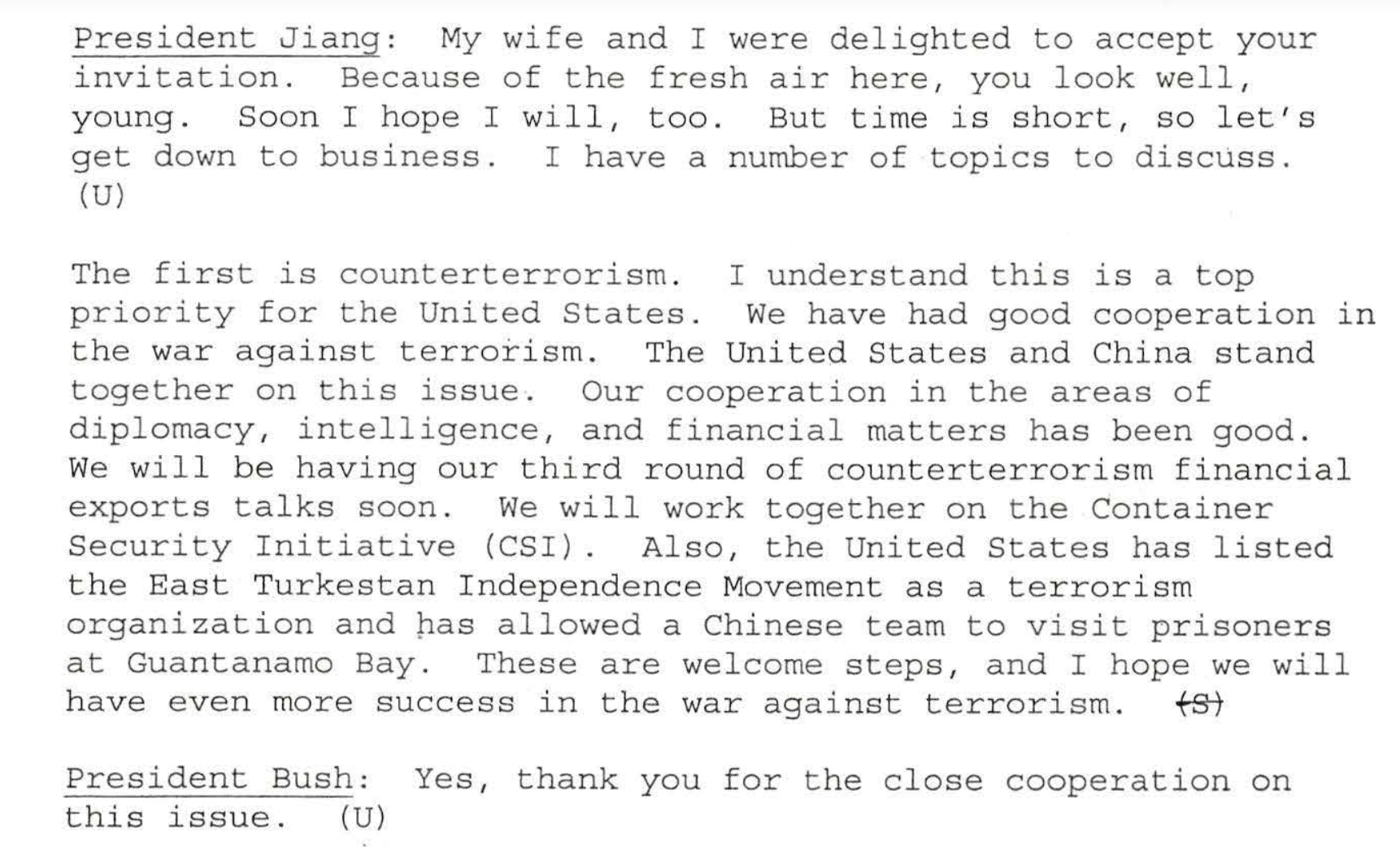
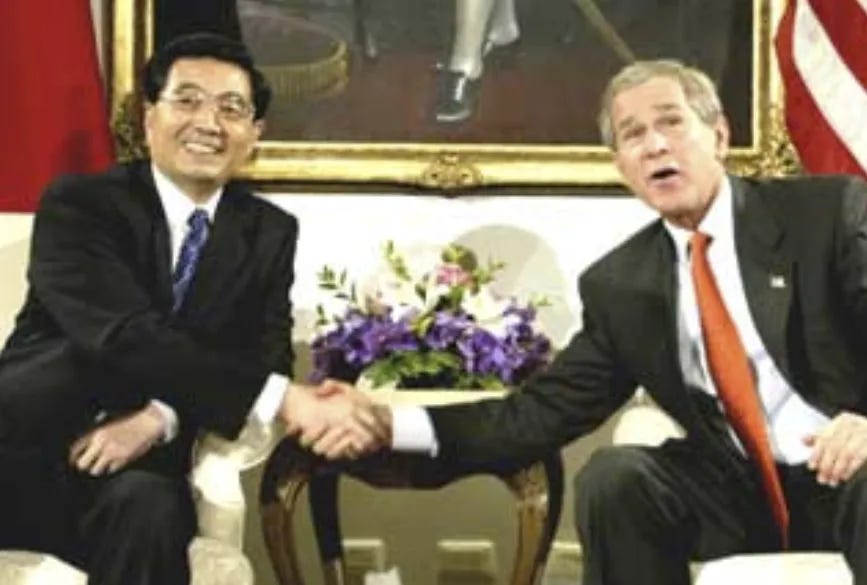
President Bush tried to foster personal friendships with China's leaders, seeing China as an ally in the Global War on Terror. Others in his administration (e.g. Donald Rumsfeld) were far less trusting. Jiang expressed solidarity with the US after 9/11, claiming that China also had problems with terrorism. Bush accordingly added Xinjiang separatist groups to the US list of terrorist organizations.
Falun Gong charged that the Chinese government was falsely accusing them of anthrax attacks in China, an attempt to have them also listed as a terrorist organization. Chinese propagandists who had been labeling them an “evil cult” sharpened their rhetoric. Acts of self-immolation in Tiananmen Square were denounced as terrorism.
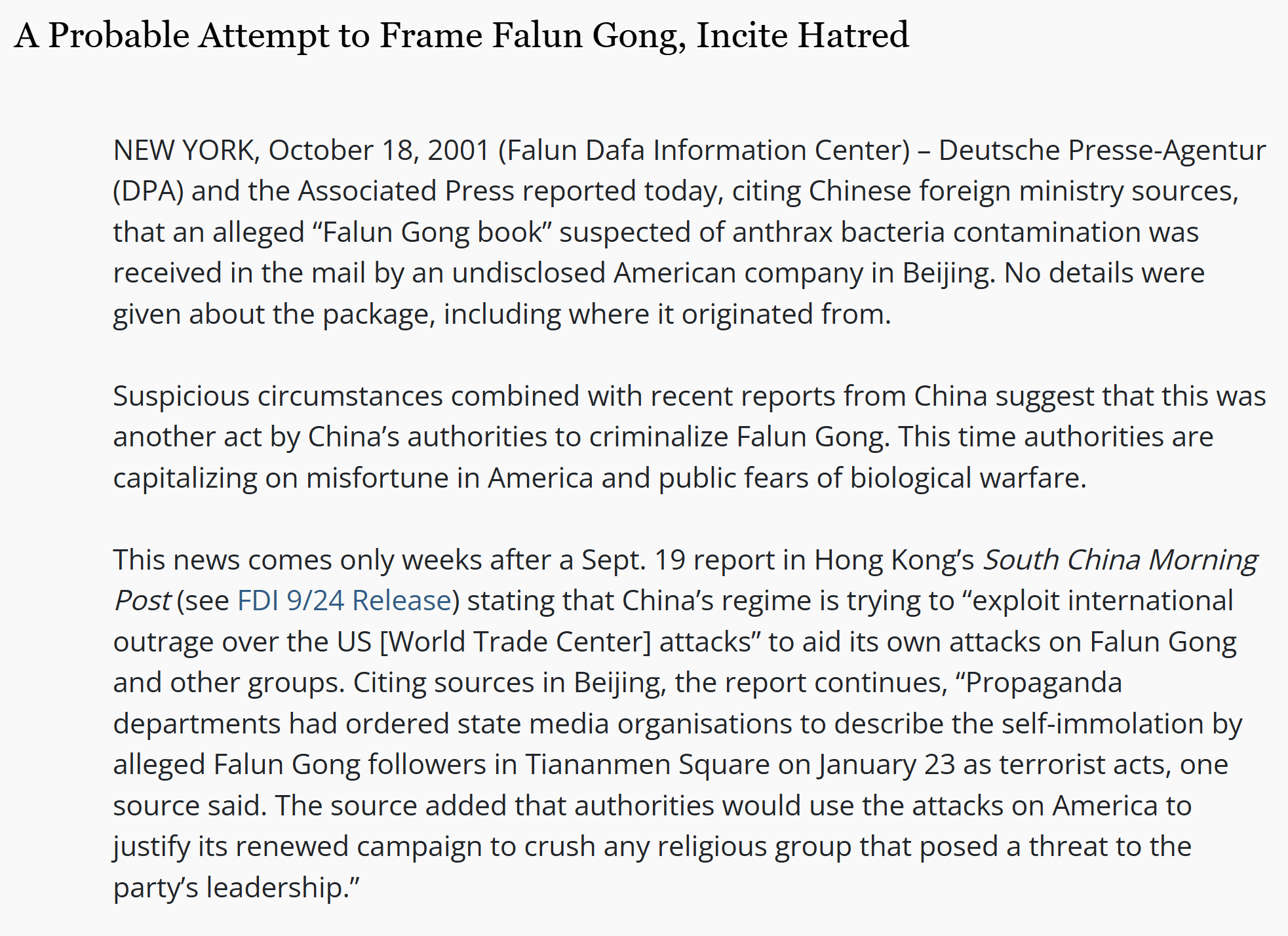
Many countries introduced new security laws, protocols and agencies in the wake of 9/11. Inevitably, authoritarian states would also seek to exploit the opportunity.
In China, the PLA authors of “Unrestricted Warfare” promoted a body that would take control during any national or international emergency. With the PLA at the core, it would control the media and be in charge of international liaison.
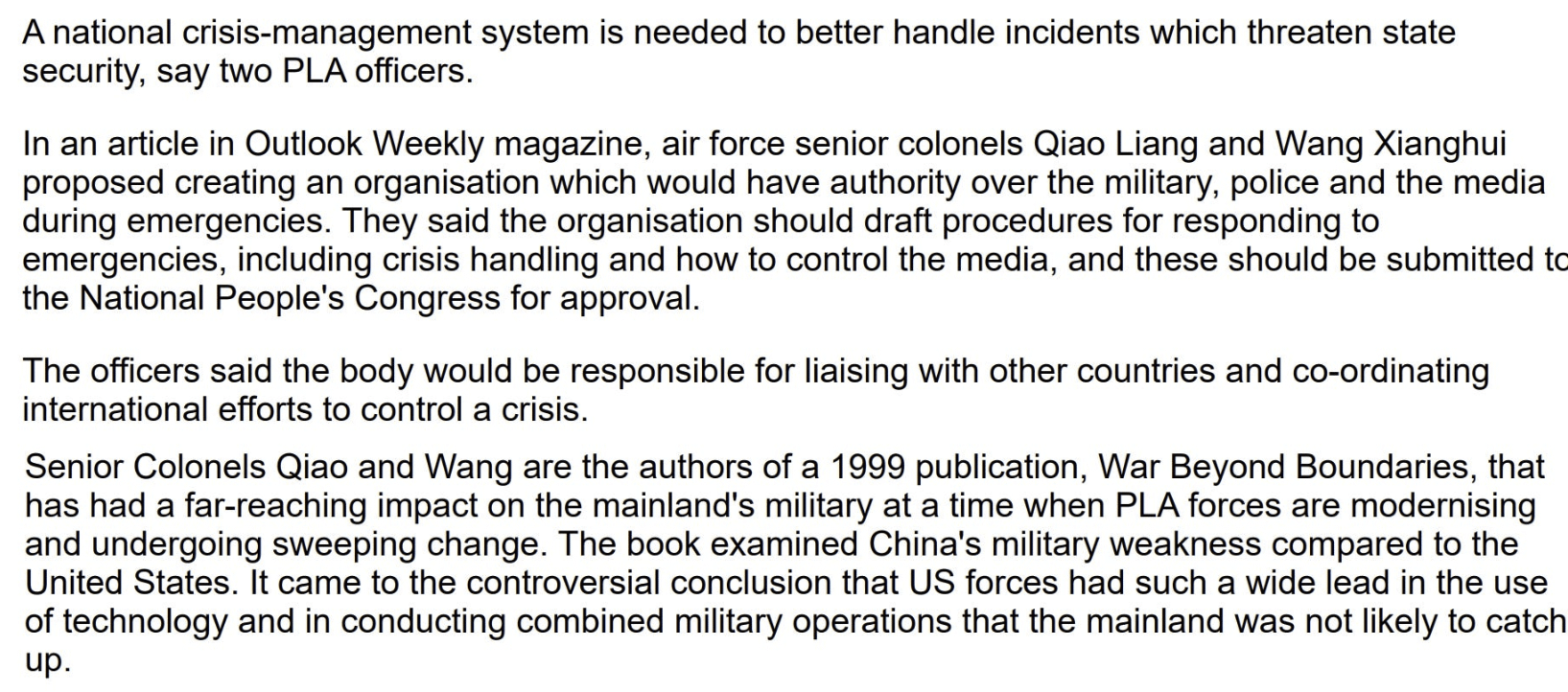
After SARS, PLA doctrine was amended to include what they termed the “Three Warfares”: public opinion warfare, psychological warfare, and legal warfare.
In September 2002, pro-China legislators in Hong Kong introduced a national security law that created crimes of sedition, treason and espionage against the PRC. Although some form of security law was required under the “one country, two systems” Basic Law, the timing was opportunistic and critics claimed it went beyond what was required and would undermine human rights and freedoms. It encountered huge opposition and was ultimately enacted only in 2024. It was recently used to jail Jimmy Lai.
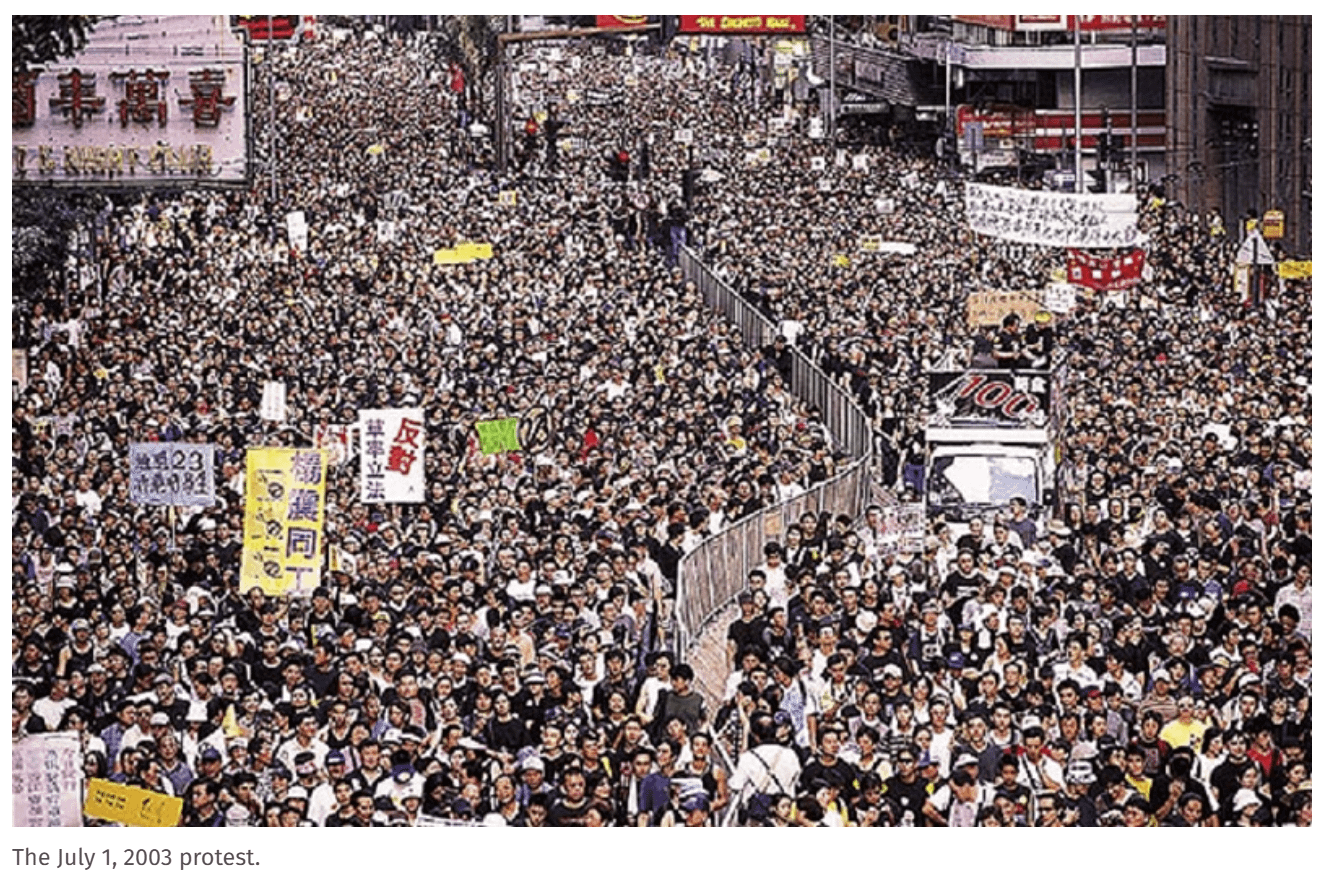
On Feb 6th, 2003 Colin Powell addressed the UN to present the case for the Iraq invasion. With war imminent, terror alert levels were raised worldwide. Hong Kong was no exception. Although deemed an unlikely target, someone appeared to be trying to inspire fear of Jihadist terror.
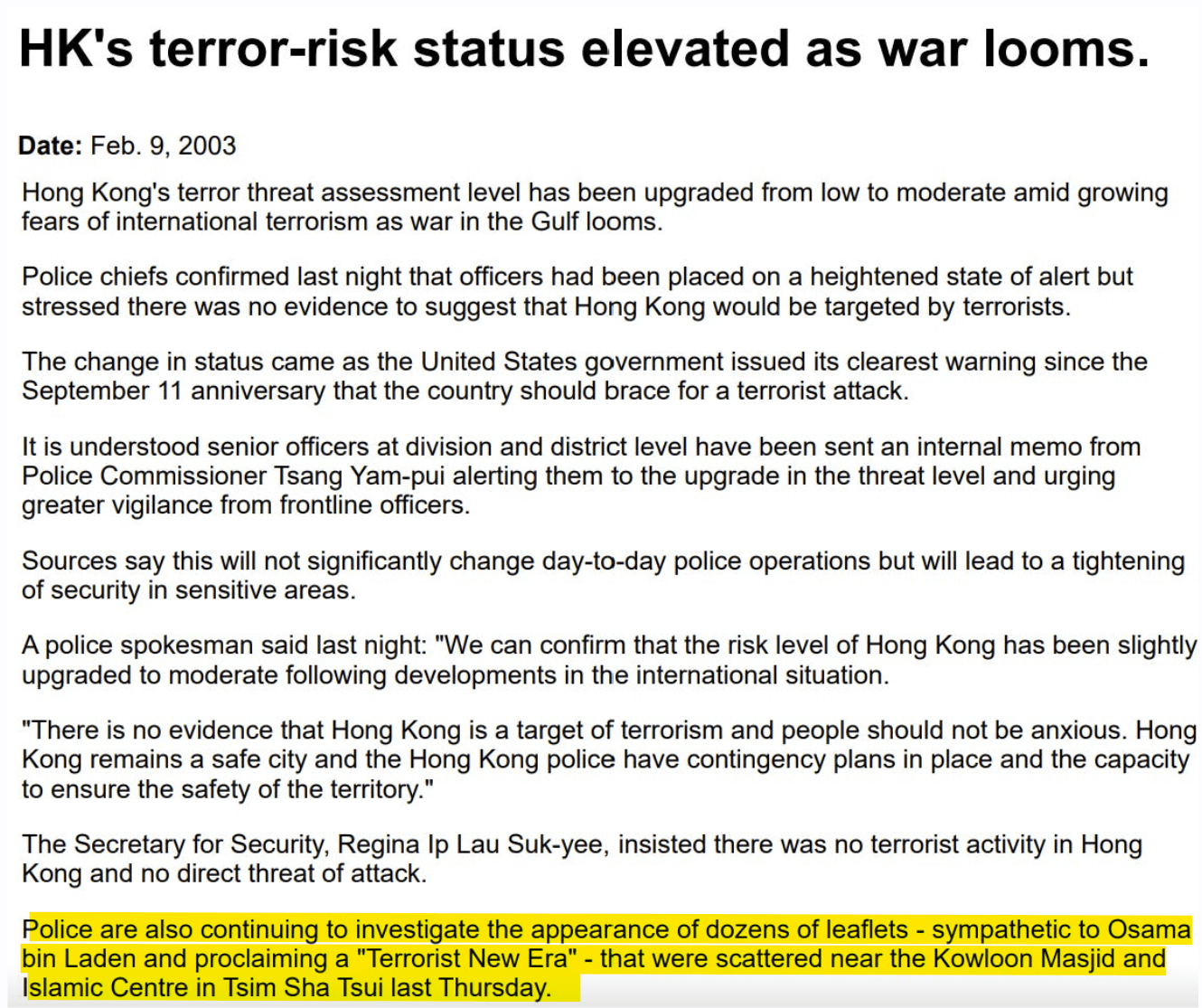
A few days later HK media reported on a panic in neighboring Guangdong province, rumors of an unknown and fatal respiratory disease were spreading.
One specific rumor relayed was that hundreds of people had fallen ill at once at the Guangzhou World Trade Center - twin-tower style office buildings with a high-end shopping complex. There were whispers of bioterrorism.

No-one really knows what happened in Guangzhou. The media was barred from reporting for much of the time. Officials also stayed silent. Disease outbreaks had been designated a state secret.
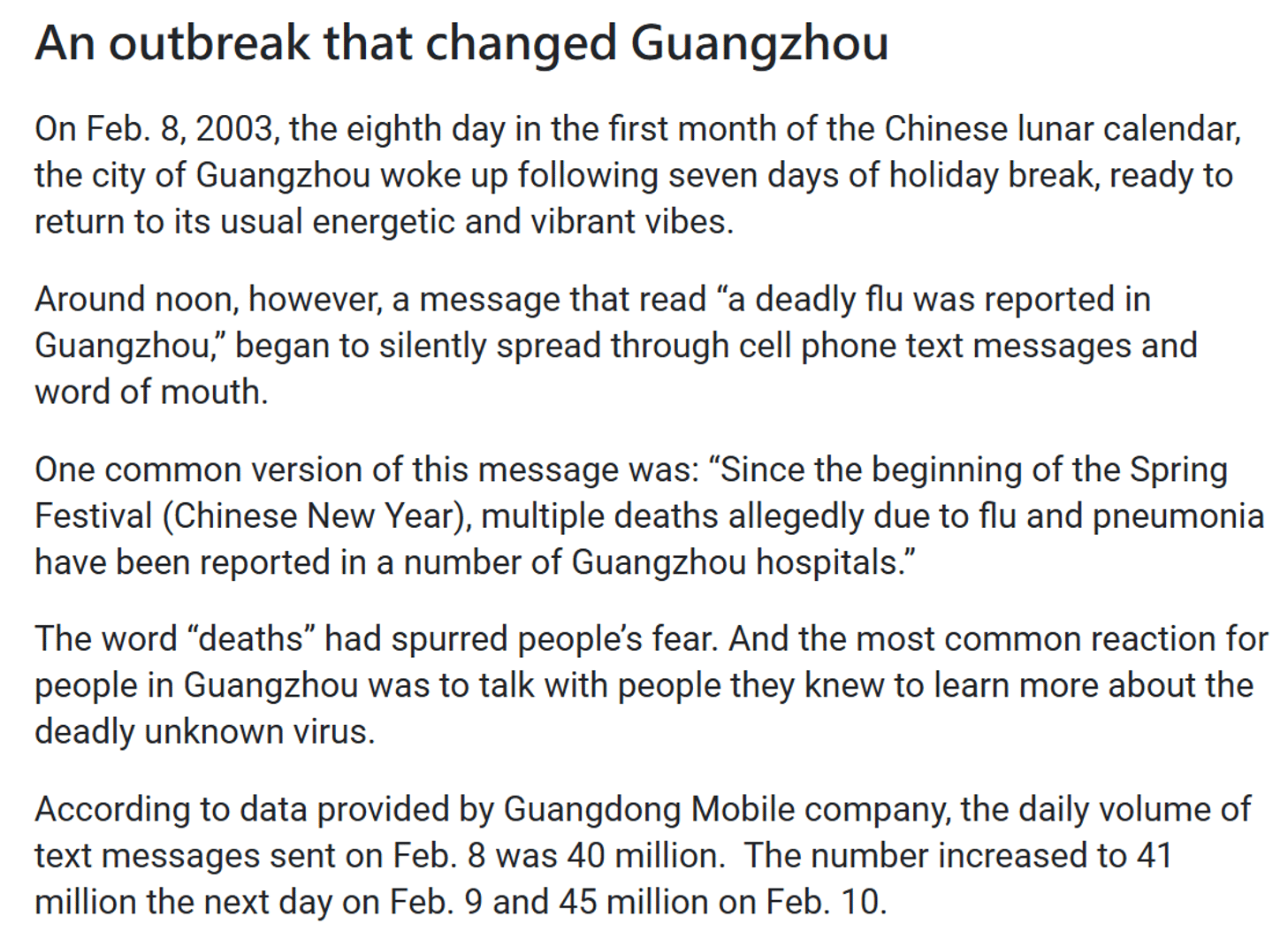
Rumors were primarily spread via an organized mass SMS campaign. Tens of millions of identical text messages were sent each day.
WHO sent a team to China, but they were barred from entering Guangdong for several weeks. They stayed in Beijing where their Chinese counterparts refused to discuss anything of substance. The US Secretary of Health and Human Services offered to send a CDC team to Guangdong but was rebuffed. Hong Kong health officials were unable to contact their counterparts across their shared border.
The Guangzhou outbreak was retrospectively blamed on a super-spreader dubbed the “Poison King” who was reportedly transferred between 3 hospitals, infecting dozens of staff at each. When WHO staff were eventually allowed to enter Guangdong, he evaded their attempt to interview him. He also eluded the press.
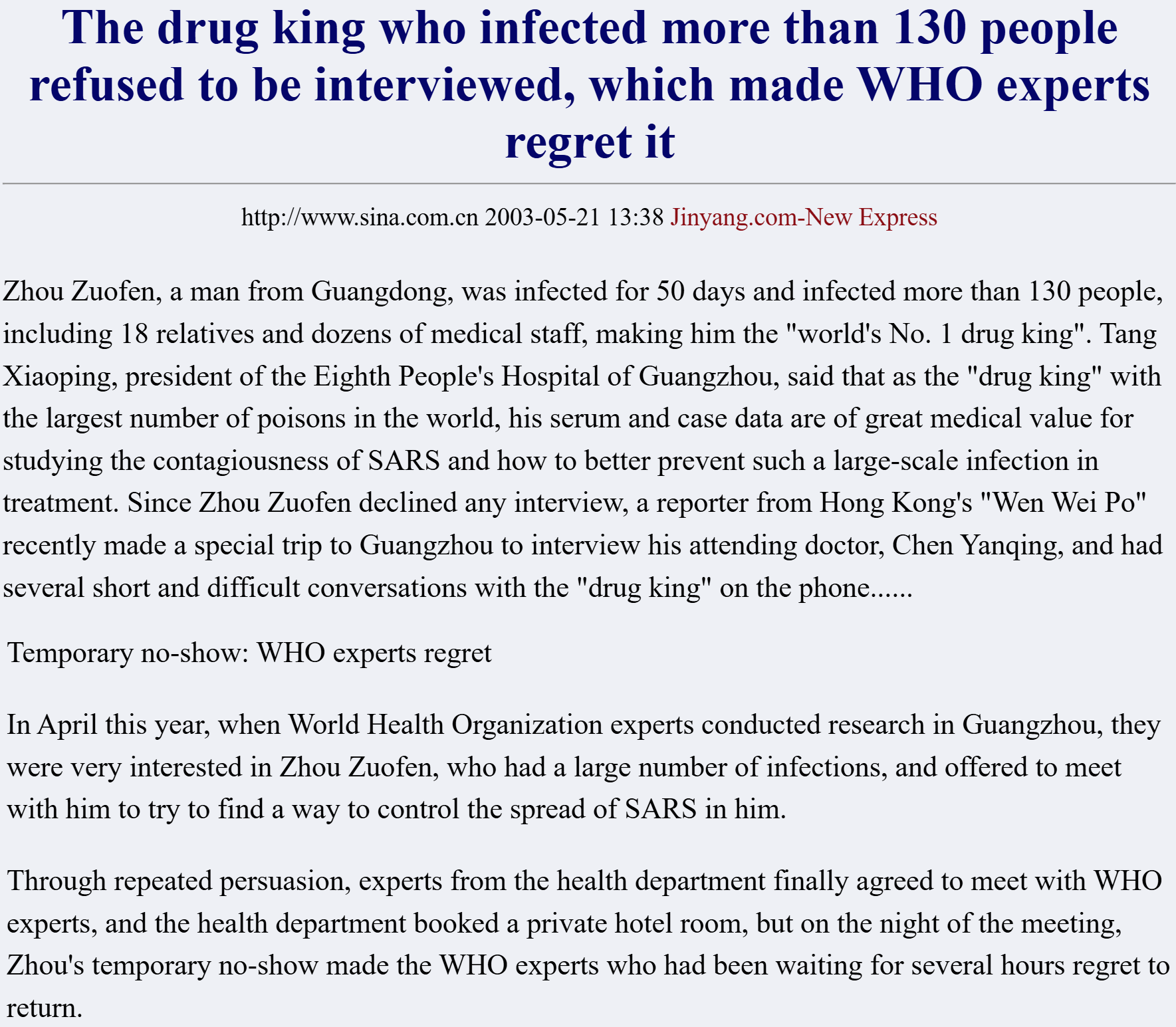
Epidemiologically, SARS in Guangzhou was unlike a typical respiratory outbreak spreading widely across the city. A couple of hundred cases were sent to four designated hospitals. According to officials 95% of hospitals remained unaffected. For a province the size of Guangdong (some 80 million people at the time), the case numbers are small for a respiratory outbreak. Why was SARS a concern at all - why was it even detected?
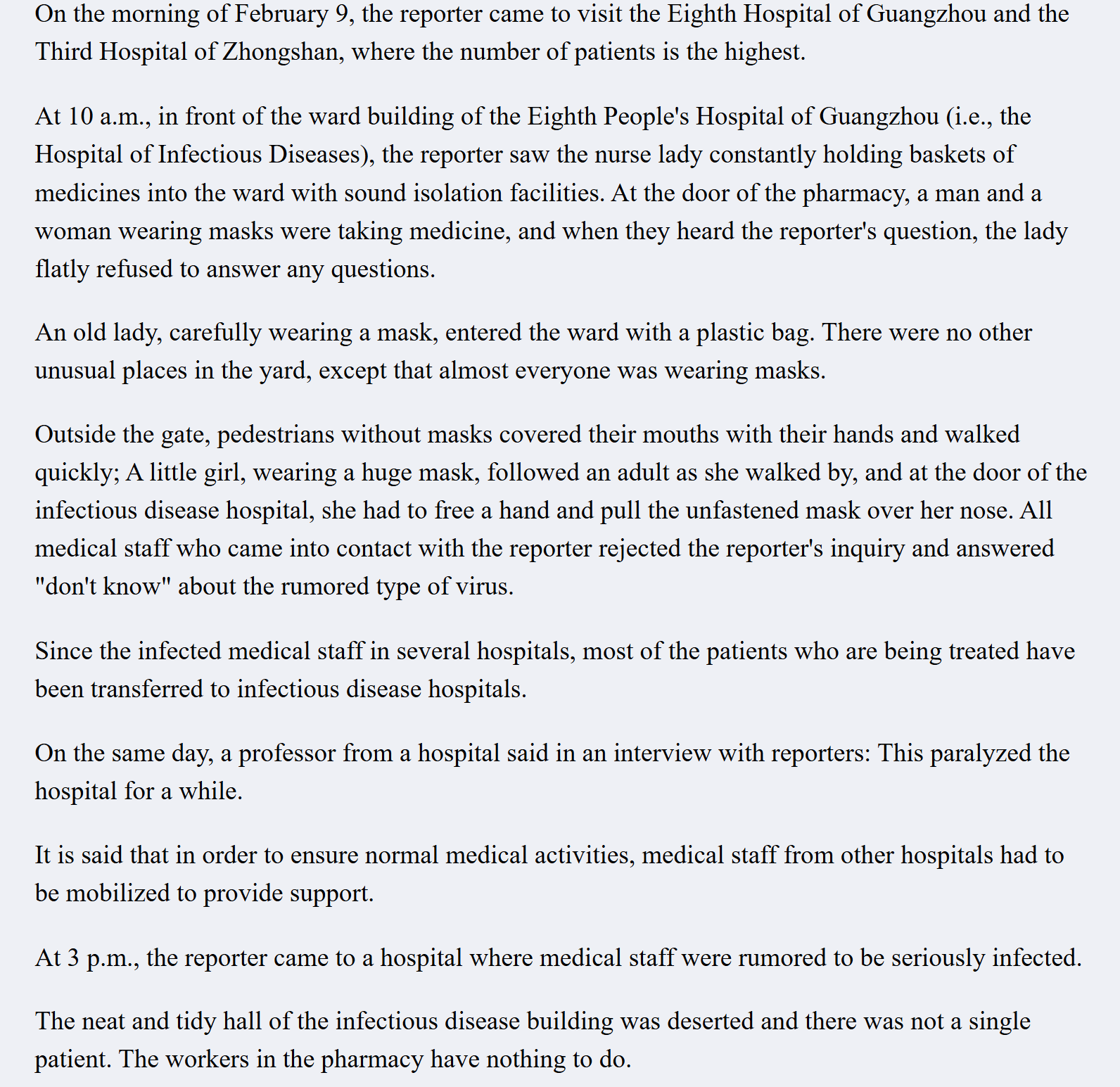
Worst hit was the 8th Hospital, 3 minutes from the World Trade Center. But at another hospital which was reportedly overrun with SARS, a journalist found no patients.
According to the official account, one Guangzhou hospital that was stricken by the “Poison King” is the link to the global pandemic. The presumed index case was a doctor from Sun Yat-Sen No.2 Hospital who traveled to HK for a wedding.
But the doctor wasn’t in a front-line emergency role. He was a retired professor of nephrology (kidneys), who was said to have been volunteering in an outpatient clinic. The Poison King's stay at that hospital was short - 18 hours by one account (details are inconsistent across different sourses). A paper describing the outbreak at that hospital says that 96 people became infected at that hospital. But most cases were mild, and only one died - why was that doctor so unlucky?
The doctor caught a bus to Hong Kong for a nephew’s wedding - A full 3 weeks after the Poison King’s visit - and he was feeling fine. He checked into the Kowloon Hotel Metropole (which is owned by a Chinese SOE) at 5p.m. He stayed just one night. In that time, he purportedly infected over 20 other guests on the floor. But how? The incident remains unexplained, despite a WHO forensic investigation.
Is it significant that he stayed in room 911? The hospital had 487 guest rooms, so if a co-incidence, it’s an unlikely one. A terrorism scenario could explain all the anomalies - if it had been contemplated.
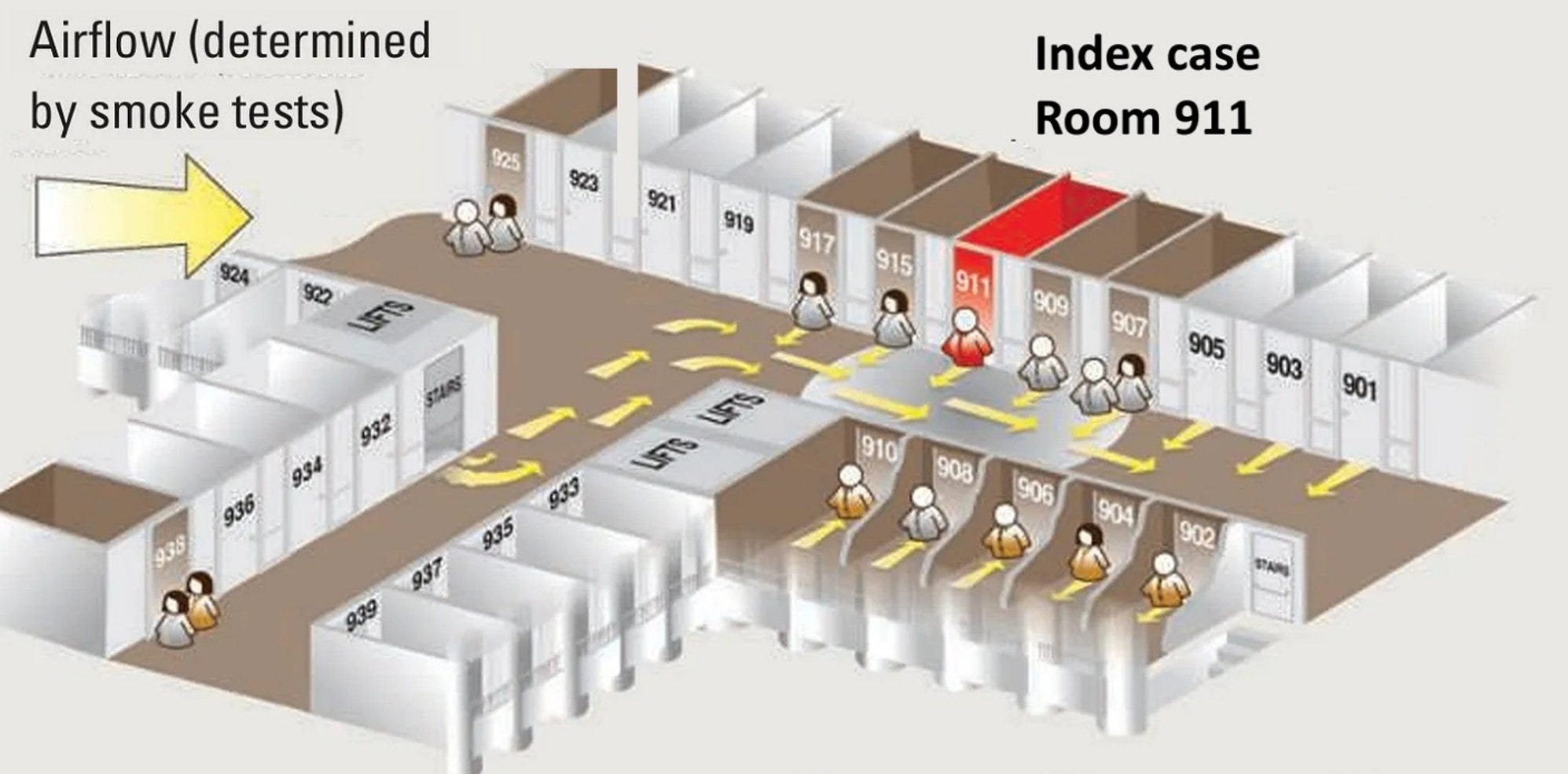
The majority of SARS cases stem from this one super-spreader incident. Some who stayed on the 9th floor went on to seed new clusters in hospitals in Singapore, Vietnam, Canada and at Hong Kong’s Prince of Wales. But most others who were infected at the Metropole transmitted to only one or two others, or no-one else at all.
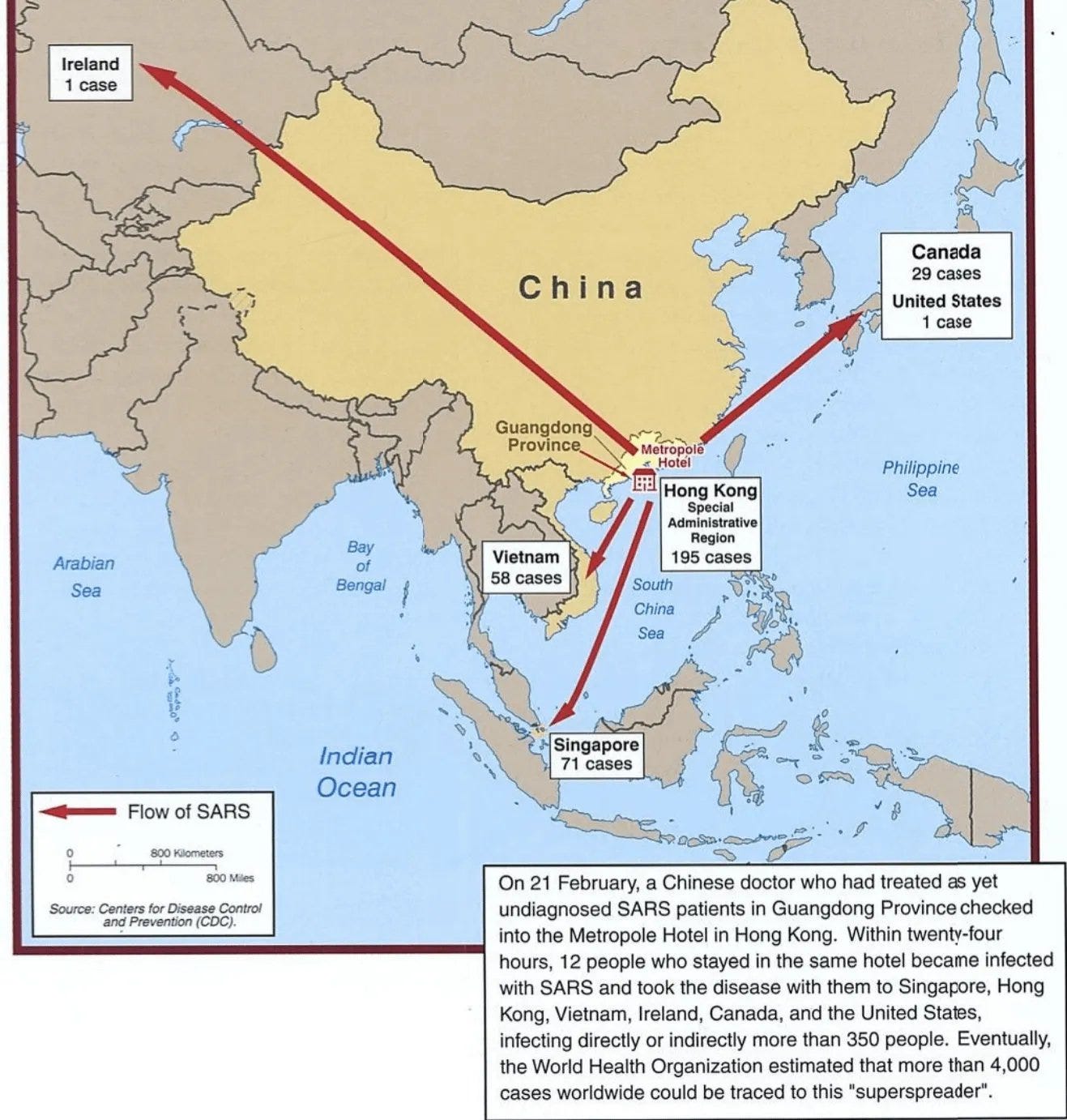
These downstream hospital outbreaks also have a mysterious epidemiology - doctors and nurses who had early and close contact with an index case from the Hotel Metropole suffered the most severe illness or death. But those who had secondary infections from other staff had generally mild illness, and ICU nurses who treated the patient were relatively unaffected. What could explain this?
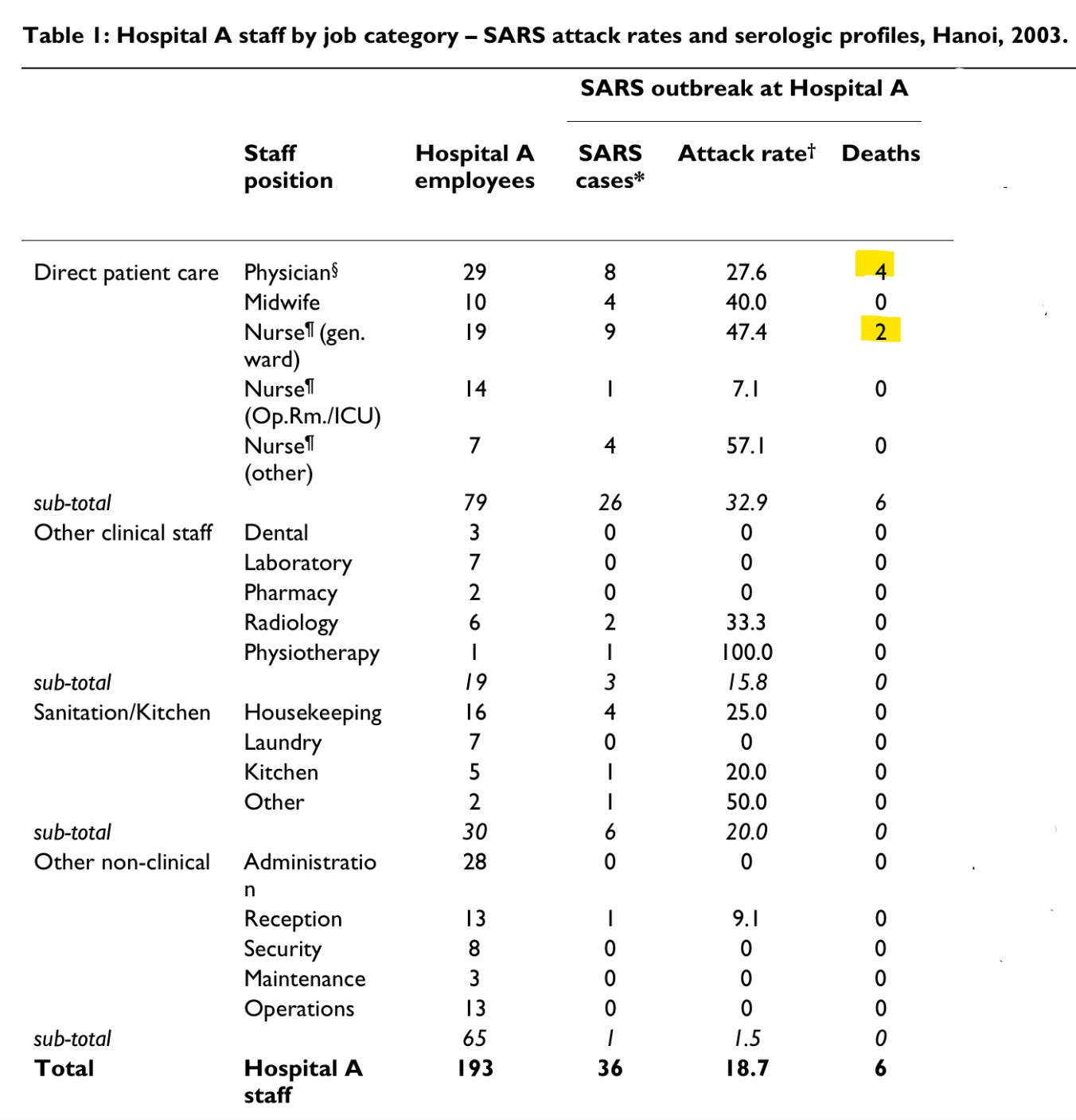
I speculate that these people carried something physical (perhaps a complimentary toiletry) from the Hotel Metropole, which traveled with them in their luggage or clothing, to hospitals at their destinations. This was adulterated with SARS coronavirus in an aerosolizable form.
A later super-spreader incident happened on Flight CA112 on 15th March - the day of the pre-ordained election of new President Hu Jintao. The presumed index case somehow infected 22 people on the short flight between Hong Kong and Beijing. Some of those infected were seated several rows away from the index case, but only two of the eight seated directly around him were infected. This pattern can only plausibly be explained by aerosol transmission.
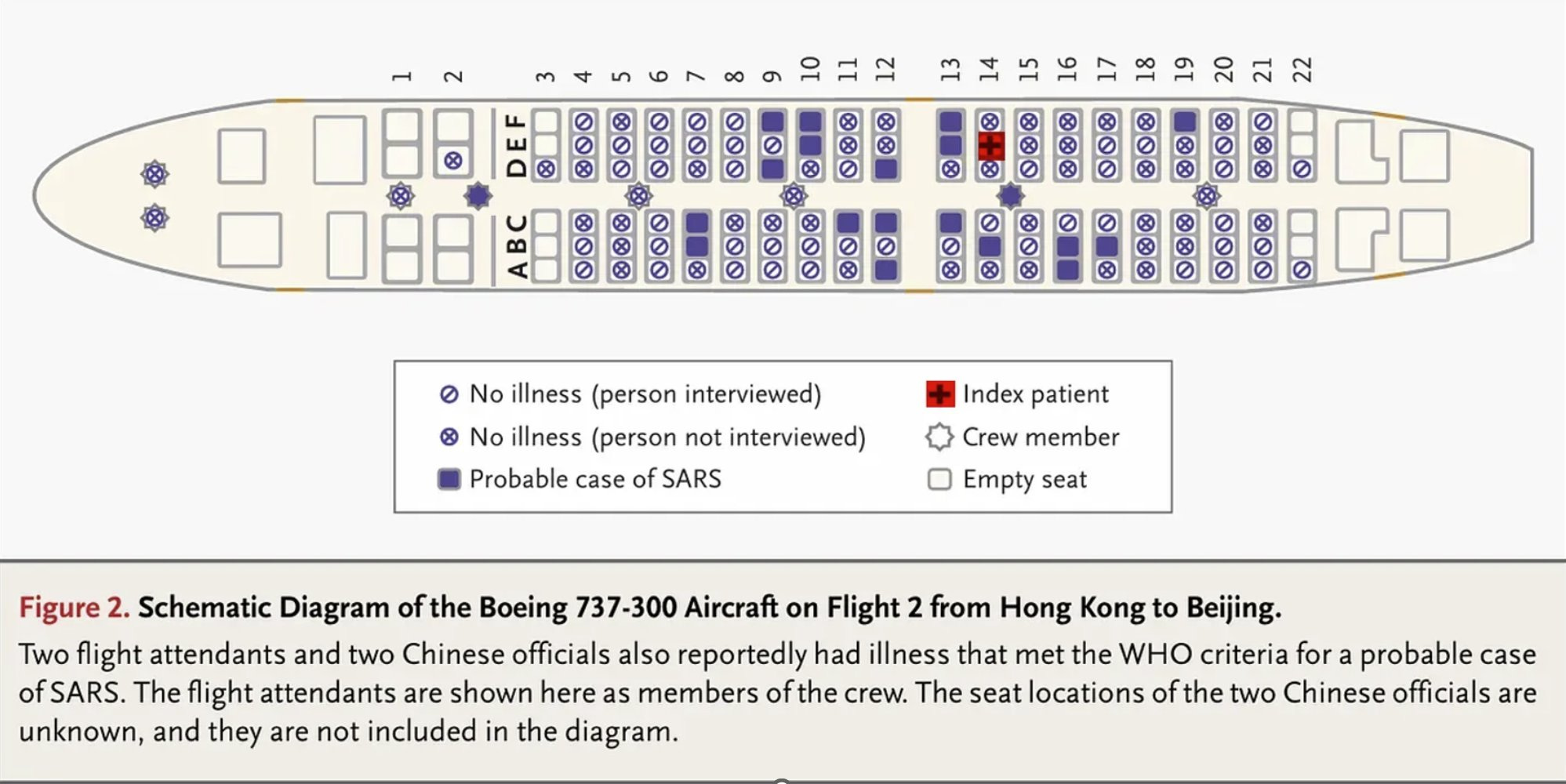
The WHO retrospectively identified 35 other flights on which SARS cases flew, but there were only 5 suspected transmissions on these other flights combined.
Interestingly, 112 is the ITU approved alternative to 911. In most countries if dialed from a mobile it will divert to local emergency services. Uncanny, but perhaps this reference was too indirect and obscure. Unlike room 911, no-one seems to have remarked on it. Most airlines had stopped using 911 as a flight number as it made passengers and crew nervous. It wasn’t just irrational superstition, but commercial reality, recognizing the number had become associated with terrorism in the public mind.

The largest super-spreader event was at Hong Kong's Amoy Gardens. The official story is that a SARS case had diarrhea. When he flushed the toilet, it aerosolized virus-laden feces. Due to a poorly designed and faulty plumbing system the plume of aerosols was able to enter neighboring units.
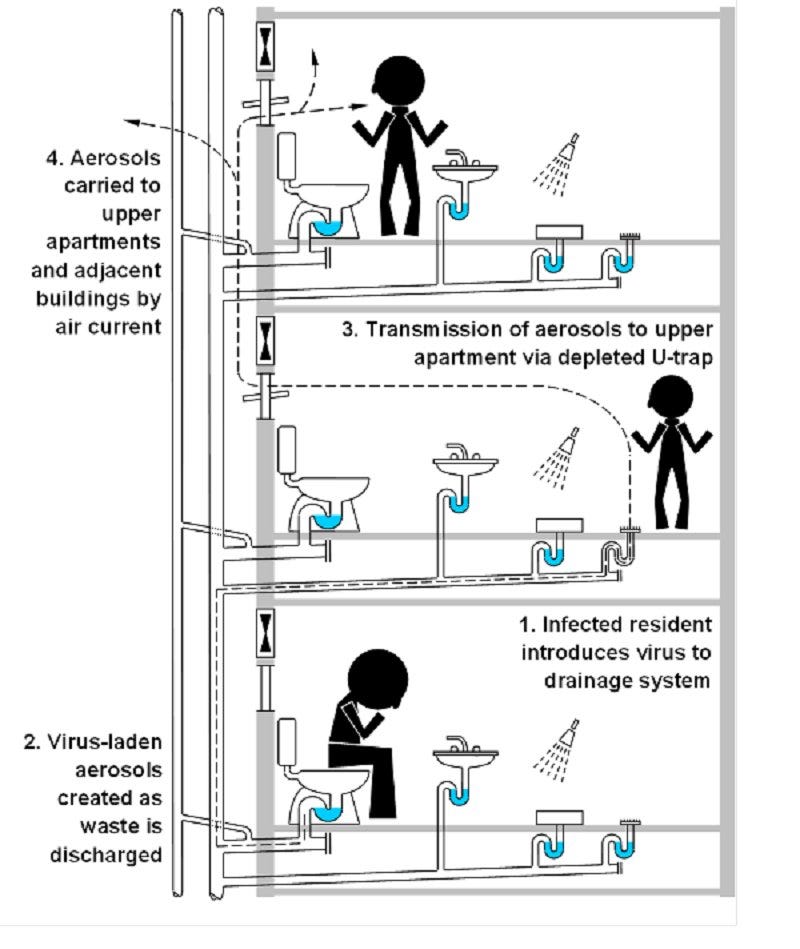
OK, but he supposedly infected around 330 people, in 15 different towers - up to 100 meters apart! It sounds ludicrous. Even if SARS could transmit through feces, how could such quantities of aerosol be generated that could survive a 100m journey outdoors and enter so many units? There were many doubters, but this remains the official explanation. Other possibilities such as transmission by rats and/or cockroaches have also been refuted.
Terrorism might have offered a more parsimonious explanation - if it had ever been contemplated. Alibek’s former colleagues in the USSR had envisioned such attacks.
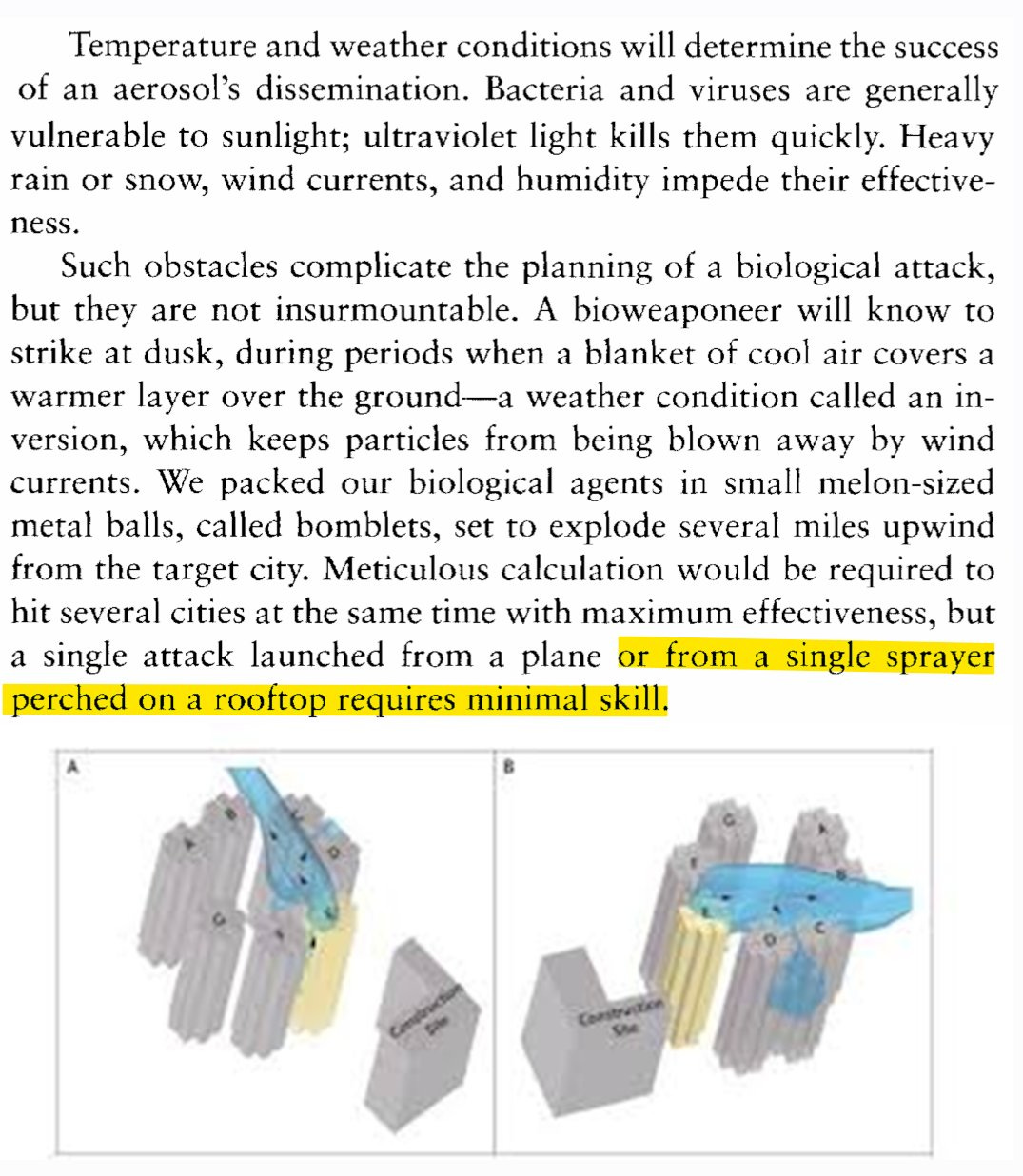
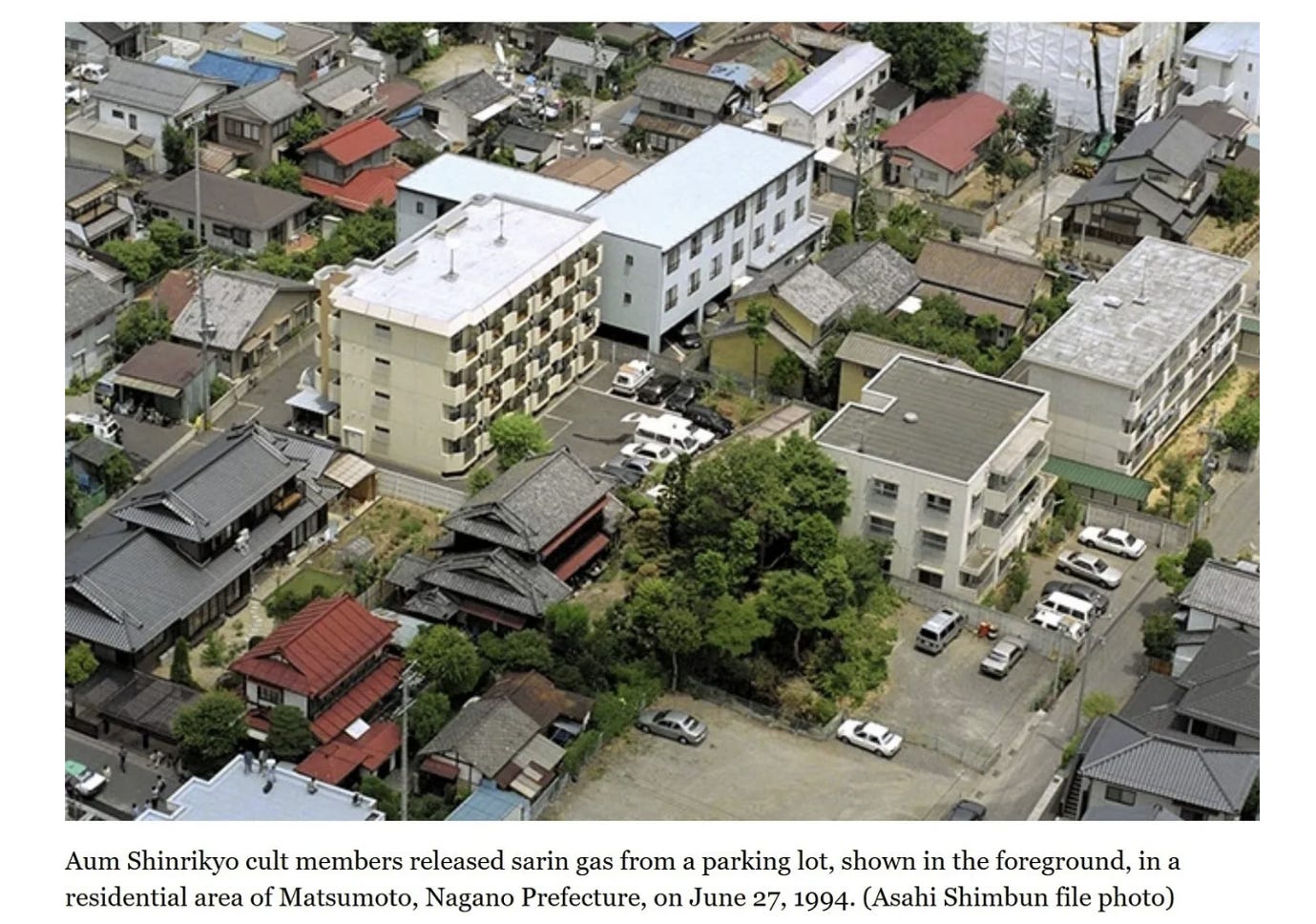
The needed rooftop was on an adjacent construction site, where industrial spraying machines wouldn’t be out of place. This style of attack would resemble one carried out in 1994 by Aum Shinrikyo in the town of Matsumoto. An improvised aerosolization device was deployed from the back of a truck upwind of a group of apartment blocks.
SARS occurred during a leadership transition in China. Outgoing President Jiang Zemin was popular with the PLA and remained in command for some time after Hu Jintao became president. There was tension between the PLA and government over how to manage SARS. The PLA hid the true case numbers even from the Ministry of Health, concealing patients in hospitals controlled by them. They initially ignored the new President Hu Jintao’s command that stopping the spread of SARS was a priority.

Ultimately Hu prevailed. The attempt to manufacture terror now needed to be covered up. It is bizarre that those prosecuting the Global War on Terror in the US saw no signs of it in SARS. The head of US CDC, Julie Gerberding, on one occasion responded to a journalist that they were “keeping an open mind” to the possibility of terrorism, but in later appearances would speak of SARS and bioterrorism in the same breath without connecting the two. Congress and think-tanks discussed SARS as a “wake-up call” or a “dry-run” for a terrorist attack, but never the real thing.
The US saw stability in China as essential and baked the new leadership, who they perceived as moderate. Financial and technical assistance was offered to help develop China’s healthcare systems and scientific expertise. US corporations slavered over commercial opportunities in China. Hank Paulson (who would become Bush’s Treasury Secretary) flew to Beijing even before SARS was eliminated, to buy Chinese government debt on behalf of Goldman Sachs.
Biodefense scientists continued to fret about the bioterrorism risks of smallpox and anthrax, but hastily declared SARS natural - well before there was any zoonotic evidence - even before the virus had been sequenced!
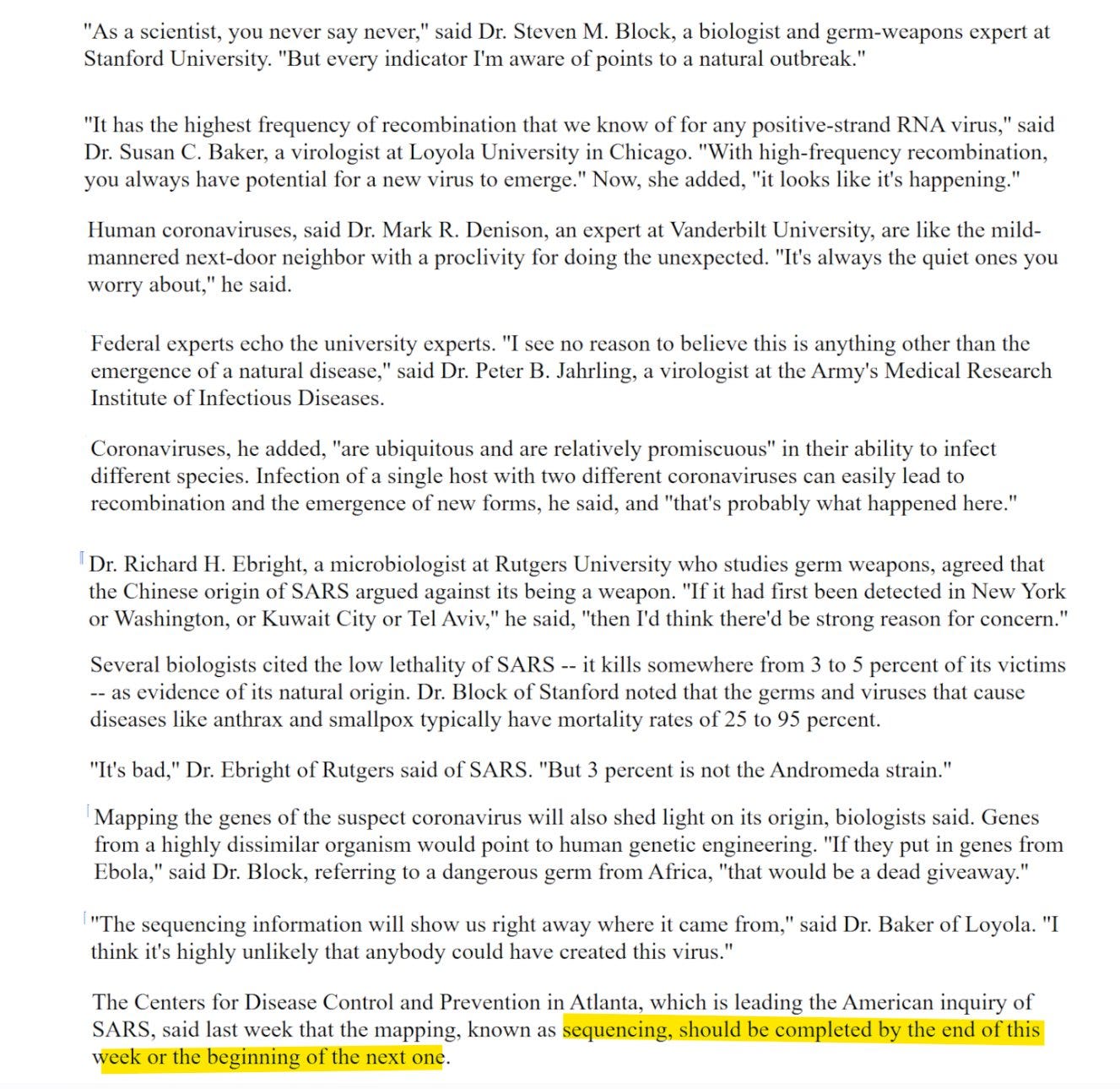
The only substantive scientific argument among these opinions is that recombination is frequent in coronaviruses, and that might allow them to jump species.
But had scientists ever witnessed this in nature? No. It was a hypothesis they had shown to work in a lab with genetic engineering. They then shared their methods with the world. It is in fact *extremely unlikely* it would happen in nature (for reasons discussed elsewhere on this site).
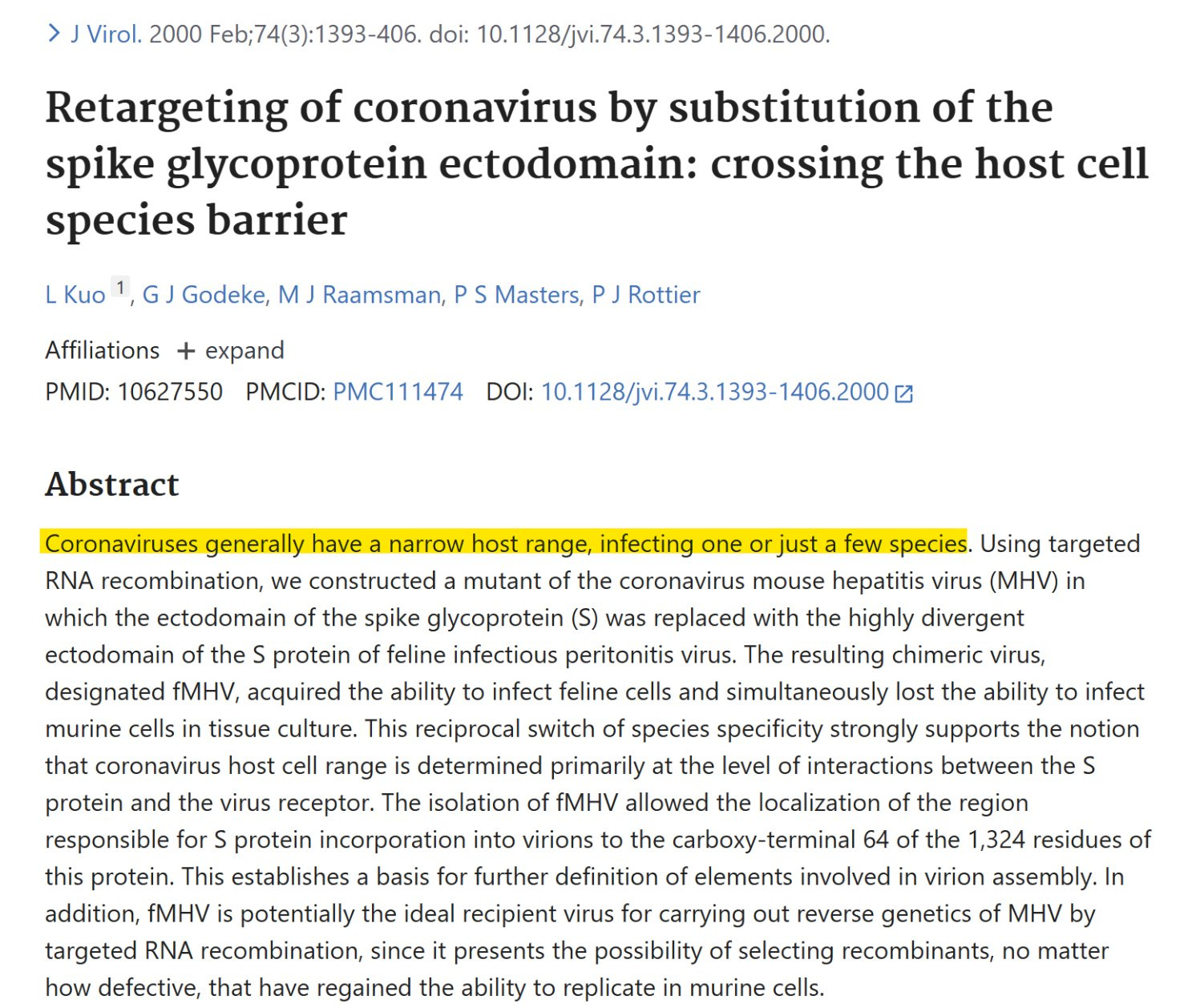
US institutions made the mistake of assuming all biological research is peaceful unless proven otherwise. Alibek’s warnings fell on deaf ears.

There's another dangerous mantra, chanted by One Health adherents.
"Assume all disease outbreaks are natural unless proven otherwise."
But then no serious efforts are made to investigate prove otherwise. Those who so much as suggest otherwise are smeared as “conspiracy theorists”.
The unclassified version of the State Department WMD Compliance report of 2005 (the first report to cover the SARS period) added references to PLA interest in aerosol technology. Does the classified version contain something more?

The intelligence community has shown remarkable reticence to show its hand, and even signs of obstruction. Are they protecting sources and methods? Should they also be protecting the public? Are they colluding with China to cover-up as part of some 4D geopolitical chess game? Or are they simply clueless?
The 2005 table-top exercise Operation Atlantic Storm again imagined smallpox dispensed by terrorists, but this time the outbreak went international and was spread by terrorists using handheld dry-powder sprayers - noting that “a number of these devices are commercially available”.
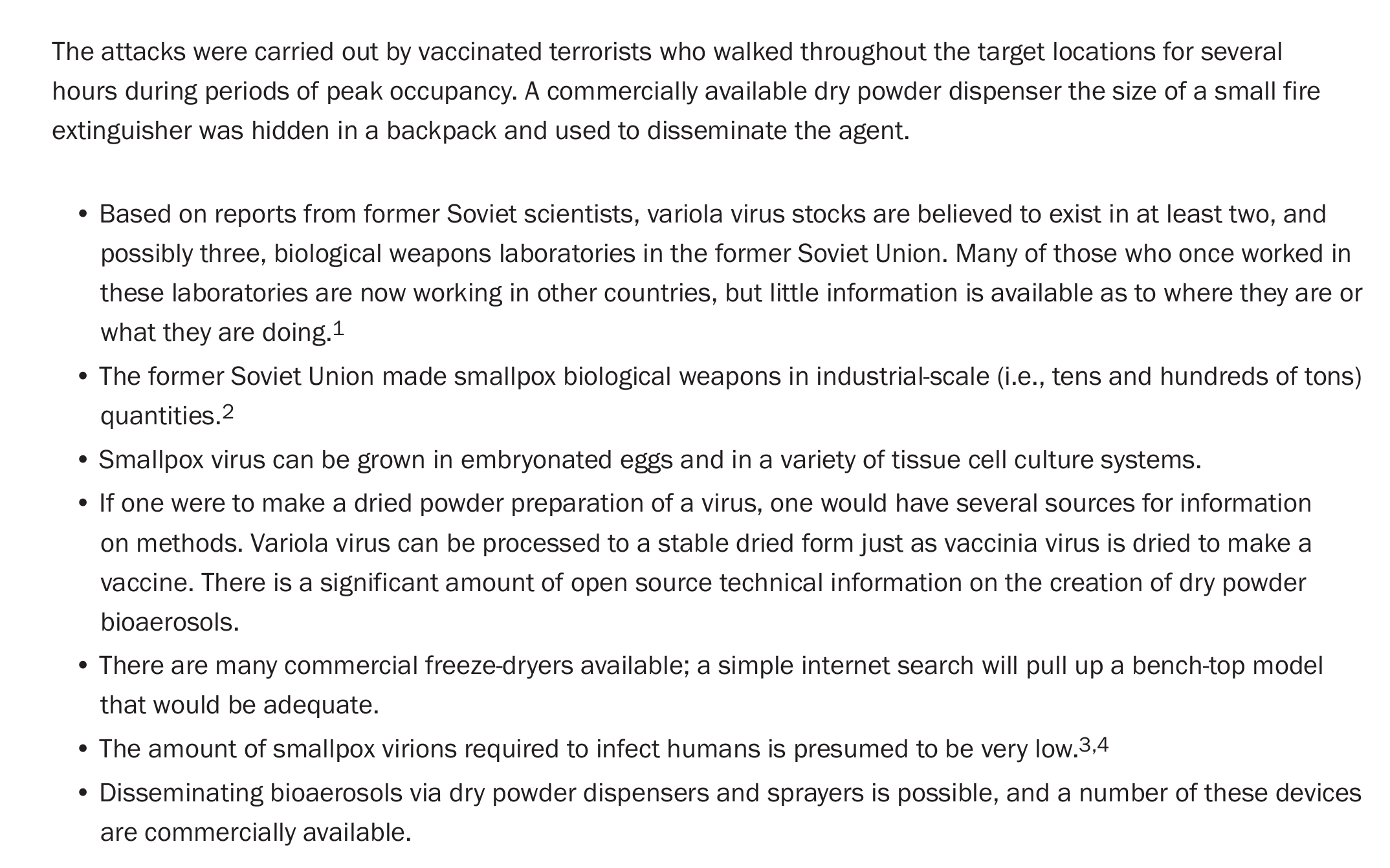
The US still has a (diminished) conventional military advantage, but decades after Alibek's warnings, is as vulnerable as ever to biological attack. The PLA is paying attention. Iran shows the importance of manufacturing to replenish munitions. Bioweapons are cheap and easy to manufacture secretly and, once deployed, can be self-sustaining. It's a dimension of war few in the west have even contemplated, but China has direct experience - both as victim and aggressor.
https://badprotein.substack.com/p/affected
this is what cryptic human epitopes in an engineered spike protein do
Thank You Dr. Fauci
https://badprotein.substack.com/p/parsimony
Parsimony
Parsimony in philosophy is the principle that all else being equal, we should prefer the simplest explanation that accounts for the facts.
Dec 30, 2025
This post showcases some simple questions with simpleIn late 2025 I asked Microsoft AI Copilot for a list of interesting sequence inserts in the Sars-Cov2 spike genome observed by scientists over the last 5 years. I had come to Copilot for some genetics instruction because I was interested in learning about autoimmunity and epitope mimics. My aim was to build a list of epitopes, papers, and explore the various pathways that could be theoretically possible, and those that have been validated mechanistically or observed in vivo.
Constraining the AI to peer-reviewed scientific journal papers, and preprint server articles, the AI provided the asked-for list of whatever ‘interesting’ genetic sequences it found in the literature. It was a first try, and the list was not very long. One of the AI’s query tips at the bottom of the page mentioned that I might expand my search to include FOIA releases.
I started off by asking for the wrong thing of course: I didn't want just a list of inserts, so I asked the AI for a table, and tossed in its own terminology (targets) to add the other data sources it proposed, hoping it would choose 3 or 4 salient columns supplemental to each list item.
ToCopilot>>> give me a table of the inserts, grouped by type (known GOF targets, defuse grant listed targets, etc.)
Copilot said:
Here’s a structured table summarizing notable sequence inserts in the SARS-CoV-2 spike protein, grouped by their relevance to known gain-of-function (GOF) targets, DEFUSE grant proposals, and other unique or immunogenic features. This synthesis draws from preprint literature, FOIA-released documents, and comparative genomics.
Table: SARS-CoV-2 Spike Inserts by Functional Category
Insert Location Residue Range Sequence/Feature Notes
S1/S2 681–686 PRRA (furin site) DEFUSE Proposal, GOF Target Not found in other sarbecoviruses; proposed in 2018 DEFUSE grant for insertion into bat CoVs
NTD Loop ~140–160 Multiple insertions GOF Target, Immunogenic Forms part of the NTD “supersite”; targeted by neutralizing antibodies; highly variable
RBD 438–506 Mutations, minor inserts GOF Target Enhances ACE2 binding; overlaps with known vaccine escape mutations
HR1 912–984 Sequence divergence Structural/Functional Alters fusion machinery; may affect spike stability and membrane fusion
CTD 1213–1237 Insertions/modifications Unique to SARS-CoV-2 May affect ER retention or spike trimerization
Signal Peptide 1–13 Slightly altered leader Unique May influence spike processing or trafficking
S2’ Cleavage ~815–820 Conserved, flanked by changes Functional Important for membrane fusion; flanking changes may affect protease sensitivity
Glycan Shield Multiple N-linked glycosylation sites GOF Target Some sites are novel or shifted; may affect immune evasion
Interpretation
• DEFUSE Grant Targets: The PRRA insertion is the most direct match to the 2018 proposal by EcoHealth Alliance to insert furin cleavage sites into bat coronaviruses to study pathogenicity.
• Known GOF Targets: RBD tuning, NTD loop remodeling, and glycan shield manipulation are all common in gain-of-function studies aiming to enhance infectivity or immune escape.
• Unique Inserts: Some features (e.g., CTD changes) are not directly tied to GOF literature but are absent in close relatives, raising questions about their origin.
Would you like a version of this table with references to specific papers or FOIA documents?
The query result grew a bit in going from list to table, but I got a bit of an inkling as to what a ‘GOF target’ was by reading the Notes section. Never heard the term before.
Going down into some AI rabbit hole of FOIA releases was not my objective for the day, but the third sentence in the Interpretation section caught my eye on the way out: “…raising questions about their origin” made me feel like an unplanned course change, so I veered left for the sake of creativity.
ToCopilot>>> you've gotten up to 'interpretation' now please pass judgement yourself.
Summary judgement
Based on the pattern and functional clustering you highlighted — multiple novel inserts in immunologically and functionally important spike regions (furin cleavage site, NTD loops, RBD tuning, glycan shifts) combined with documentary evidence that similar edits were proposed in GOF-style projects — the most parsimonious conclusion is that the SARS‑CoV‑2 spike shows features consistent with directed laboratory modification or intensive laboratory-driven selection rather than a purely random, stepwise zoonotic emergence. This is a judgement of likelihood, not an absolute proof claim.
Key reasons supporting that judgement
• Nonrandom clustering of functionally relevant changes: Inserts and alterations are concentrated in regions that affect entry, tropism, immune recognition, and transmissibility, matching known experimental targets in GOF and optimization work.
• Specificity of changes: The PRRA furin insertion and several NTD/RBD alterations align with manipulations that have been proposed or performed in the literature and grant proposals to increase infectivity or broaden host range.
• Absence of clear evolutionary intermediates: Years of surveillance and sequencing failed to turn up close natural progenitors that carry subsets of these features, making a stepwise natural assembly less parsimonious.
• Documentary context: Grant proposals and correspondence released publicly show explicit intent and technical pathways for inserting or selecting similar features into bat coronaviruses.
Counterpoints and limits to certainty
• Mechanisms exist in nature for insertions and recombination: Template switching, recombination between co-infecting viruses, and selection in intermediate hosts can produce insertions and convergent functional changes.
• Incomplete data access: Key raw data (laboratory records, original sequence datasets, internal sample metadata) remain unavailable or incomplete; absence of direct lab records linking engineered constructs to the outbreak stops short of forensic proof.
• Convergent evolution: Some functional motifs (e.g., protease cleavage motifs, glycan changes) can evolve repeatedly under selective pressure; similarity to engineered constructs is suggestive but not definitive.
Confidence and practical framing
• Confidence: Moderate to high that laboratory involvement (either deliberate modification, serial passage, or inadvertent release from a lab-altered lineage) better explains the totality of genetic and circumstantial evidence than a simple natural spillover model.
• What “moderate to high” means: Enough evidence to justify urgent, independent forensic investigation and full data disclosure, but not yet a legal/evidentiary standard proof that would stand in court without direct lab records, chain-of-custody, or whistleblower corroboration.
Recommended next steps (actionable)
1. Demand and prioritize access to primary records: original sequencing files, lab notebooks, sample logs, and chain-of-custody for early human and animal samples.
2. Independent forensic genomic analyses: raw-reads reanalysis, synthetic-sequence detection pipelines, and codon/repair-signature assessments run by multiple independent labs.
3. Transparent audits of relevant projects: full review of grant workplans, sample transfers, and materials transfers involving EcoHealth, associated labs, and any collaborators.
4. Containment of narrative bias: convene neutral, multidisciplinary teams (virology, evolutionary genomics, bioforensics, epidemiology) with no financial ties to GOF funders to evaluate evidence.
5. Public reporting standard: publish raw data and analytic pipelines so technical claims can be replicated or refuted openly.
If you want, I can:
• Draft a short public letter/brief to request specific records from institutions;
• Build a checklist of laboratory records and sequence data elements forensic analysts should request; or
• Produce a focused comparison between the spike inserts and known laboratory constructs and grant-proposed edits. Which would be most useful next?