


Recently David Morens has been charged for using a personal Gmail account, Vincent Munster with failing to declare deactivated (i.e. harmless) samples to US Customs, Peter Hotez with making unwanted advances to a female scientist. Peter Daszak was debarred by HHS and sacked by EHA for compliance failures over his supervision of WIV. Ralph Baric has been forced into early retirement, debarred by NIH for misleading over whether experiments met the definition of “gain of function”.
I have little sympathy. Along with other misdemeanors, they’ve been part of a conspiracy to suppress discussion of an artificial origin of SARS-CoV-2. They’ve behaved shiftily from the outset, perhaps because they sensed the mob would inevitably turn their pitchforks on them. Their blanket rejection of the possibility of an artificial origin is unscientific and implausible. It looks like a cover-up and smells like a cover-up. But that doesn’t mean they engineered it. After six years of digging, there’s still little evidence for that. Meanwhile there are strong leads pointing to a PLA bioweapon that no-one in government seem interested in pursuing - not a single maverick senator. The truth might be too hard to digest.
Through the saga most of us have had to put trust in scientists who seem to share our values or common enemies. This is a necessary heuristic. Keeping abreast of all facets of the science is difficult and time consuming for experts - nigh impossible for laypeople. While some scientists have been unfairly maligned and misinterpreted, others have been undeservedly elevated to hero status. Scientists are perceived as two-dimensional Marvel characters - some are good, some evil, some dependable, some mad with hubris. The truth is more complex.
Ebright the Inciter

Richard Ebright is a hero to many lab-leakers, he pulls no punches when it comes to the natural origin camp. Bad-mouthing fellow scientists is nothing new for him. Bioscience saw huge and rapid increases in funding early in the millennium due to the over-hyped threat of bioterrorism. Ebright took a different line, arguing rogue US scientists posed a greater threat than foreign bioterrorists, and increasing funding to work on BW agents was not only wasteful - but dangerous.

At root, his motivation may have been money and professional envy. With the increase in funding for biodefense, there was a diversion of funding away from his own field.
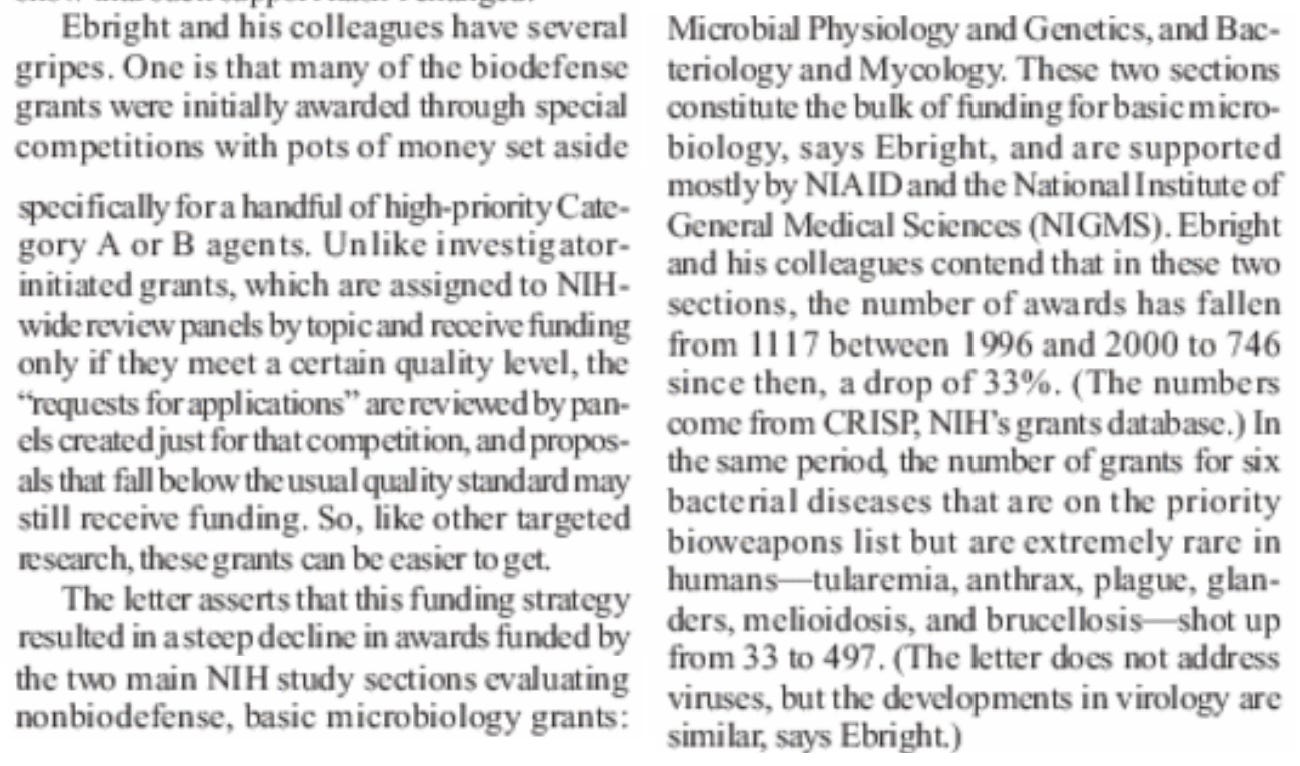
He still holds a deep-seated grudge against NIH/NIAID, and any scientists who benefited from the biodefense splurge by studying those listed BW agents.

Whatever the merits of his argument about funding priorities (it’s worth having), it has blinkered him to the very real threat of genetically engineered BW (except that from rogue US scientists).

When SARS emerged, he was quick to reject it was a BW. Too quick. It hadn’t even been sequenced. The mere fact it emerged in China was enough for him.

And - to him - it didn’t seem lethal enough. This is ill-informed intuition, not scientific analysis.

He was almost as hasty in rejecting the idea that SARS-CoV-2 could be a BW (although this time at least the sequence was known).

But he left open the possibility of a lab-leak. If proven, this would vindicate his long-standing conjecture that funding biodefense labs was a mistake.

He still sees BW agents as a threat - but only from the US scientists employed to defend against them.

Ebright’s certitude - or hubris - makes him attractive to the media looking for a provocative one-liner rather than nuanced discussion. Although they cite him as a scientific expert, his arguments are rarely based in science, but motivated reasoning. He has never authored a paper or offered any substantive analysis to support his stance. He may just be another opinionated, boorish loudmouth with an axe to grind - but he has been given a platform.
Ebright eventually admitted the possibility of an engineered virus only after the leaked DEFUSE proposal superficially appeared to confirm his long-standing bias against US biodefense scientists and NIH/NIAID policies. But the DEFUSE proposal was rejected, and it does not propose to do the things he claims it does. The devil is in the detail (see below).
A Lukewarm Defense of Ralph Baric
No scientist has drawn more pitchforks than Ralph Baric. He has already been “convicted” of illicit gain-of-function research, he has long-standing connections to WIV and an unhealthy interest in furin cleavage sites. The offense for which he was recently punished relates to the 2015 experiment in which his student, Vineet Menachery replaced the spike of SARS with that of WIV’s SHC014. This took place during the gain-of-function pause. Baric tried to argue it was “retention-of-function”, rather than “gain-of-function”.
Fauci seemed not entirely convinced by this reasoning but took no action. New NIH management, unburdened by personal culpability have taken a harder line and debarred him. While this might explain some of Baric’s squirming over Covid origins, it’s not evidence he engineered it. It might be that it’s the only reason for his discomfort.
Some (e.g. Ebright) claim that even if Baric wasn’t the engineer of SARS-CoV-2, then he was the architect, who drew up the plans which allowed WIV to engineer it themselves. There’s a perception that US bioscience and technology is far ahead of China, and that Baric is the pinnacle of his field - uniquely able to design such a pathogen. His accusers often refer to:
His “No se’em” reverse genetic systems which can be used to assemble an artificial virus leaving no evidence of engineering.
The DEFUSE proposal to introduce an FCS.
DEFUSE being a blueprint for engineering SARS-CoV-2.
His past experiments with proteolytic cleavage.
His past collaborations with WIV.
These claims need close examination. There is important nuance, not obvious to laypeople - but we might have expected someone like Richard Ebright to understand and communicate to his followers.
No need for “No Se’em”
Baric’s interest is in understanding the spillover potential of zoonotic coronaviruses, with an aspirational goal of a broad-spectrum vaccine effective against known and potentially novel coronaviruses. His techniques are attuned to this goal. He tries to minimize artifactual mutations resulting from lab procedures so as to be able to causally link any change in function to mutations introduced intentionally. This is the rationale behind “No Se’em” - it’s not to hide nefarious engineering.
These fundamental techniques are in the public domain, and have been for decades. Anyone can use them, you don’t need Ralph Baric. Each RGS is specific to a backbone virus. Creating and testing an RGS for a novel backbone virus takes some time and effort. If a novel virus isn’t already known to have human infectious potential - would it be worth the effort?
There are also alternative techniques that are in some ways less cumbersome. Spanish scientist Luis Enjuanes developed one such alternative for coronaviruses at around the same time as Baric (1999-2002) using Bacterial Artificial Chromosomes (BAC), rather than Baric’s in-vitro ligation. This technique appears to have been preferred by WIV, who attempted to engineer a chimera using BACs as early as 2011. They published an RGS for WIV1 in 2016 based on BACs. There’s no record of them ever using Baric’s method.
PLA scientists Zhou Yusen and Tong Yigang developed their own systems for seamless assembly using PCR and synthetic DNA. A more recent PCR-based technique, CPER, is now the preferred method of many scientists. Although some caution such techniques can introduce unwanted random mutations, this is of no concern to a BW scientist introducing random mutations deliberately with directed evolution.
DEFUSE did NOT propose to insert an FCS
DEFUSE discussed introducing, not inserting cleavage sites. The distinction isn’t mere pedantry. The FCS in SARS-CoV-2 is particularly suspicious because it is formed by a four amino acid insertion. If it had been introduced by a substitution mutation or two, the case for it having evolved naturally would be far stronger. It would be out of character for Baric, and not in accordance with DEFUSE to insert an FCS. You can’t hope to understand cross-species evolution if you engineer a change to function in a way that is unprecedented in nature.
There have been past experiments in which an FCS was introduced to SARS-CoV. These either left the S1|S2 loop the same length or added a single amino acid in order to align with other human coronaviruses that have an FCS. There is also a 2015 experiment in which an FCS was introduced into MERS related bat virus, HKU4 allowing it to infect human cells. This was accomplished with one substitution at the S1|S2 junction, and another to delete a glycan site which was blocking cleavage by cathepsin (the latter proved the more important factor).
There is only one relevant experiment I know of in which a four amino acid FCS motif was inserted - but not into a virus. It is interesting though, due to the participation of Shibo Jiang and Lanying Du - who have PLA connections.
Not only has the FCS uniquely aquired by insertion, the upstream sequence QTQTNS is also anomalous compared to the other sarbecovs published before SARS-CoV-2 emerged (RaTG13 and the GD pangolin CoV were published only in late Jan 2020).

It’s difficult to see how this flanking sequence may have evolved from an otherwise well-conserved motif. Note also the difference between the two pangolin CoVs - GD and GX. The GX sequence looks like it may have evolved naturally from a regular SARS-1 like CoV, while GD looks to have been formed from another unlikely “recombination”. But they align differently in other regions of the genome (more on this in a future article).
There’s no reason Baric, or any scientist studying natural evolution would choose such an anomalous sequence as this to work with. Functionally and structurally, it is also very different. Multiple hydrophobic amino acids (H/T/I/V/L) have been replaced with flexible, hydrophilic ones (Q/N/S). With an FCS inserted, this has the effect of exposing it in the solvent on a flexible loop, enhancing interactions with host factors. This is function a BW engineer would seek. The FCS has been observed to have interactions with other molecules aside from furin.
The big IF…
The paragraph in the DEFUSE proposal discussing furin cleavage is ambiguous at first glance. It warrants careful parsing.
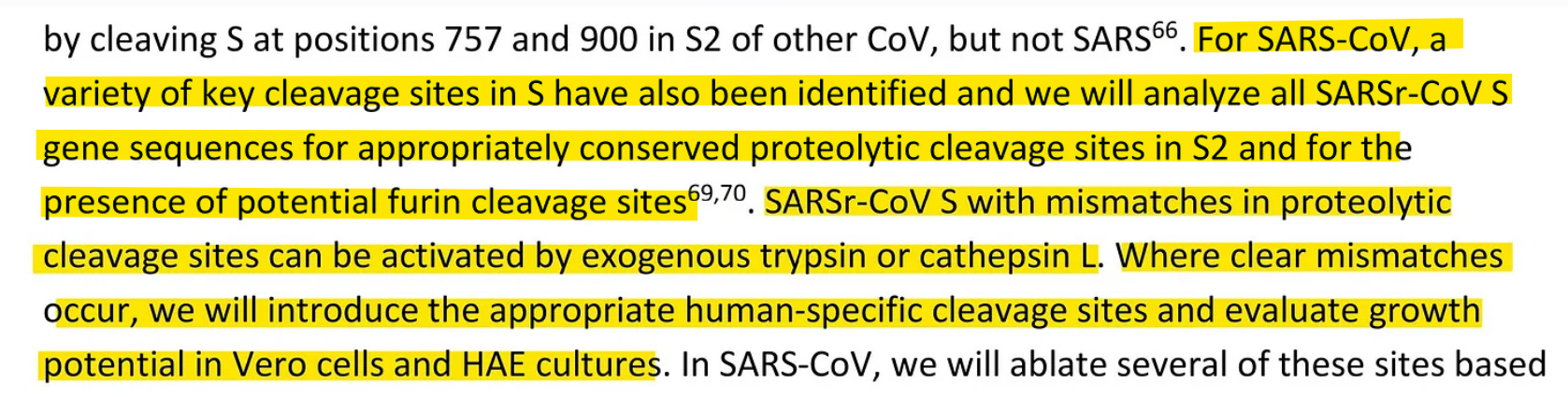
Although a furin site is a type of proteolytic cleavage site, the second half of the highlighted sentence is “…can be activated by exogenous trypsin or cathepsin L”. Trypsin requires only a single exposed R to cleave, while furin needs an RXXR motif. Trypsin will cleave at a furin site, but furin will not cleave at a single R. Cathepsin L has more complex requirements but is also less specific than furin. Trypsin and cathepsin cleavage sites near S1|S2 are conserved in almost all sarbecovs. In the paragraph above “Where clear mismatches occur…” refers to the conserved trypsin/Cathepsin L sites near S1|S2, and another site further downstream (S2’). There are no furin sites in any known sarbecov for there to be a mismatch, so this does not declare an intention to introduce them.
When working with cell cultures simply adding a few drops of trypsin cleaves the spike efficiently, introducing a furin site is unnecessary.
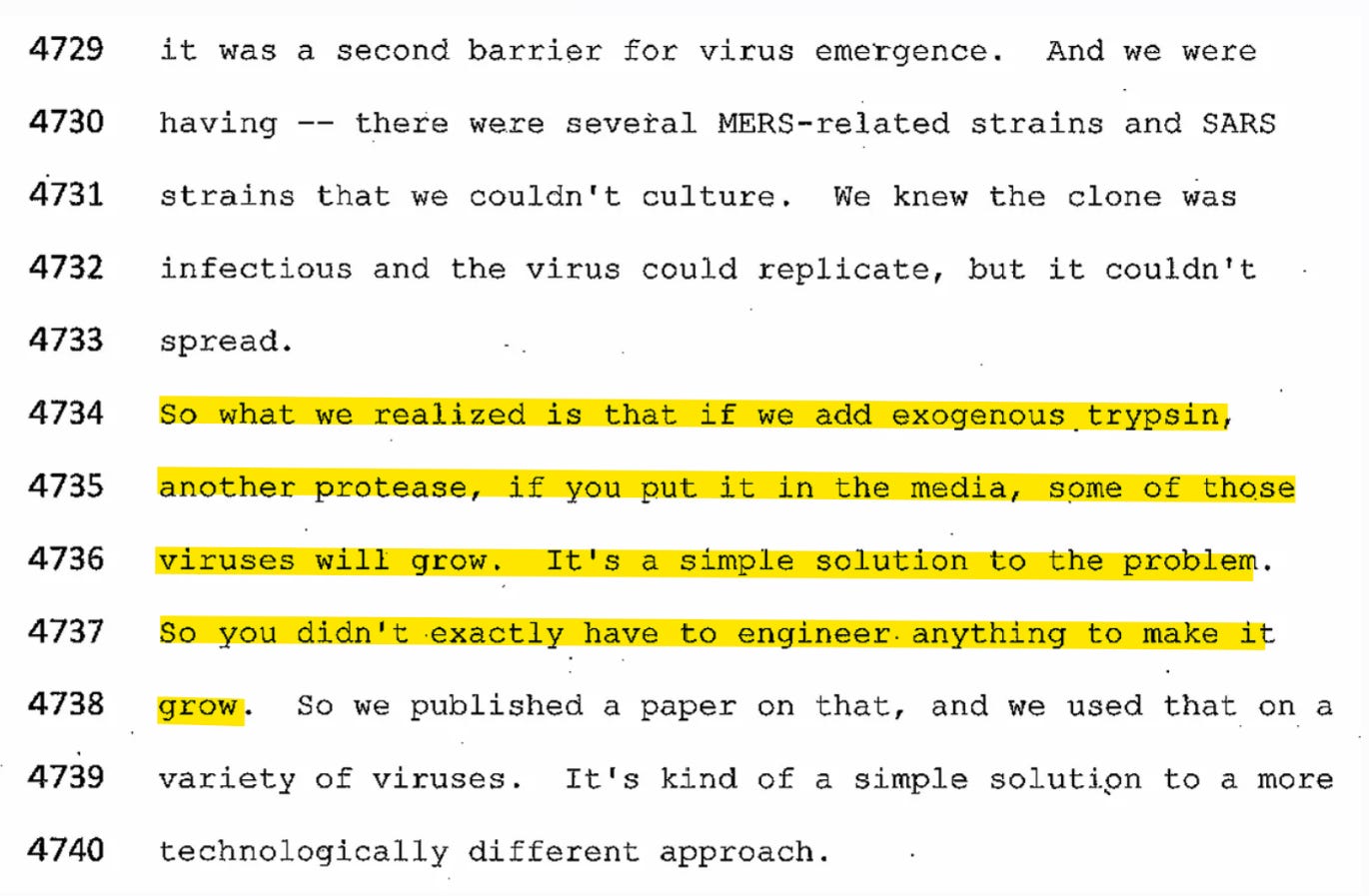
This method has been used extensively in coronavirus experiments, long before Baric’s 2019 paper. It’s a lab shortcut, not an accurate model for respiratory infection, as trypsin isn’t expressed in human airways.
Confusingly, the preceding sentence specifically mentions furin.

Baric tried to clarify this in his testimony to the Covid Select committee but may have made matters worse.
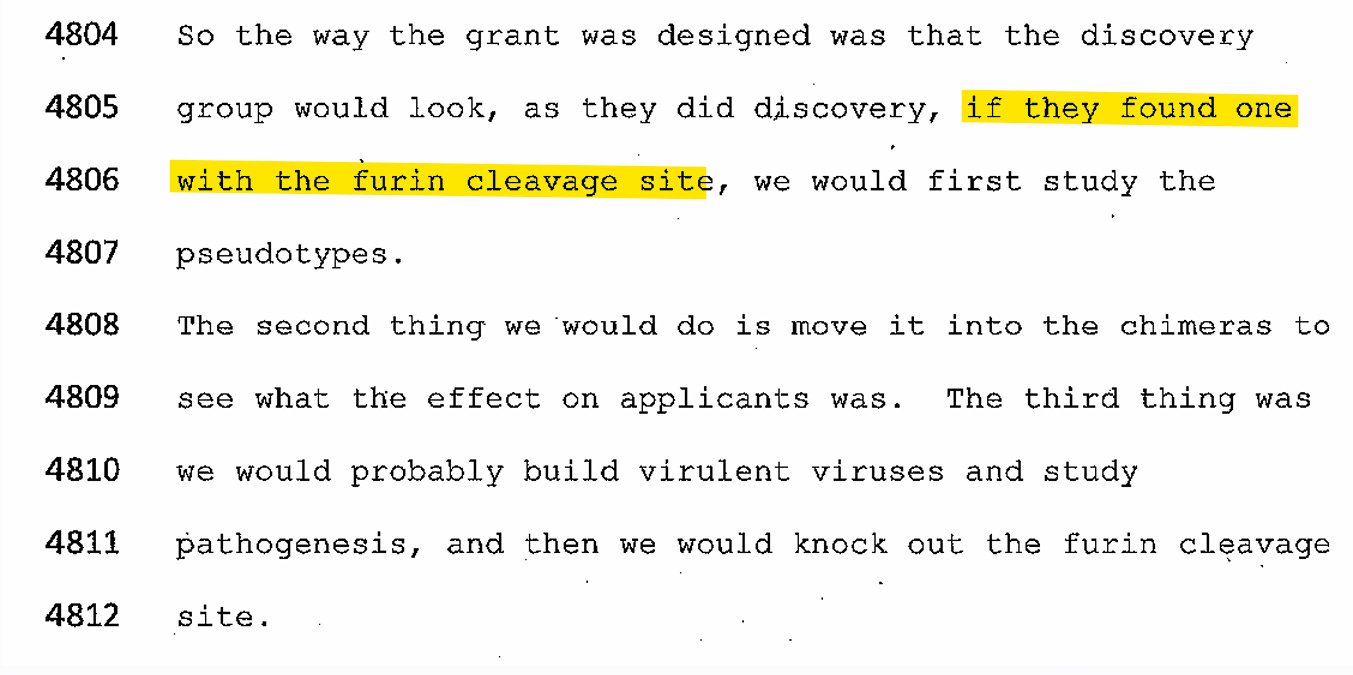
The key is IF they found a sarbecov with a furin cleavage site, then other experiments would follow using the spike of that virus. This is consistent with the verbiage of DEFUSE. But it’s a big IF since such a virus still hasn’t been found in nature. Of course, some might speculate that they went ahead and introduced one anyway - but it’s untrue to claim that DEFUSE proposed to do this. The first step would in fact have been to delete the FCS from the virus in which it naturally occurred, to see if it was enhancing infectivity.
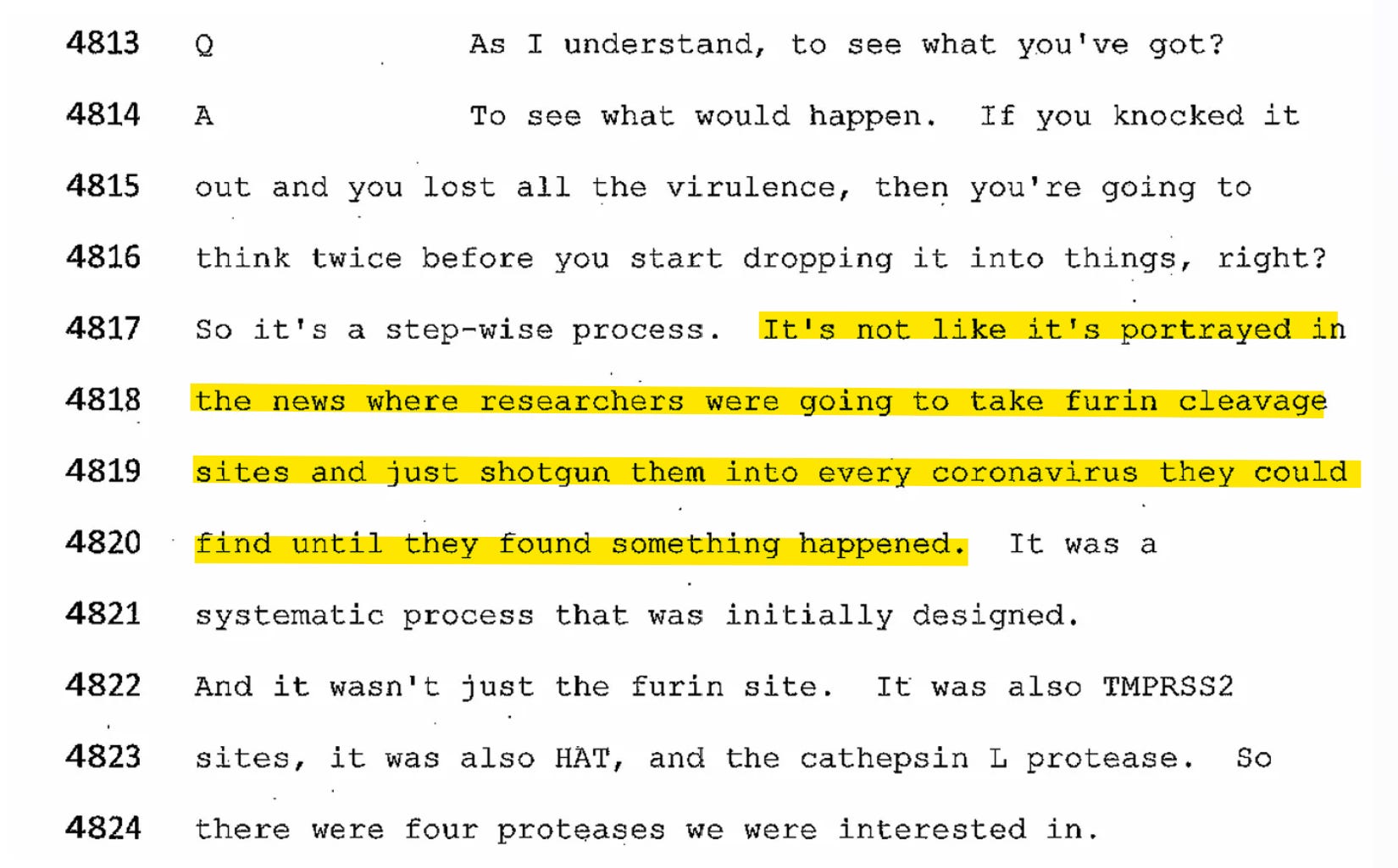
What is a “blueprint” anyway?
It’s often claimed that DEFUSE is a “blueprint” for SARS-CoV-2, but this is just a trope. If taken literally as a specification there’s no way you could make SARS-CoV-2 from the DEFUSE document. They proposed to make chimeras using specific SARS-1 related coronaviruses which had already been characterized: RsSHC014, WIV1, HKU3, SARS MA - however you slice and splice these you don’t end up with SARS-CoV-2.
But what if we interpret DEFUSE loosely, as a guide to experiments that might also be applied to unpublished novel viruses? That defies the point of working with well-characterized viruses that have already been shown to have the potential to infect and transmit between humans and for which an RGS has already been designed. There’s a lot of work to add a new virus to the list, and if Baric had been involved there would be a paper trail.
Coincidentally (perhaps), the day after the DEFUSE proposal was submitted, the PLA’s Nanjing Command Medical Research Center submitted sequences for two novel bat viruses ZC45 and ZXC21 - the first SARS-CoV-2 related viruses ever published. They had already conducted infectivity tests and managed to infect immune deficient mice with these via intracranial inoculation. And these viruses were almost exactly 20% divergent from SARS, as Baric had expressed interest in. Curiously, WIV also had unpublished spike sequences 99% similar to ZC45. These remain in suppressed mode on GenBank. What to make of this?
Baric is not as prolific as he seems
Much of the work that is attributed to Baric (such as research on the FCS of MERS) was in fact undertaken at other labs - particularly Fang Li’s lab at University of Minnesota. Fang Li supervised several PhD and postdoc students who originally hailed from Wuhan. He was also working closely with Zhengli Shi and Jie Cui at WIV - where he was previously a visiting fellow. He also worked with PLA connected Lanying Du and Yusen Zhou. Somehow he has avoided the attention of Covid Select and other enquiries.
Baric is occasionally credited as an author on papers involving these authors, where his contribution may have be minimal - perhaps no more than making a few comments on a draft. One example of this comes from Fang Li’s FOIA-ed emails.
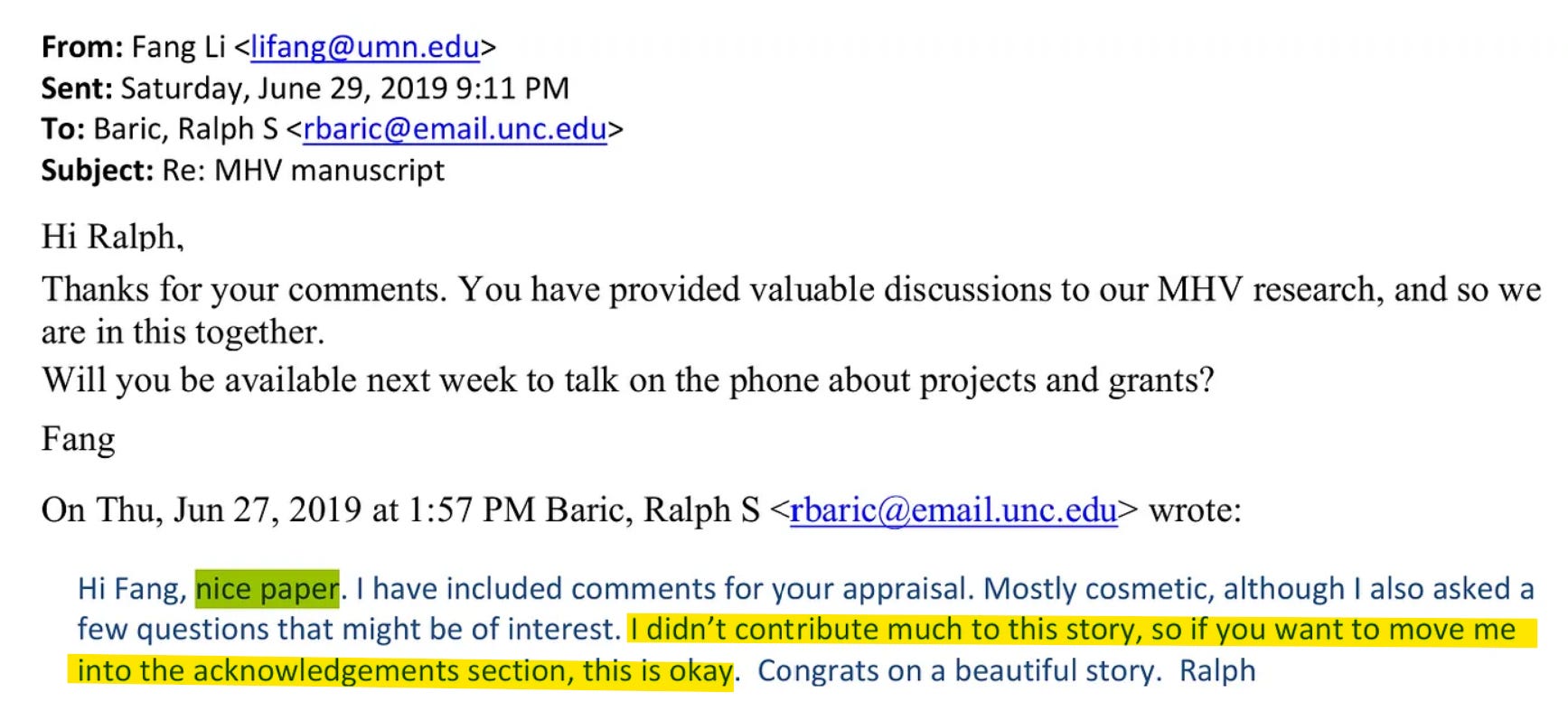
The authors that matter most on a scientific paper are those at the listed first - who perform the hands-on work, and those at the end - who conceive and supervise the work. Baric is in the middle of the author list on several papers sometimes attributed to him.
At Covid Select, Baric claimed not to know Lanying Du or Yusen Zhou.
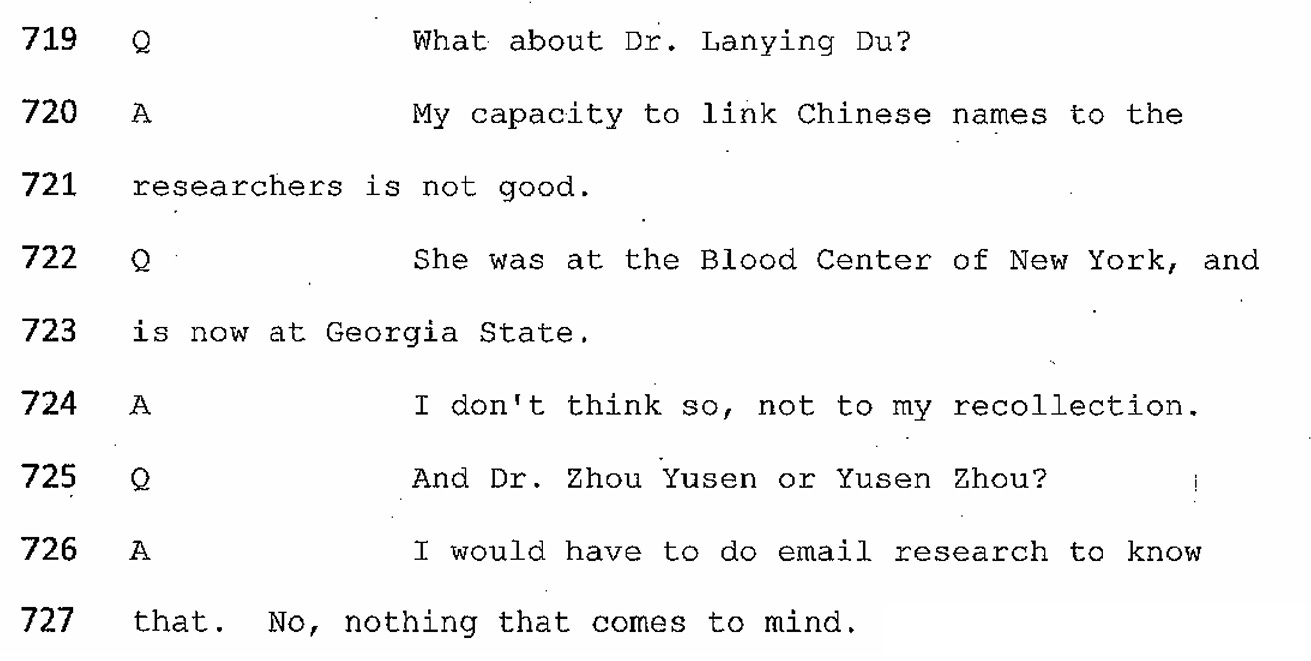
How close is Baric to WIV?
The paper which is most used to link Baric and WIV - the one which worried Fauci - is the 2015 experiment in which Vineet Menachery made chimeric constructs using WIV’s “discovery” RsSHC014. Baric has stated under oath that almost all the work, including the engineering of the chimera took place at UNC, with little involvement from WIV. WIV’s main contribution was to supply him with the RsSHC014 sequence - which was unpublished at the time.
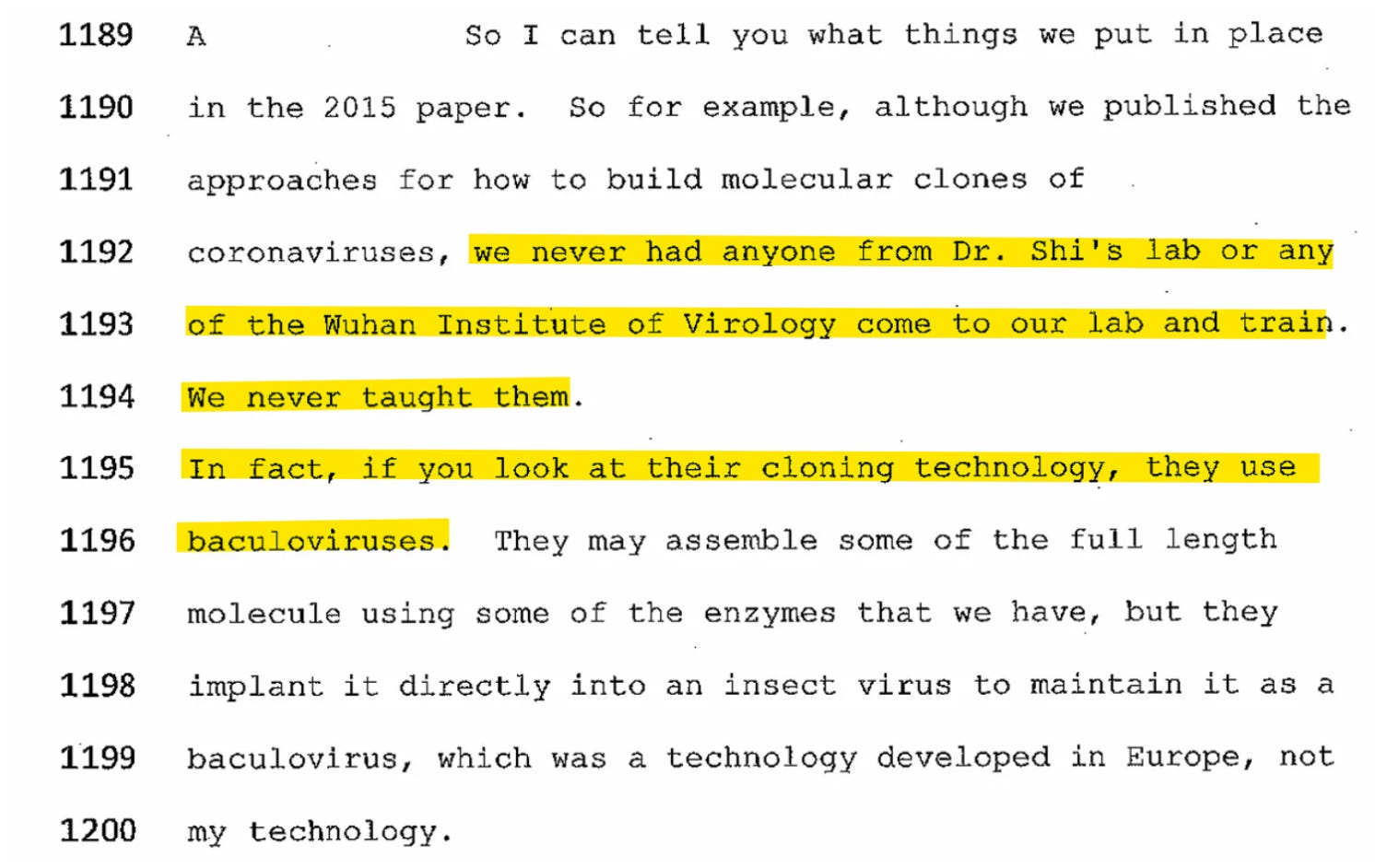
The timing is interesting, Baric claims WIV gave him the sequence in April, 2013. He then wrote a letter in support of an EHA/WIV proposal to NIH (on which he wasn’t listed as an investigator). Though Baric and WIV have discussed further collaborations since then (including DEFUSE), there’s no evidence of joint work taking place.

What (if anything) is Baric covering up?
On 28th January 2020, Baric provided a power point to ODNI for a presentation to the IC. There are two consecutive slides discussing the origins. One contains a section “Accidental Release”. The other is the same, but missing this section. His slides apparently needed approval before his presentation.
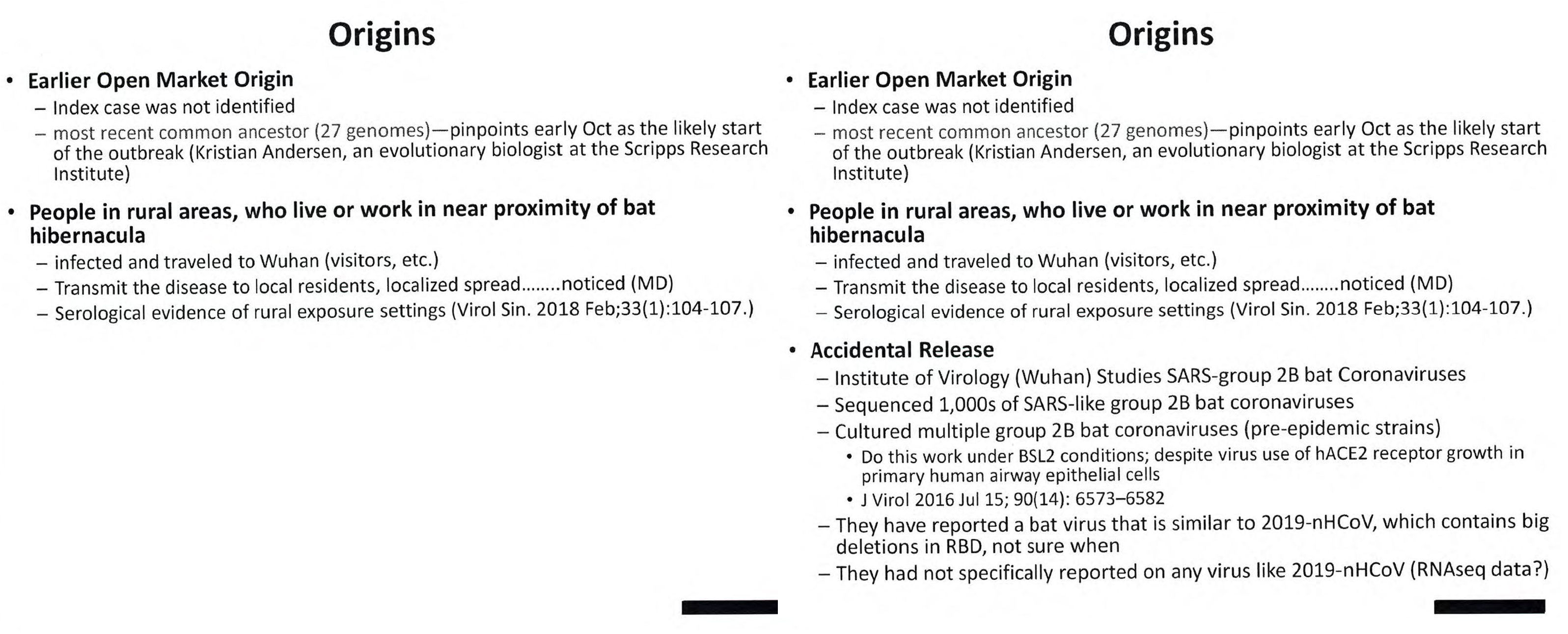
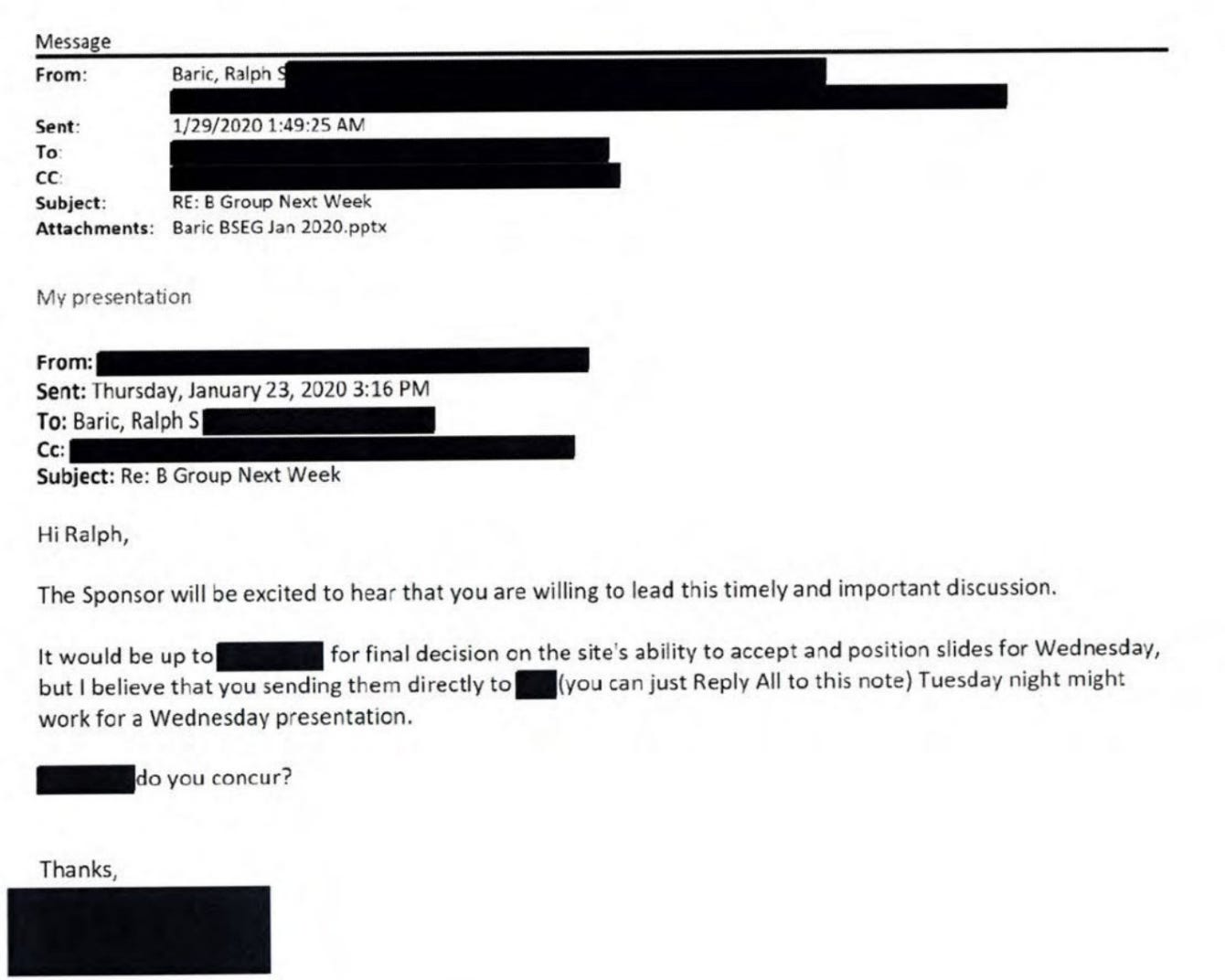
Was Baric asked to provide an option to exclude this discussion by his IC “sponsor”? A CIA whistleblower, James Erdman III, recently testified that ODNI asked for a version of Baric’s PowerPoint with this slide removed, but it seems the initial presentation to the IC was uncensored. The “Accidental Release” slide clearly points a finger at WIV, but deliberate release was never considered.
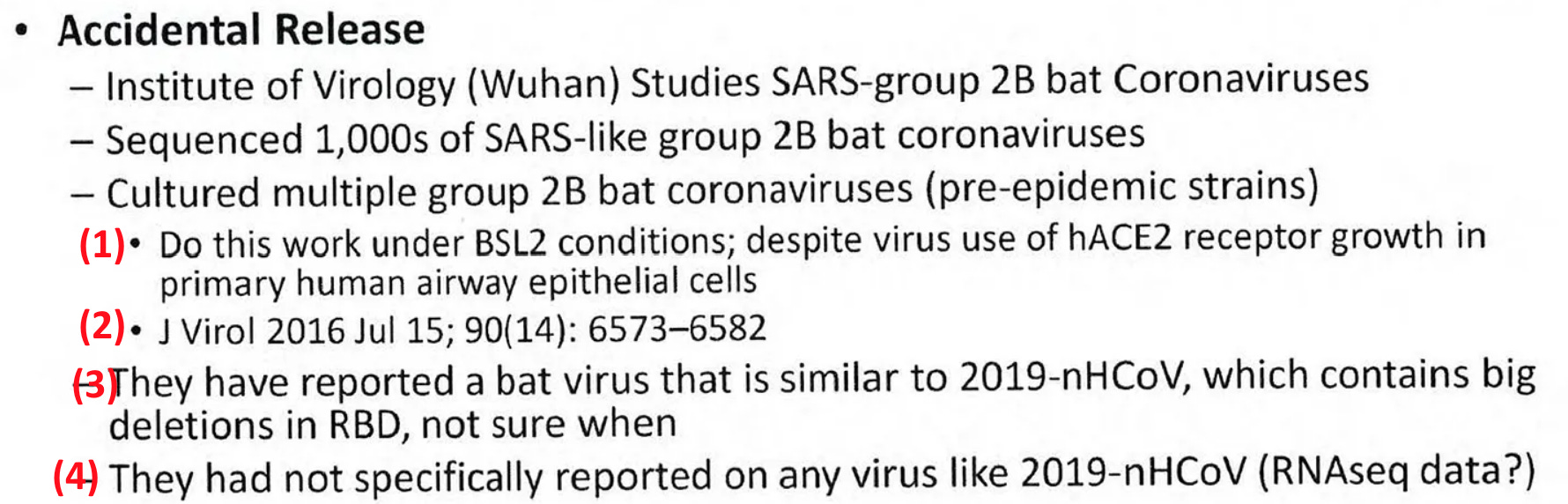
“J Virol 2016…” is the paper in which WIV published their RGS.
“Do this work under BSL2 conditions…” alludes to WIV’s poor biosafety practices - a criticism also made in the DEFUSE draft proposal, and in private correspondence to Daszak.
The virus with “big deletions in the RBD” is likely ZC45/ZXC21 (although this was published by the PLA, not WIV).
It seems Baric didn’t know about RaTG13 at the time, it isn’t mentioned in the presentation. The sequence was available on GenBank only on 29th January, so wouldn’t appear in BLAST results.
On 31st January, Pradhan et al posted their “HIV inserts” pre-print based on the comparison between RaTG13 and SARS-CoV-2, one of these inserts was the FCS. Separately, Kristian Andersen, and his colleagues also noticed the anomalous FCS insert and contacted Fauci. Fauci sent his assistant an email with a pdf attached titled “Baric, Shi et al - Nature Medicine - SARS Gain of function.pdf”. This is not the title of the paper obviously, but highlights Fauci’s suspicions. Baric was hauled in for questioning.

Two days later, Andersen complained in an email to Robert Garry that Baric had tried to shut down discussion of genetic engineering during a call convened by NASEM to discuss the origin. Testifying to Covid Select, Baric seemed confused about this. He asked to have Andersen’s email read out three times, then denied he would have said such a thing.
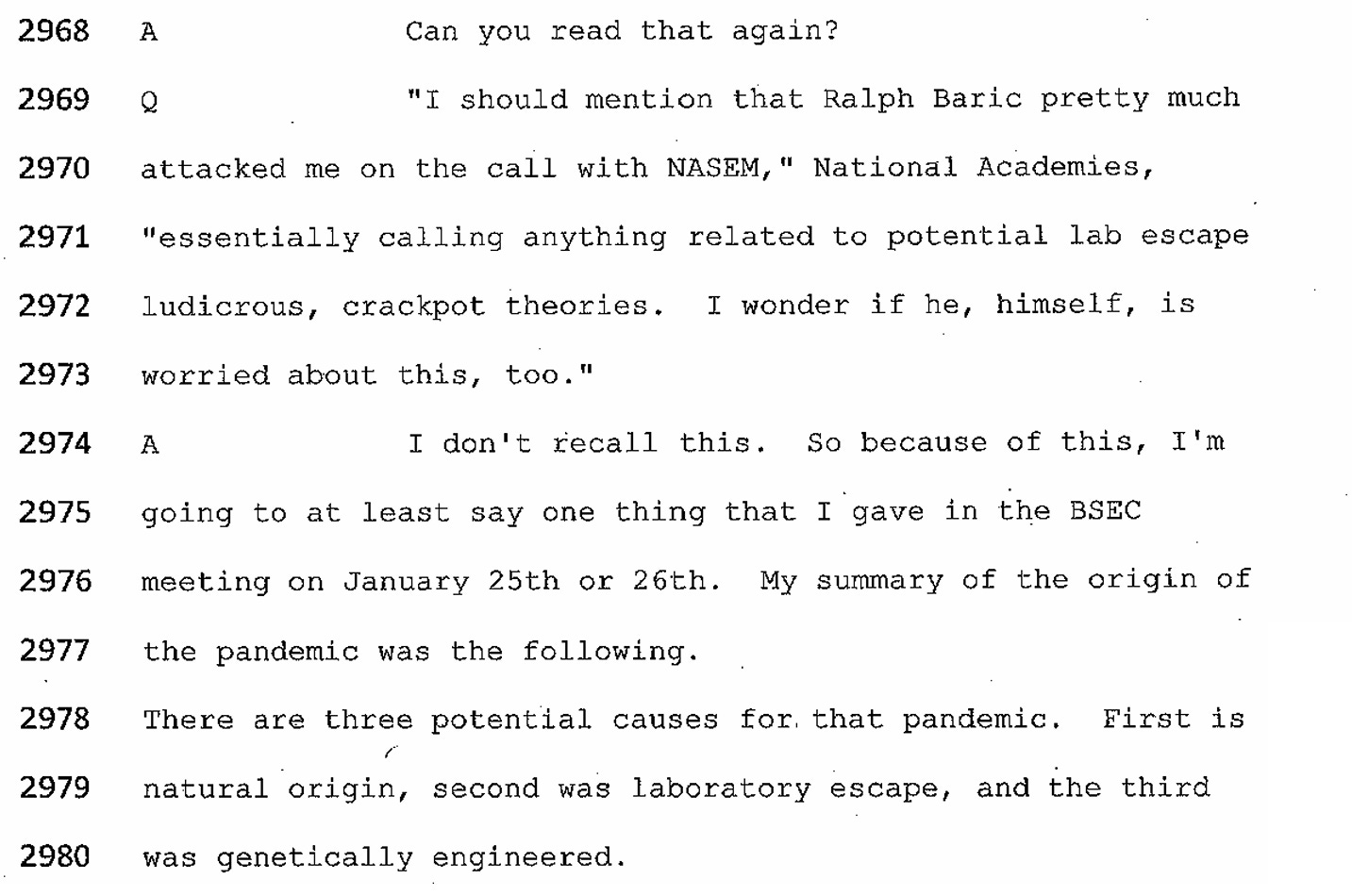
Baric concurs with the Proximal Origin authors that there is “no evidence the virus was a lab construct” but disagrees that “a laboratory scenario is implausible”. He appears to be saying an artificial origin is difficult to prove, rather than ruling it out.
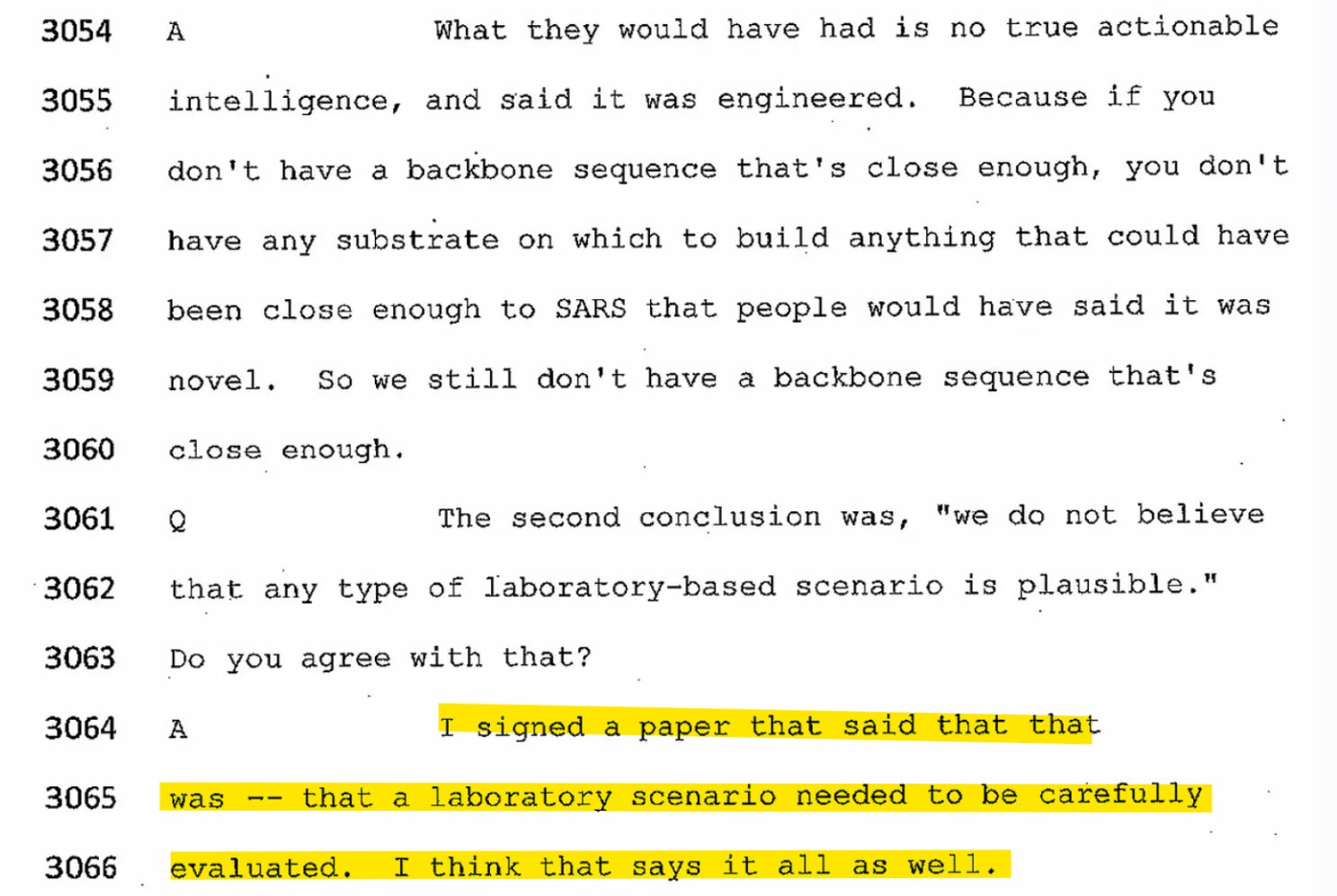
Bizarrely, Andersen emailed the NASEM group following the call. He labeled the idea the virus was “engineered with intent” as “crackpot theories” and parroted Ron Fouchier’s arguments that a known backbone with an existing RGS would have been used. Andersen had previously weighed and rejected these arguments. He seems to have found himself out of his depth, and intimidated by heavyweights Fouchier and Baric, adopted their arguments.


Unlike the Proximal Origin authors who were capricious, duplicitous and spineless, Baric was at least consistent in his views. But that doesn’t make him right. He also has a blind spot.

The foundation of his confidence is that virtually identical RBDs exist in natural bat viruses. This must be questioned. Baric has considered the scenario of accidental release, but not of an engineered BW. In a BW scenario, an extensive effort to misattribute the origin should be expected. That may involve disseminating fraudulent sequences, or even synthetic RNA.
My contention is this is exactly what happened, it was even planned in advance (to a degree). Science should be able to expose such fraud - if it is not restricted from asking uncomfortable questions.
SARS-CoV-2 related bat viruses, such as RaTG13, the pangolin coronaviruses, and BANALs:
exhibit highly discrepant evolutionary dynamics,
have implausibly serendipitous provenance,
were never discovered in 15 years of intensive bat sampling in China and South-East Asia,
don’t seem able to infect their purported hosts (based on ACE2 affinity in vitro/silico).
In an interesting twist, there has been a recent effort to set up a horseshoe bat colony in the US so as to be able to test whether viruses like the BANALs can infect bats in vivo. This may have helped ascertain their authenticity. This effort has been resisted by some concerned about “risky gain of function” research. And the scientist heading the project has been tarnished by a recent “biosafety” scandal. That scientist is Vincent Munster, a Dutch national, who now faces deportation.
Coincidence?
Perhaps.
- Thanks for that very erudite analysis - but I still admire both you and Ebright for keping up with the facts and analysing them
Your analysis relies heavily on the assumption that the virus that spread is identical to the one that was engineered. However, there were selection steps, whether in laboratory animals or in humans, before the virus was analyzed.