

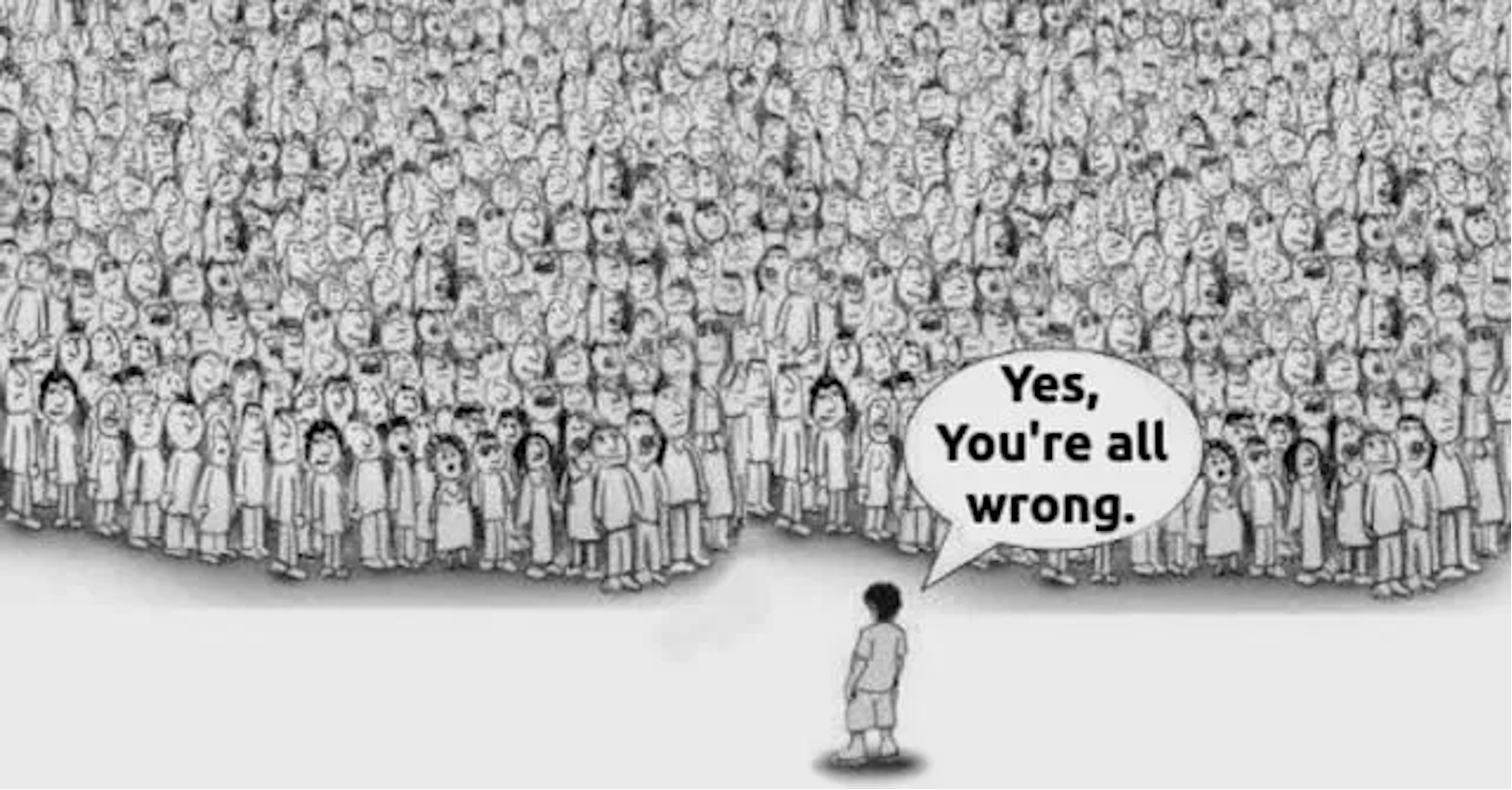
Some lab-leakers try to downplay Chinese military involvement in the origin of Covid. They argue it’s speculative and a distraction from issues like biosafety and gain-of-function experiments. But it’s neither speculative, nor peripheral. The PLA have been at the forefront of coronavirus research in China - and even in the US. Why try to obfuscate this? Partly because lab-leakers are concerned for their image. They want to be taken seriously by “serious” scientists, and those scientists say that bioweapons are a “conspiracy theory”.
Ironically, many “serious” scientists owe their careers to the tsunami of funding that inflated the sector during the millennium-era panic over bioterrorism. After the costly failure to confirm BW in Iraq and Afghanistan, it seemed to some the threat had been over-hyped - perhaps even deliberately. A premature consensus formed among scientists that SARS had emerged naturally by zoonosis - even before the virus had been sequenced, let alone a zoonotic host identified. Their view was shaped by misconceptions about bioweapons and geopolitics rather than scientific evidence.
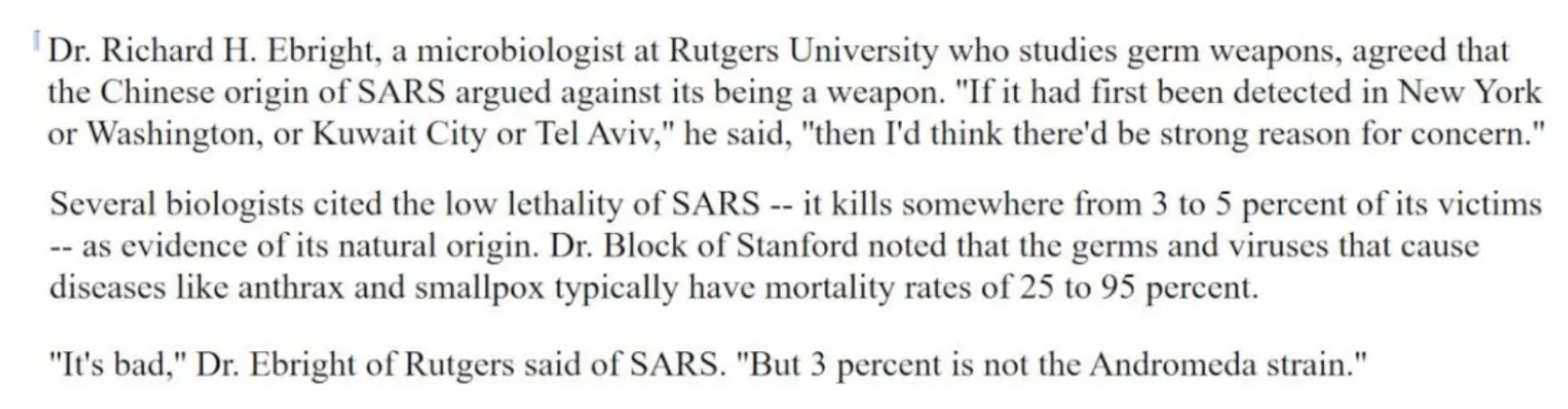

With the bioterrorism panic abating, scientists didn’t want to relinquish their lavish funding, so they inflated a new threat: disease emergence resulting from ecological wantonness. One Health became the mantra for a still thriving biodefense sector.
But they were wrong again. SARS was never scientifically proven to be natural, and bioterrorism is still a threat. Jihadists and Middle-Eastern “failed states” had been struck from the list of suspects, but China and Russia were never on it - and they are far more capable, if their motives less discernable. Conversely, nature is not the threat that some claim. Although bats certainly harbor dangerous diseases, they aren’t poised to ignite human respiratory pandemics. The ability to transmit between humans efficiently evolves in humans (or close relatives) gradually. But it can be conferred easily and instantly in a lab.
Soon after SARS, the PLA introduced new grey-zone tactics into doctrine known as the “Three Warfares”: Public Opinion Warfare, Psychological Warfare and Legal Warfare. These principles enshrine the use of deception, media manipulation and influencing global institutions - even outside wartime. They would prove extremely useful for concealing the origin of SARS.
This is a story of geopolitically naive western scientists: ecologists, zoologists, veterinary scientists - motivated by ideals like nature conservation, health equity, international development. They entered collegiate relationships with Chinese scientists in a spirit of trust and openness. They weren’t trained to sniff-out fraud and saw no reason to suspect it. Pitted against them were rat-cunning PLA bioweaponeers covertly engaged in unrestricted war with the West. They framed their involvement in soft terms the westerners could relate to, and even became China’s champions for One Health. They worked hand-in-glove with Chinese civilian institutions, whose roles under Military-Civil Fusion arrangements were even less transparent.
SARS came from civets, didn’t it?
Some lab-leakers point out that even though they believe SARS-1 is natural, that doesn’t rule out an artificial origin of SARS-CoV-2. There are important differences between the two e.g. after six years no-one has found an intermediate host for SARS-CoV-2, but during SARS-1, civets were identified within weeks. True enough, but few know how this unfolded and that the PLA was instrumental in forging the link.
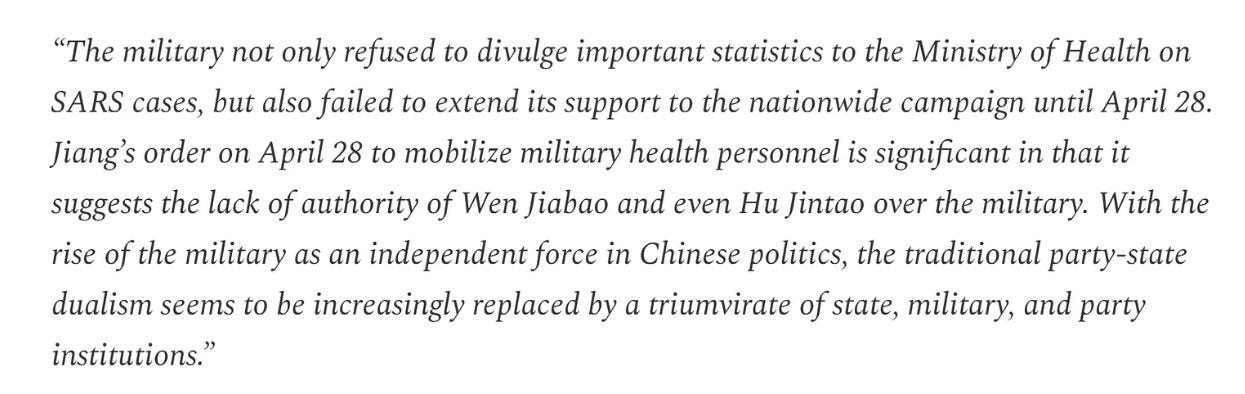
At the time of SARS, China was in a leadership transition between Jiang Zemin and Hu Jintao. Hu became President on March 15th, 2003, but Jiang remained head of the Central Military Commission, so kept command of the PLA. Four weeks into his presidency, Hu called an emergency meeting of the politburo to demand a new approach to SARS. The PLA had been caught concealing case numbers from civilian authorities. Hu now demanded complete transparency. China was to mobilize all necessary resources to end the epidemic swiftly, it would be framed as a patriotic struggle. The PLA at first seemed reluctant to co-operate, until Jiang Zemin added his assent.
The day of the politburo announcement, Cao Wuchun's group from the Academy of Military Medical Science (AMMS) uploaded a sequence to GenBank which they claimed had been isolated from a patient early in the Guangdong outbreak. It had a unique feature - an extra 29-nucleotides inserted in ORF8. They published a paper which hypothesized this was an ancestral strain that had spilled over recently from an unknown animal host. They suggested the deletion of this 29-nt in other known sequences was an adaptation which allowed better replication in humans (this was eventually shown to be false).
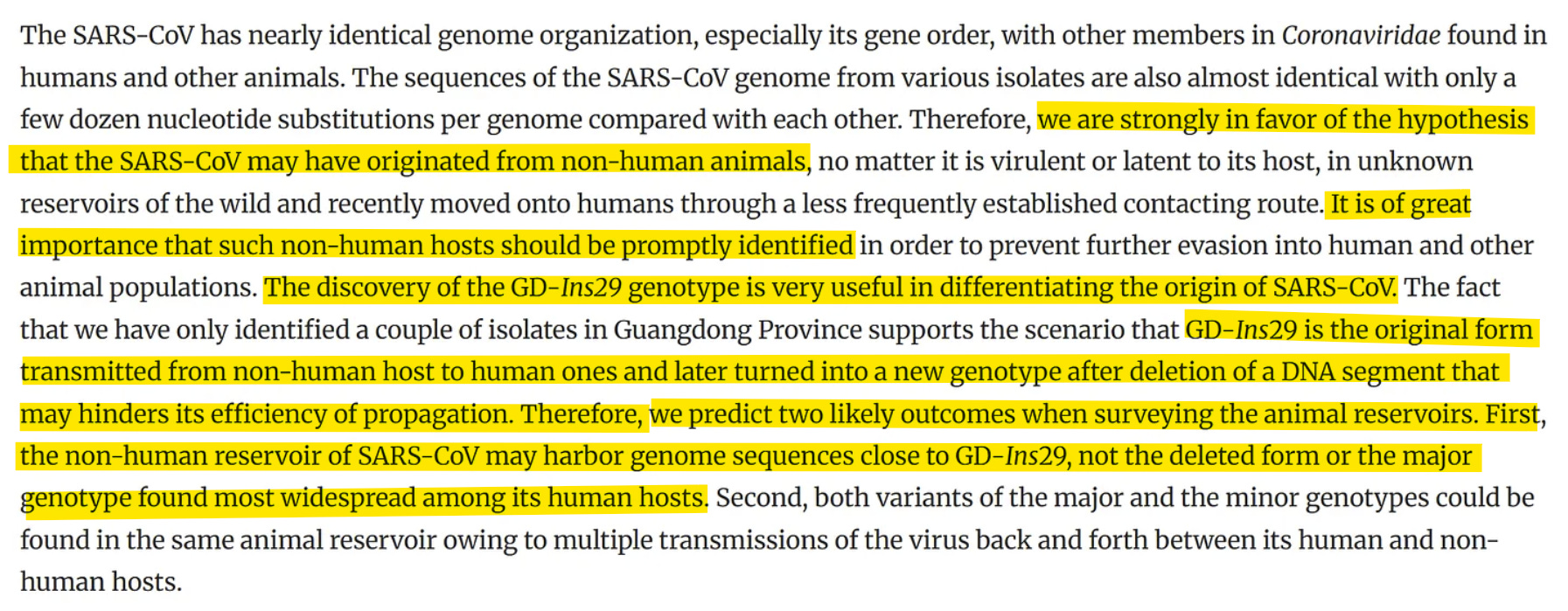
Now if only someone could find a zoonotic strain with this extra 29-nucleotides…
They didn't have to wait long. Guangdong CDC claimed that several of the early cases they had managed to trace were in food handling occupations and floated a theory that the outbreak may have been related to the trade in wild animals sold for food. At the invitation of high-profile respiratory doctor and CPPCC delegate Zhong Nanshan, two scientists from Hong Kong University (HKU) - Bojian Zheng and Yi Guan, crossed into Shenzhen to assist the CDC in sampling live animal markets. Both scientists were born and educated in mainland China, Bojian Zheng was a Guangdong native who had previously studied at Zhong Nanshan's institution.

Soon they announced they had sequenced strains of SARS with the 29-nt insert in samples from six civets and a raccoon dog in a Shenzhen market. They announced their findings at a press conference months before publishing the paper and sequence data. For most of the public and media this evidence was enough. Case closed!
Well, for scientists…not quite.
Another group also sampled civets and many other mammals. Finding no evidence of any coronavirus, they questioned HKU’s results. Other scientists weighed in, suggesting it was possible the civets may have been infected by people, or other animals in the market, and perhaps weren’t the reservoir. WHO and UN representatives declared that further investigation was needed.
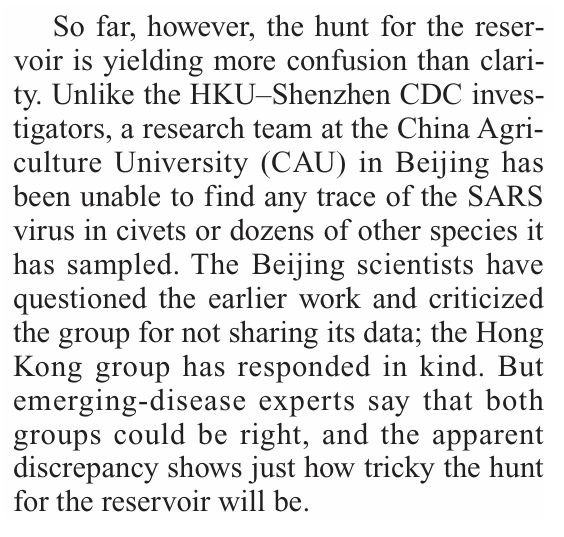
In December 2003, 7 months after SARS had been declared eradicated world-wide, four new SARS cases were announced in Guangzhou. The cases weren’t linked to each other and all had mild symptoms, so it is perhaps surprising they were detected at all. Fortuitously, one of the cases was a 20-year-old waitress who happened to work in a restaurant serving exotic animals. Once more, Bojian Zheng and Yi Guan raced to Guangzhou to help sample civets in the restaurant kitchen and a nearby market. This time they sequenced a strain in the civets that was an identical match to the waitress’ clinical samples - and all had the extra 29-nucleotides. This- they claimed - was evidence of a new spillover in progress - caught before the virus had time to adapt to humans. On this new evidence Zhong Nanshan recommended a mass culling of civets on farms and wildlife markets. Since then, no SARS cases have been detected in civets, humans or any other animal (excluding lab-leaks). Case closed - again!
Well, not quite…
The PLA papers over the cracks
Even before the civet evidence, US scientists favored a natural origin. They assumed China wasn’t the kind of place terrorists would target, but Guangdong was exactly the kind of place a novel virus might emerge. The consensus view comfortably aligned with President Bush’s wish to engage China as a partner in the war on terror, and corporations clamoring to do business. In the wake of SARS, governments raced to help China develop bioscience capability. Due diligence was neglected, the warnings of intelligence agencies and national security hawks went unheeded.
At WHO and UN urging, China allowed foreign scientists to assist with origin investigations (restricted to natural causes, of course). The most significant contributions came from Institut Pasteur, Australia’s CSIRO, and US-based EcoHealth Alliance. But they didn’t work alone. Most of the work of collecting samples and sequencing them was conducted by their Chinese collaborators. There is a crucial limitation that hasn’t been recognized: there is no way to independently verify sequence data is genuine, or that samples haven’t been tampered with. Not only is data inadequate for an investigation of possible bioterrorism, it doesn’t meet basic scientific criteria of reproducibility and falsifiability. To believe SARS was a natural phenomenon - you must trust the PLA.
Institut Pasteur was at the center of negotiations for the French Government to help design and build China’s first P4 lab. French intelligence agency DSGE had expressed concern about the PLA use of such a facility for biowarfare. To assuage their fears Institut Pasteur Shanghai (IPS) was founded in 2004. This was a joint venture with China’s Academy of Science. The intention was that IPS would host international scientists who would maintain some oversight of the lab (which was originally planned for Shanghai). China pushed back against this before the lab was even complete. Through its existence, IPS was largely staffed by Chinese scientists. France eventually dissolved the JV in 2021 for reasons that are unclear.
Institut Pasteur assisted Wuchun Cao’s AMMS group on the epidemiology of the Beijing outbreak. What was the point made by this work?

Most SARS cases from the international outbreak (excluding China) stem from the super-spreader incident which occurred at Hong Kong’s Hotel Metropole. The presumed index case, Dr Liu Jiunlun, was supposed to have stayed there, after being infected at a Guangzhou hospital at which he worked. One of many outstanding mysteries was why sequences descending from the Metropole had several different signature mutations to those from patients at the hospital. The AMMS/Pasteur paper claims that the same set of mutations evolved independently (convergently) during the Beijing outbreak, proposing these were strongly selected adaptations due to the recency of the spillover to humans.
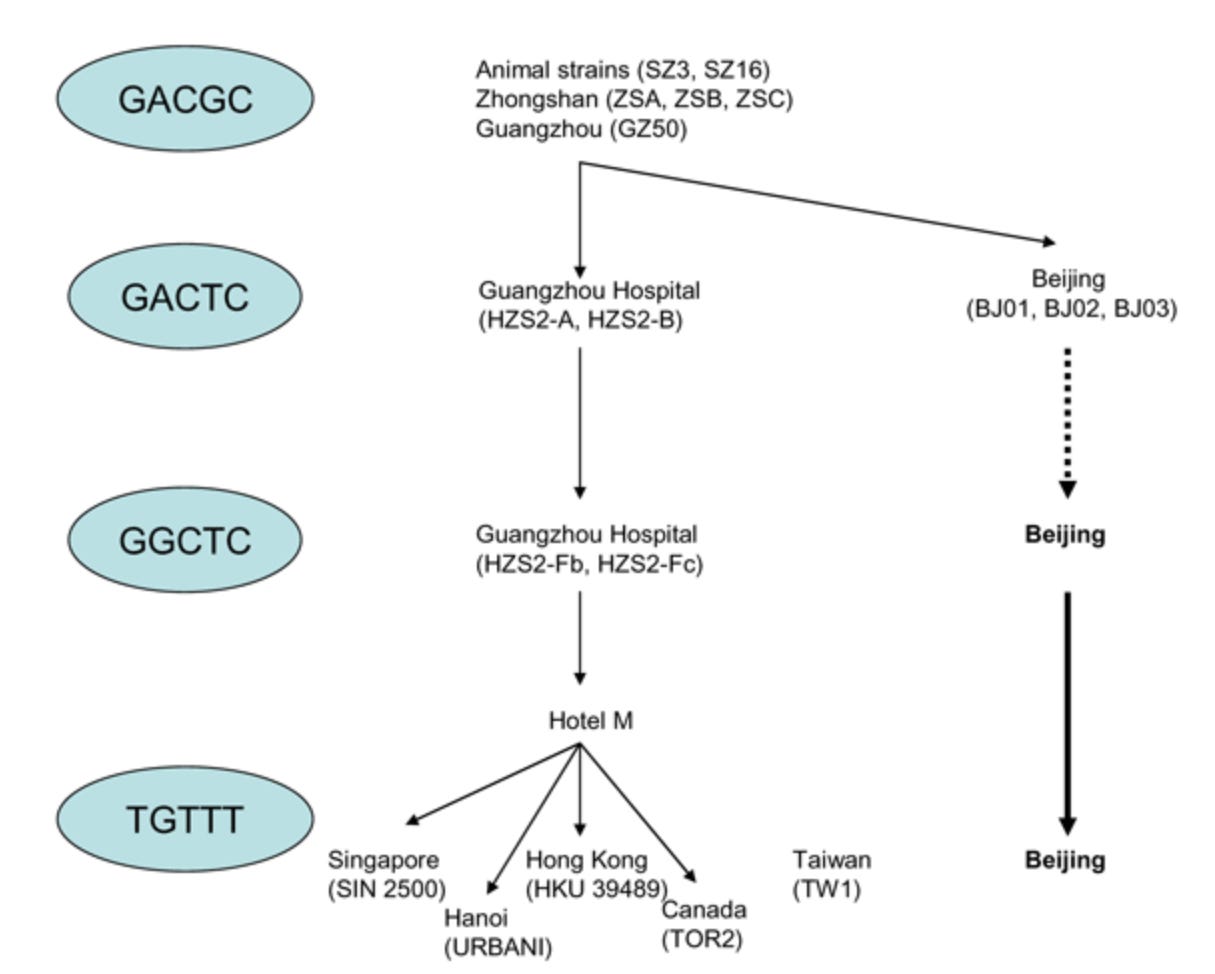
The sequences supporting this were provided by AMMS, should they be trusted? Institut Pasteur obtained and transferred over 2000 patient samples back to Paris. Perhaps these could have been independently sequenced, but the samples disappeared in 2013, in a mysterious incident which remains unsolved.
Another super-spreader incident that lacks a plausible explanation is the Amoy Gardens, in which over 300 people were said to have been infected from a single index case transmitted via diarrhea aerosolized by a toilet flush. Although viral RNA had been detected in stool samples, attempts to culture live virus from them had failed. Again, it was the PLA who tied this loose end. The evidence for live virus in feces, and the possibility of transmission via this route comes from the PLA’s 302 Hospital.
Most research into SARS in civets comes from a group from the AMMS Military Veterinary Research Institute in northern China’s Jilin province, a group led by Tu Changchun. Tu’s papers provide the experimental evidence that civets can be infected with SARS, sequences that support the viral evolution between human and civet, and further evidence of civet infection in live animal markets.
Scientists from Australia’s CSIRO are listed as co-authors on Tu Changchun’s civet-related papers. The role CSIRO played, and extent of their involvement is unknown. Tu Changchun and his colleagues often publish using civilian affiliations and titles in order to obfuscate their military links.

Focus switches to bats
While Linfa Wang’s CSIRO team had pre-existing expertise in identifying and isolating bat viruses, Wuhan Institute Virology did not. At the time Zhengli Shi studied the viruses of marine crustaceans. Linfa Wang had an intuition that bats may be the reservoir host. Zhengli Shi expressed interest in this hypothesis. A collaboration formed that would last well over a decade.
They had early success finding bat coronaviruses that seemed closely related to SARS through much of the genome. But the all-important spike gene - which determines host tropism - was quite divergent. In particular, the region of spike which binds the host cell receptor - the RBM - had several amino acid deletions, which meant these viruses couldn’t bind human ACE2, nor even bat ACE2.
In 2008 a German group led by Christian Drosten isolated a bat virus from a sample collected in Bulgaria. Although very different from SARS through much of the genome, the RBM was much closer to SARS than any Chinese bat virus. Since then, many more related viruses have been discovered belong to this clade, spanning much of Europe and Africa. Some of these can bind ACE2, albeit weakly, they still have some amino acids missing.
SARS appears to be a recombinant - or chimera - having the "backbone" of a Chinese virus, but the spike (especially the RBM) is much more similar to an African or European virus.

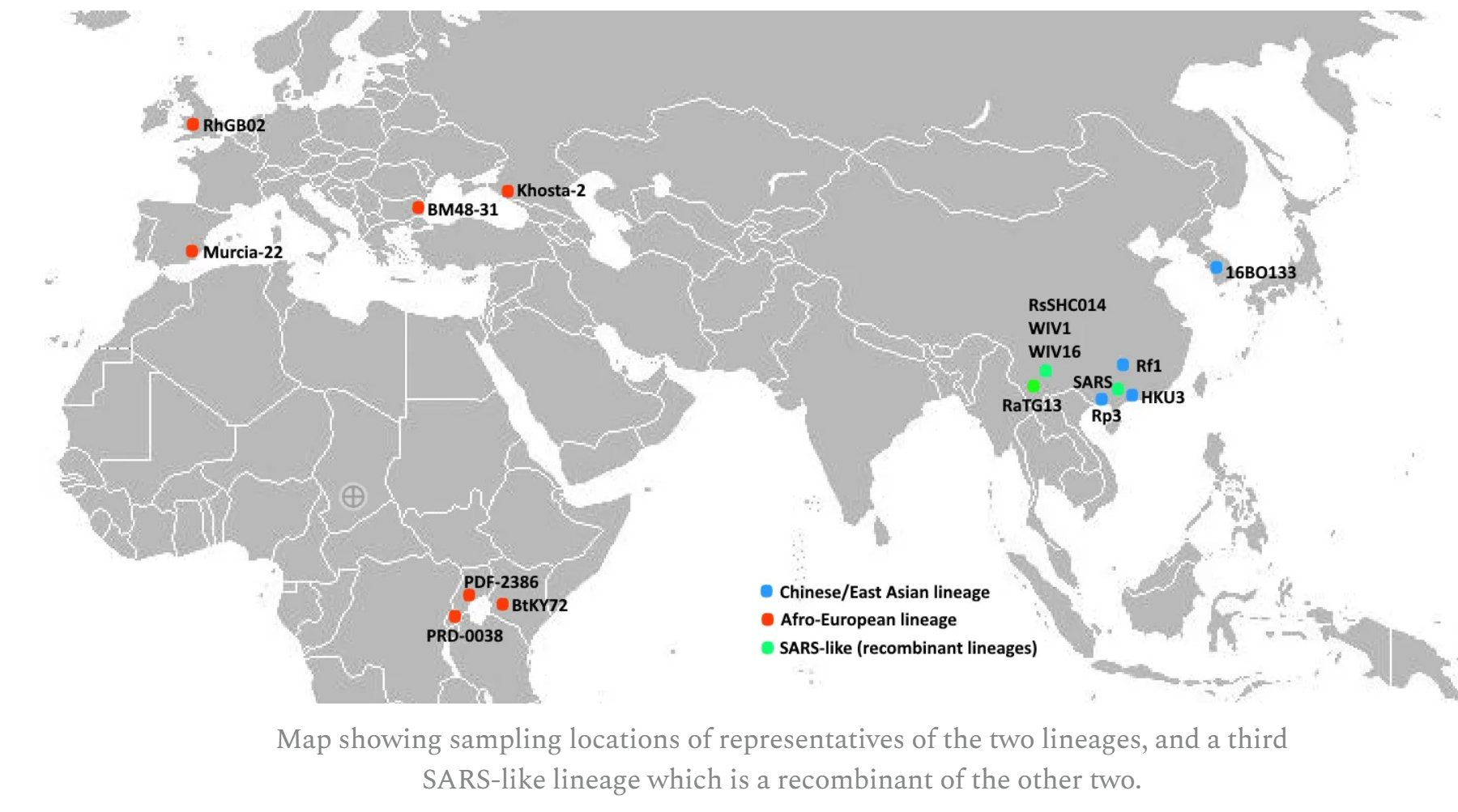
The Bulgarian discovery reignited interest in finding a bat virus with SARS-like RBD, and also led people to experiment with artificial chimeras. Ralph Baric and Marc Denison showed you could replace the RBD of a Chinese bat virus with that of SARS and the resulting chimera was viable and able to infect human cells. WIV tried to engineer something similar, but weren’t able to recover and culture living virus - at least initially.
HKU strengthens ties to Beijing
HKU remained involved in the origin search, also switching their focus to bats. They quickly answered CSIRO/WIV's bat virus discovery with a similar one of their own (HKU3). CSIRO/WIV had also sequenced some variants from other provinces and bat species (Rm1/Rf1). HKU again responded with viruses similar to these (BtCoV279/BtCoV273). Both groups had matching sets.
In 2005, the HKU microbiology department of Bojian Zheng and Yi Guan, JS Malik Peiris and Kwok-Yung Yuen was designated State Key Laboratory for Emerging Infectious Diseases, and began to receive lavish funding from the PRC government. Later it began to collaborate - rather than compete with WIV, and established formal partnerships with other mainland institutions, such as a three-way collaboration with Zhejiang University and the Institute of Pathogen Biology in Beijing.
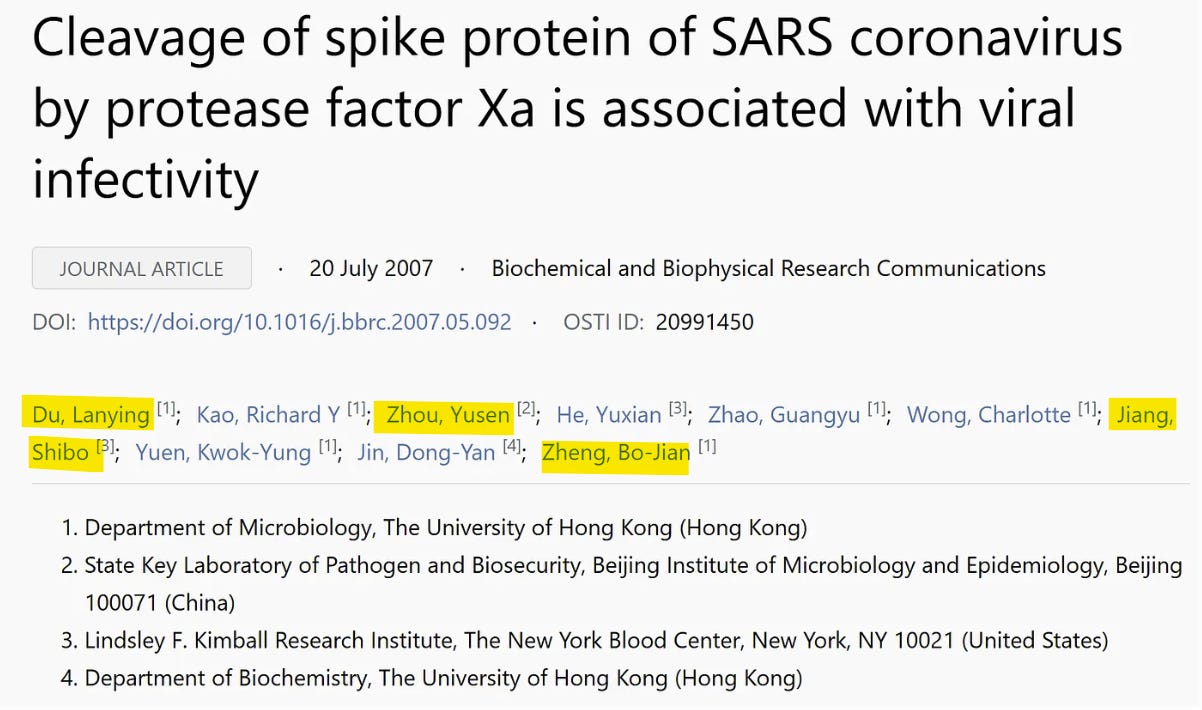
Bojian Zheng became a guest professor at AMMS Beijing lab, which at around the same time was designated the State Key Lab of Pathogen and Biosecurity. AMMS virologist Lanying Du moved from Beijing to Hong Kong to commence a PhD. Her thesis was on the structure and function of the SARS spike protein, Bojian Zheng was her supervisor. Du was married to senior AMMS officer Yusen Zhou until his death in early 2020 (reportedly from falling off a building). After completing her PhD, she moved to the US to continue researching SARS, and later MERS, under Shibo Jiang. Over the years she has authored several key papers on receptor binding and proteolytic cleavage of SARS and MERS.
Yusen Zhou remained in Beijing, where he collaborated with Tong Yi-gang developing synthetic biology techniques. They invented systems for assembling viral genomes seamlessly using DNA synthesis and PCR. This is an alternative approach to the restriction enzyme based "no see-em" system used by Baric et al, and has become the preferred method for many scientists, as the cost of DNA synthesis has fallen.
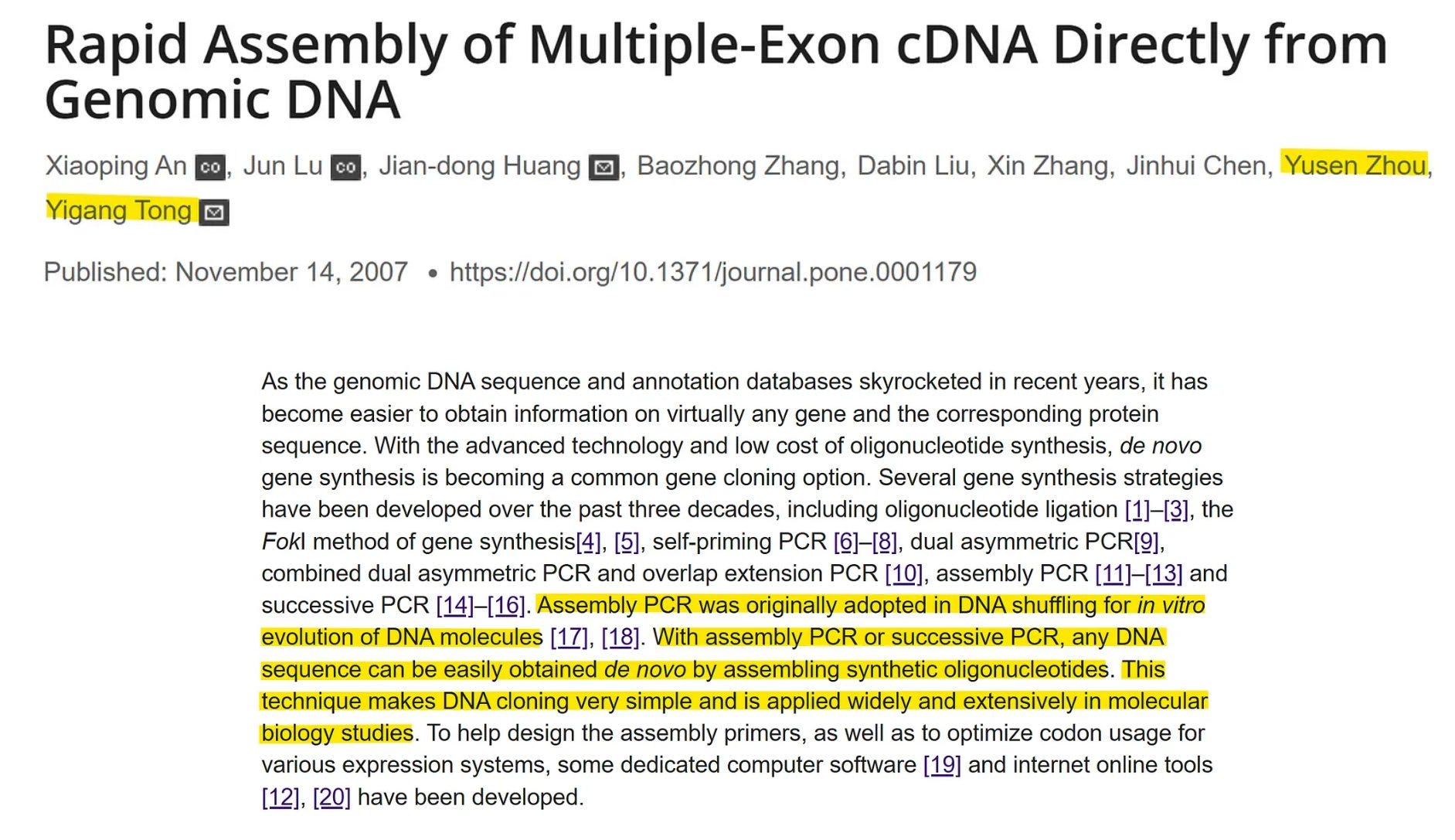
Zhou and Tong jointly developed other engineering techniques with possible relevance particularly to the FCS region.


They also used a directed evolution technique called phage display which is used to select variants of a protein which bind most strongly to another protein. This technique might be used to select from a library of millions of randomly generated variants, an RBM sequence that binds most strongly to hACE2.
The search heats up
In 2012 a group of epidemiologists from the 4th Military Hospital published a paper in a Chinese language journal suggesting SARS had an artificial origin. They pointed out some epidemiological quirks:
Ten years on, no reservoir species had been identified.
As suddenly as it appeared, SARS vanished without trace. No infections in humans or animals have been reported since early 2004 (aside from lab-leaks). Excepting smallpox (which took decades after the development of an effective vaccine) this is unprecedented.
It has signs of reverse evolution. Adaptations thought key for its replication in humans/civets, reverted to less fit residues in some of the more recent sequences.
The leader of the group, Xu Dezhong, had been the senior epidemiologist working with China’s Ministry of Health during SARS. As a PLA(but not AMMS!) general Xu has been misrepresented in some media as a BW Dr Strangelove. However, he wasn’t promoting the use of BW, but edited a compilation of papers that gave an introduction and historical background. He noted the similarity of SARS to USAF Colonel Michael Ainscough’s depiction of a bioterrorist attack with a novel genetically engineered pathogen.
Having failed to interest the Chinese government in investigating an artificial origin, Xu tried unsuccessfully to get the group’s papers published in English language journals. He wrote to WHO Director-General Margaret Chan personally, asking her to open an investigation. She dismissed him curtly.
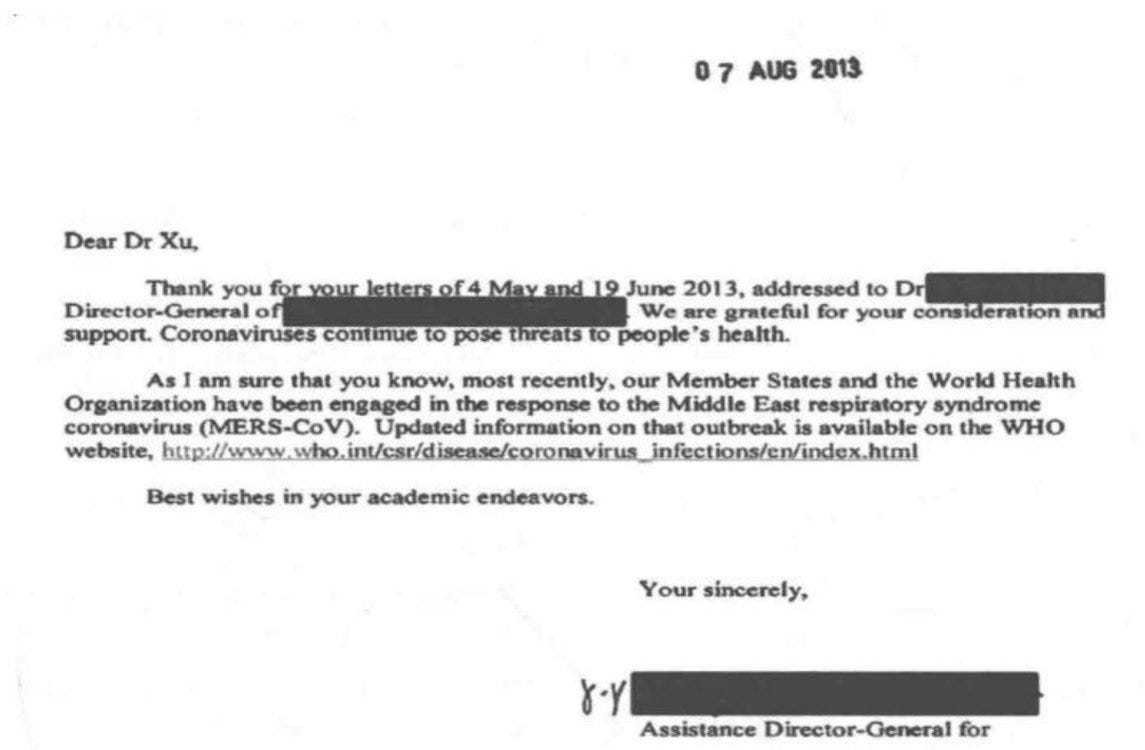
As Hong Kong Department of Health Director at the time of SARS, Margaret Chan had been chastised by the subsequent Hong Kong Legislative Council inquiry. She was accused of doing too little to press her Chinese counterparts for information about the situation in Guangdong, and of keeping discussions with them secret from her Hong Kong colleagues. Her counterpart in Beijing had been Liu Peilong, Director-General of International Cooperation at the Ministry of Health. In June 2003, Liu Peilong was appointed Assistant Director and Advisor to the incoming WHO Director-General, South Korean Lee Jong-Wook. In 2006, Lee died suddenly of a subdural hematoma after collapsing at a function held at the Chinese mission in Geneva. Chan, Liu and China’s Minster for Health Gao Qiang were all present at the time. There was no autopsy or inquest held. Following Lee’s death, China lobbied intensely at high level for Chan to be elected to the role.
But Xu’s ideas were attracting some attention in China. In a review published in August 2013, Ruiheng Xu, former Deputy Director of Guangdong CDC, who had led the epidemiological investigation in the province, gave some credence to his theory.

He also gently chided AMMS for keeping secret that they had identified, isolated and sequenced the virus long before the rest of the world. The possibility of further muckraking may have expedited a resolution to the origin.

Holiday in Yunnan
Baric’s human infectious chimera heightened US concerns over pandemic potential viruses in Chinese bats. The USAID-funded PREDICT program, led by UC Davis’s One Health Institute joined the search. PREDICT’s work in China was led by EcoHealth Alliance (EHA), which rebranded from Wildlife Trust under the slogan “Local Conservation, Global Health”. EHA subcontracted much of the fieldwork to WIV.
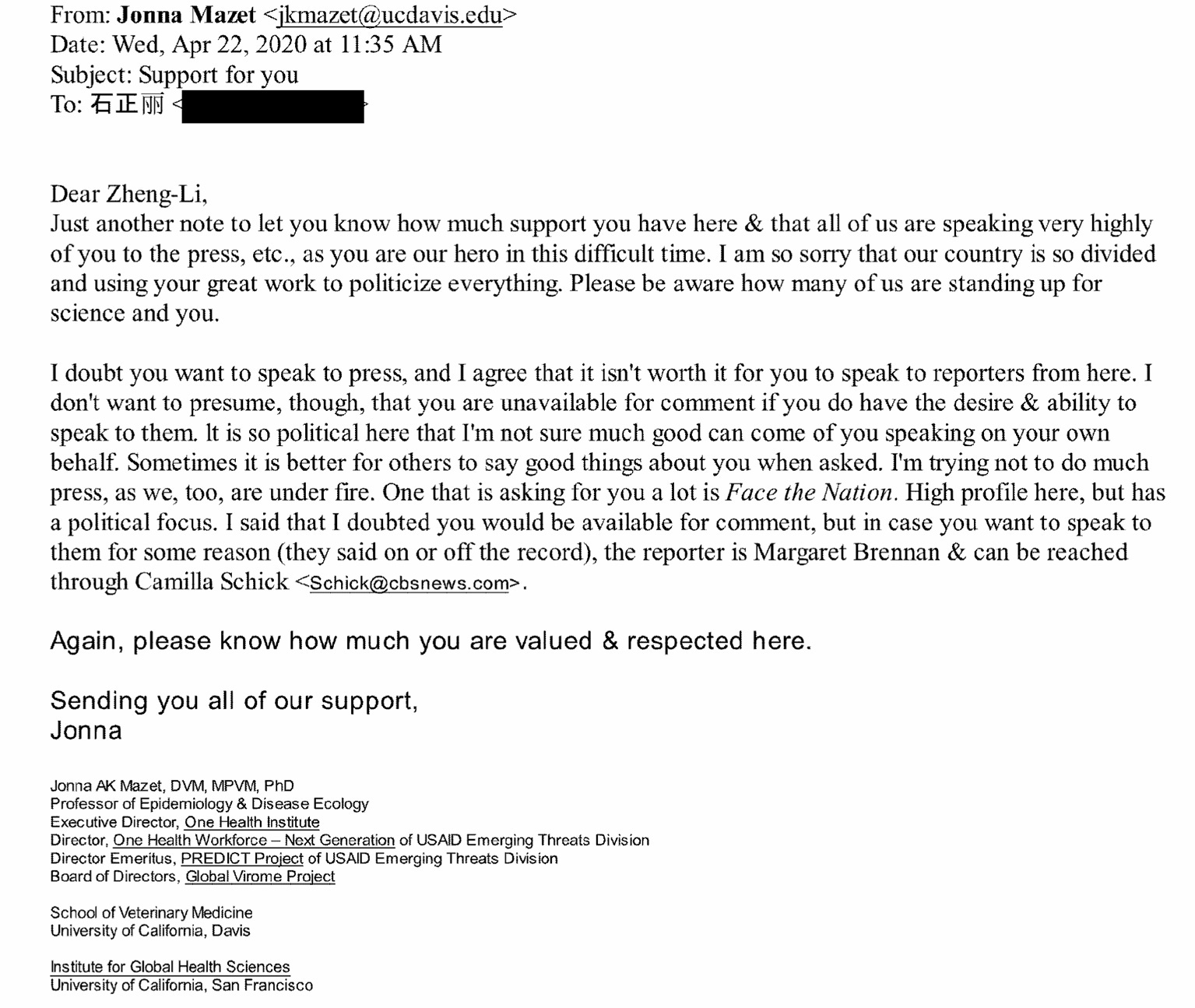
In October 2012, PREDICT and EHA organized a joint US-China workshop in Kunming, Yunnan. I recently obtained some FOIA documents about this period from UC Davis's Jonna Mazet - the Global Director of PREDICT. They contain a few insights, but what’s perhaps most interesting is what's not discussed and what’s not on the conference agenda.
Zhengli Shi gave a talk on general bat virus diversity. Cao Wuchun gave a talk on tick-borne viruses. Zhao Guoping, who led the SARS Molecular Epidemiology Consortium was also present. Zhang Shuyi had been involved in the earlier CSIRO/WIV bat virus discoveries. The Chinese contingent was packed with SARS origin expertise, but SARS origin wasn’t on the agenda, and the conference attendees weren’t even discussing it in emails between each other.
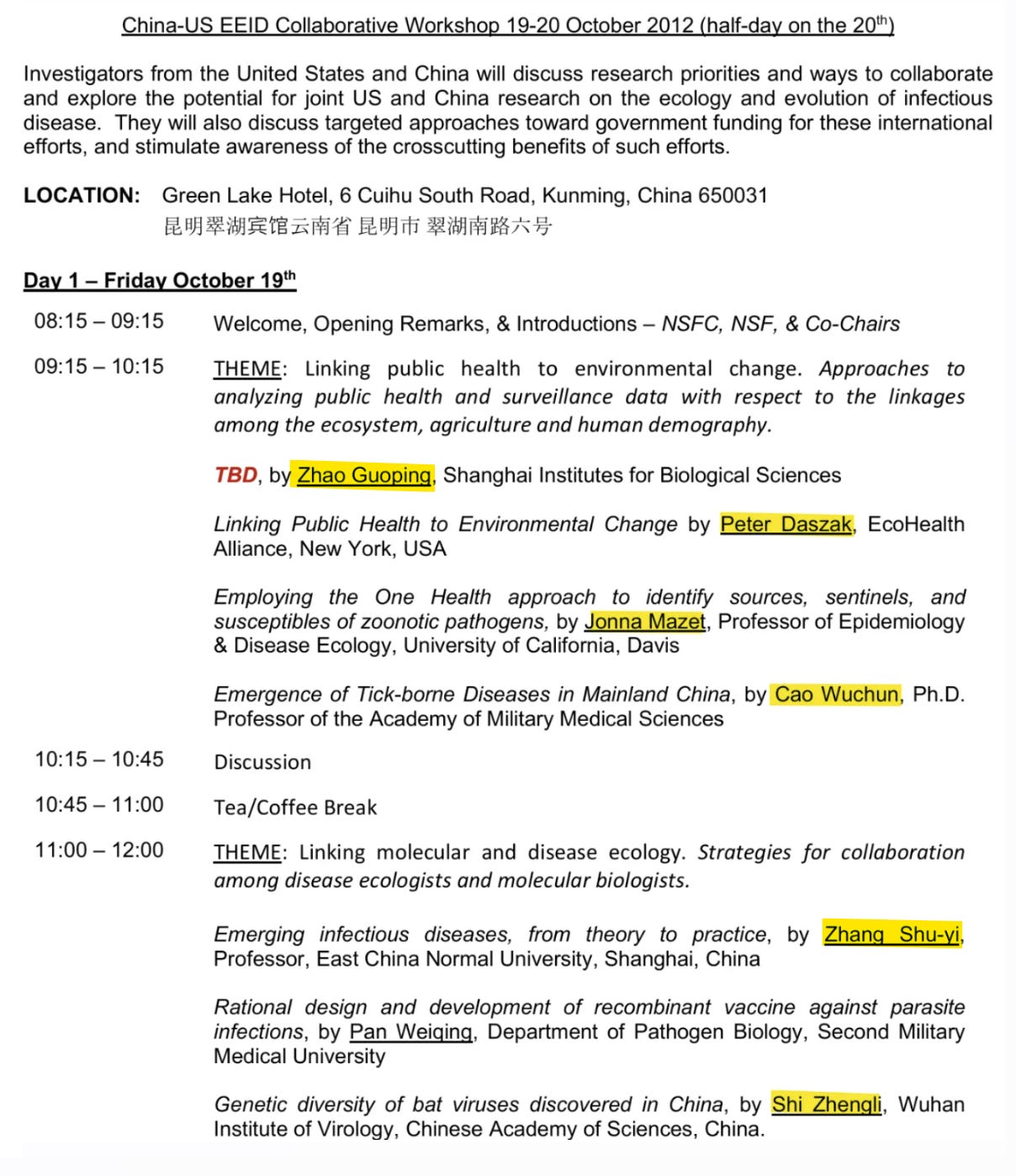
This is doubly surprising because a year later WIV would publish the first paper suggesting that SARS likely emerged in a cave just a short drive from the conference venue. They claim to have sampled and cultured bat viruses that for the first time had an almost identical RBM to SARS and were capable of binding hACE2. The first of these was collected in April 2011, they should already have sequenced it by the time of the conference.
What’s more, the "Mojiang miners" incident is also said to have happened recently in Yunnan. This was deemed important enough that three teams of Chinese scientists made multiple trips to the mine to collect samples. But again, the incident isn’t mentioned by the conference attendees. It seems that the choice of conference location was pure co-incidence.
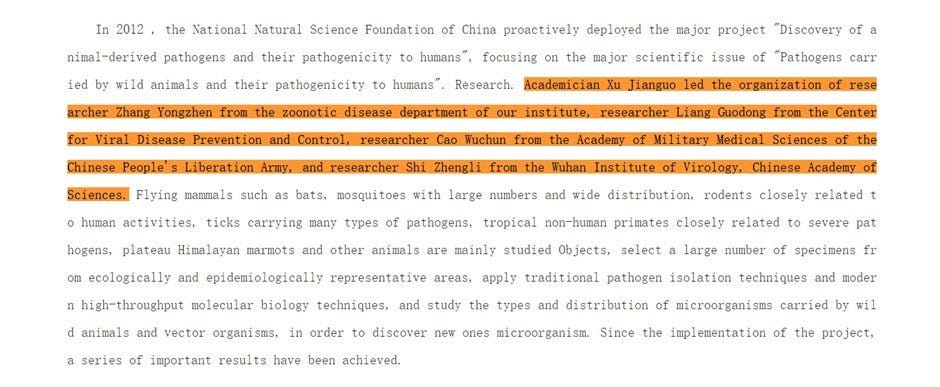
There’s also no mention that in January 2013, WIV joined a Chinese state funded program, with a similar objective of collecting novel pathogens. This 5-year program brought together WIV (led by Zhengli Shi), AMMS (led by Cao Wuchun) and the CDC lab of Zhang Yongzhen (Eddie Holmes collaborator). Either WIV didn’t disclose this to EcoHealth, or EcoHealth didn’t disclose it to PREDICT, but it seems a serious conflict of interest.
Myth of the Mojiang Miners
The tale of the Mojiang Miners is well known in lab-circles. In an abandoned mine-shaft, in Mojiang county, Yunnan, six miners clearing guano fell ill, and three died. In this mine-shaft, WIV claims to have discovered RaTG13 - the virus which for a time was the closest to SARS-CoV-2. Some lab-leakers speculate that WIV may have sampled other viruses in the mine, kept them secret and one of these may have been the precursor to SARS-CoV-2. That isn’t my view though - I think the miners’ story is fiction.
There are no official records or local media articles about the incident, it is mentioned only in three student theses and one published paper. Between these sources, important details (such as dates and test results) differ or are unclear. WIV seems to be the source of the claim some clinical tests were positive for SARS - but they later recanted and said that the disease was fungal, and that all tests had been negative. According to Zhengli Shi, it was just a co-incidence that hearing of these sick miners guided them to the place they discovered the first SARS-CoV-2 related virus. So these student theses contained false information:

Zhong Nanshan was said to have been involved in sampling.

In late 2012 a pre-print about the origin of SARS was posted by a group led by Zhong Nanshan. The paper was accepted for publication, but never published. The pre-print has a strange annotation.

This pre-print explains the emergence of SARS as being from bats via civets in Guangdong, and also claims SARS still circulates in humans in mild form. It doesn’t mention Yunnan at all. This suggests Zhong Nanshan hadn’t heard of the Mojiang miners - or WIV’s hACE2 binding viruses either.
The first mention of the hACE2 binding viruses in Jonna Mazet’s emails isn’t until August 2013, after the paper has already been accepted for publication by Nature.
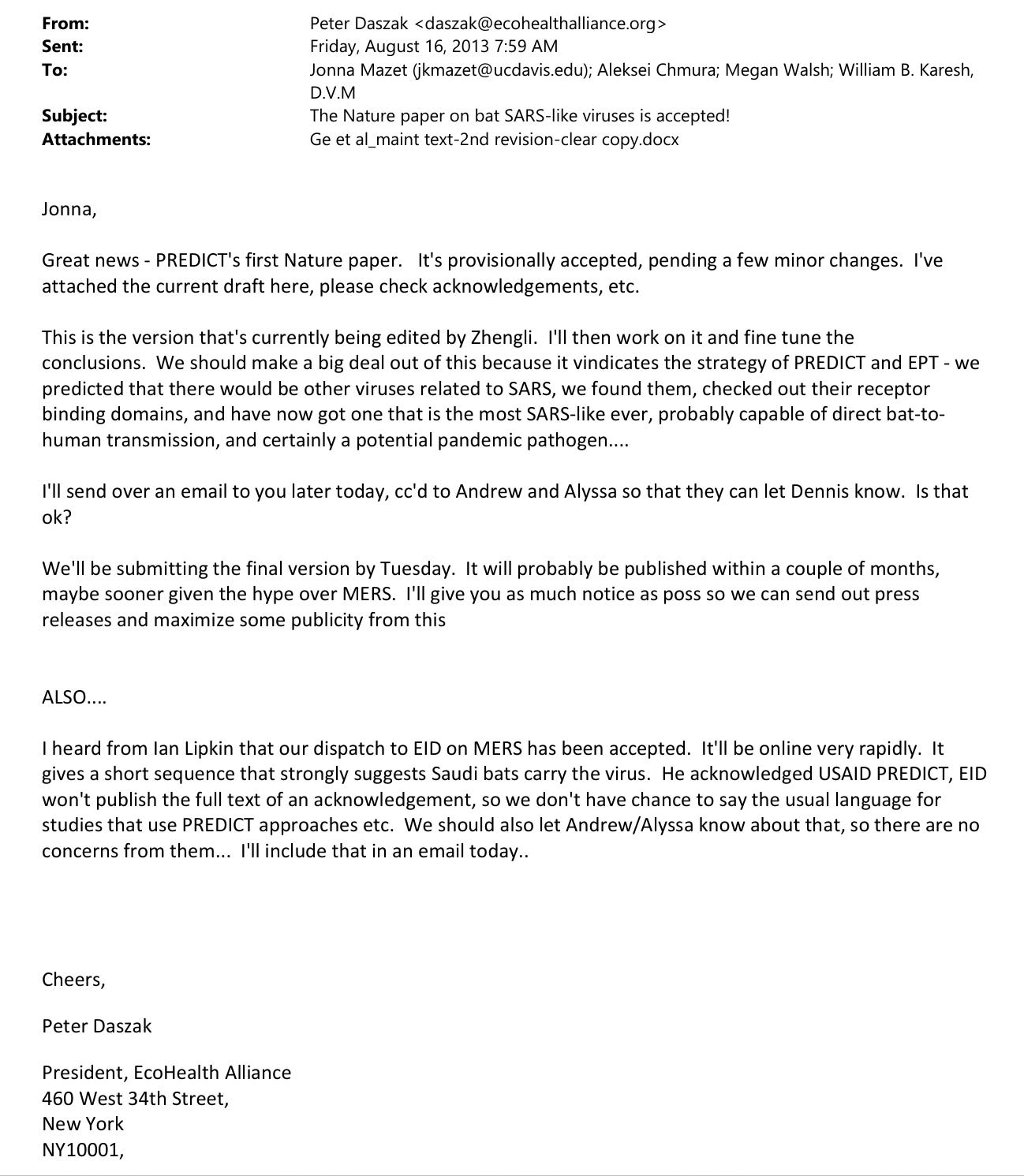
CSIRO have been unable to find any documents about the work, but UC Davis has a couple that suggest they had little involvement in the “discovery”.
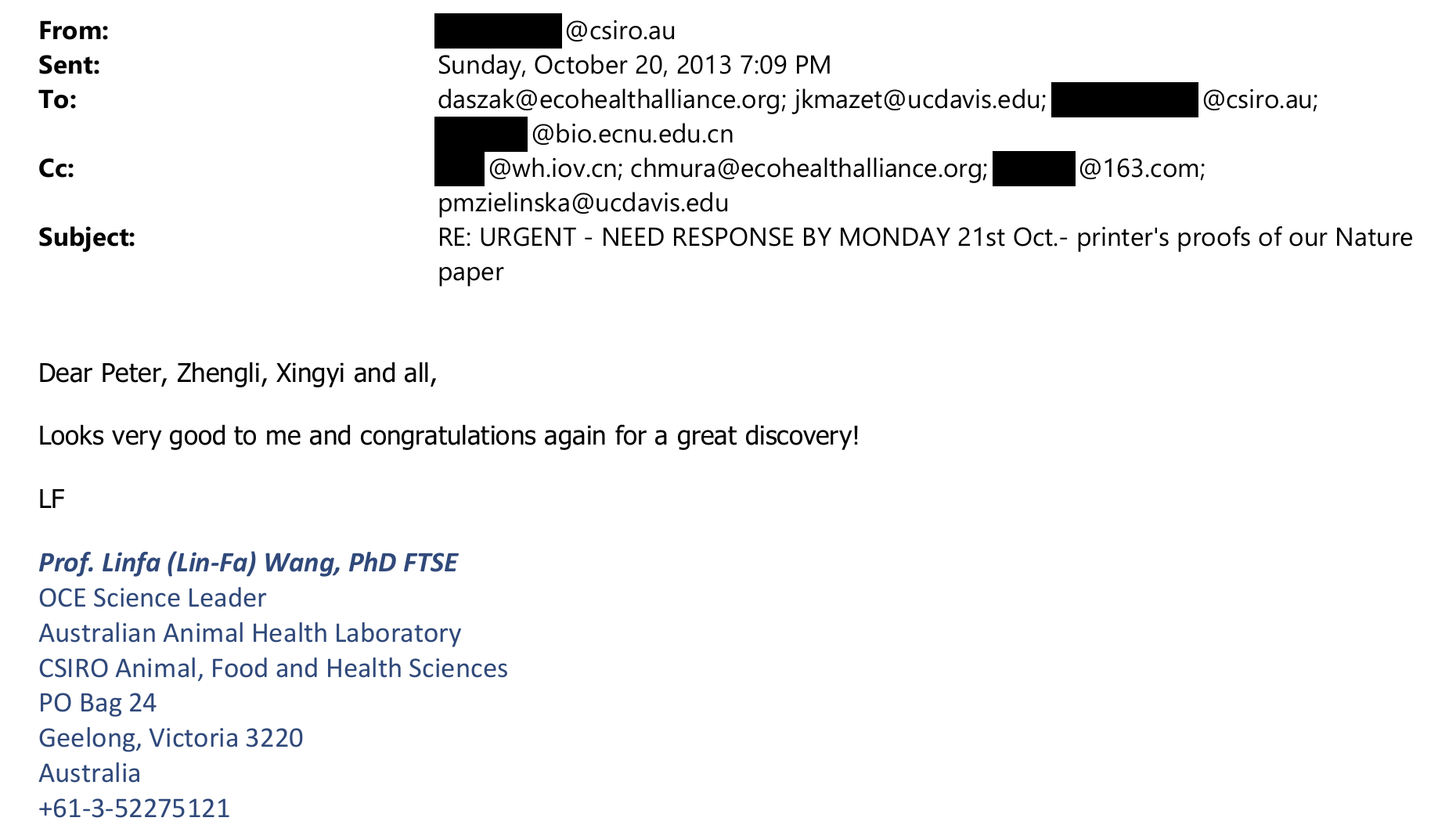
While the ABC and BBC played up CSIRO’s role, the Guardian may have the correct nuance. WIV used a technique pioneered by CSIRO. Aside from reading the draft paper, CSIRO may have had nothing to do with it.

The first author of the paper, Xinye Ge, had recently complete his PhD jointly between WIV and Institut Pasteur (Paris). His work at WIV involved isolating bat viruses, but at Pasteur he learned skills in synthetic virology: reverse genetic systems, phage display, protein-protein interactions. He may have succeeded where his WIV colleague Zhang Huajun failed, successfully engineering chimeras which were passed off as natural.

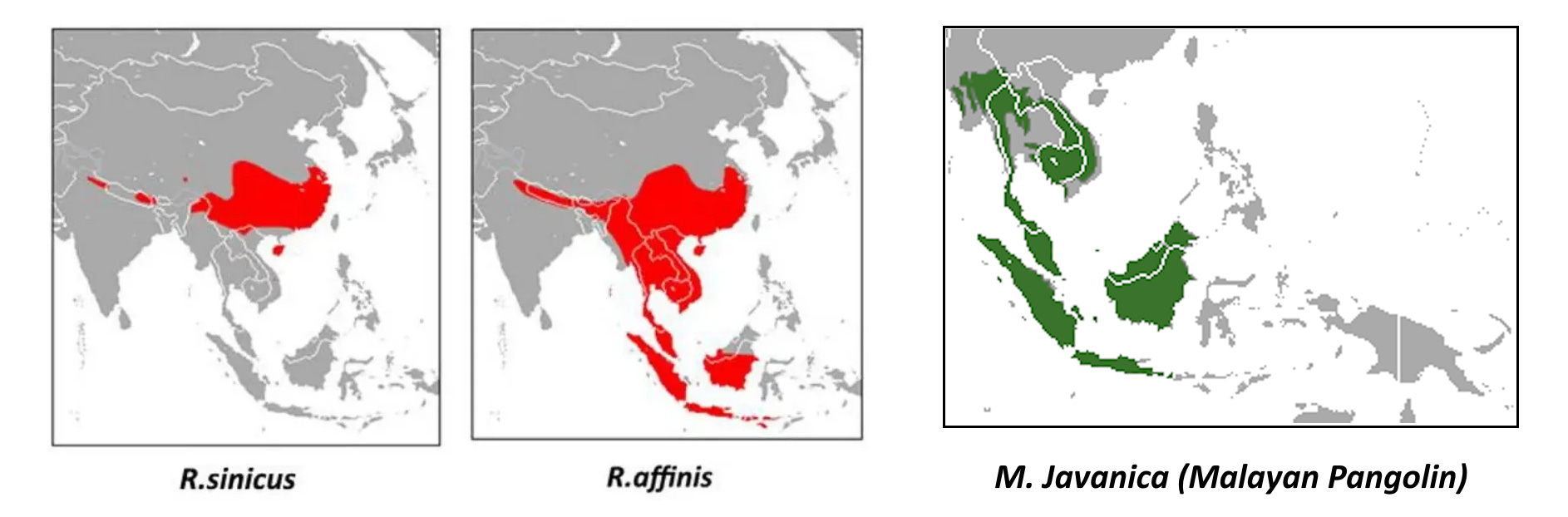
As WIV’s Nature paper was being finalized, Tu Changchun’s AMMS group uploaded sequences for a similar virus (LyRa11) they claim to have sampled in another part of Yunnan (also in 2011). Lyra11 is from a different bat species R. affinis, while WIV's are from R. sinicus. The significance is that while R. sinicus is largely confined to China, R. affinis has a range that extends deep into South-East Asia - where it is possible for it to encounter a Malayan pangolin. R. affinis is also the host of RaTG13.
One Health infects China - or vice versa?
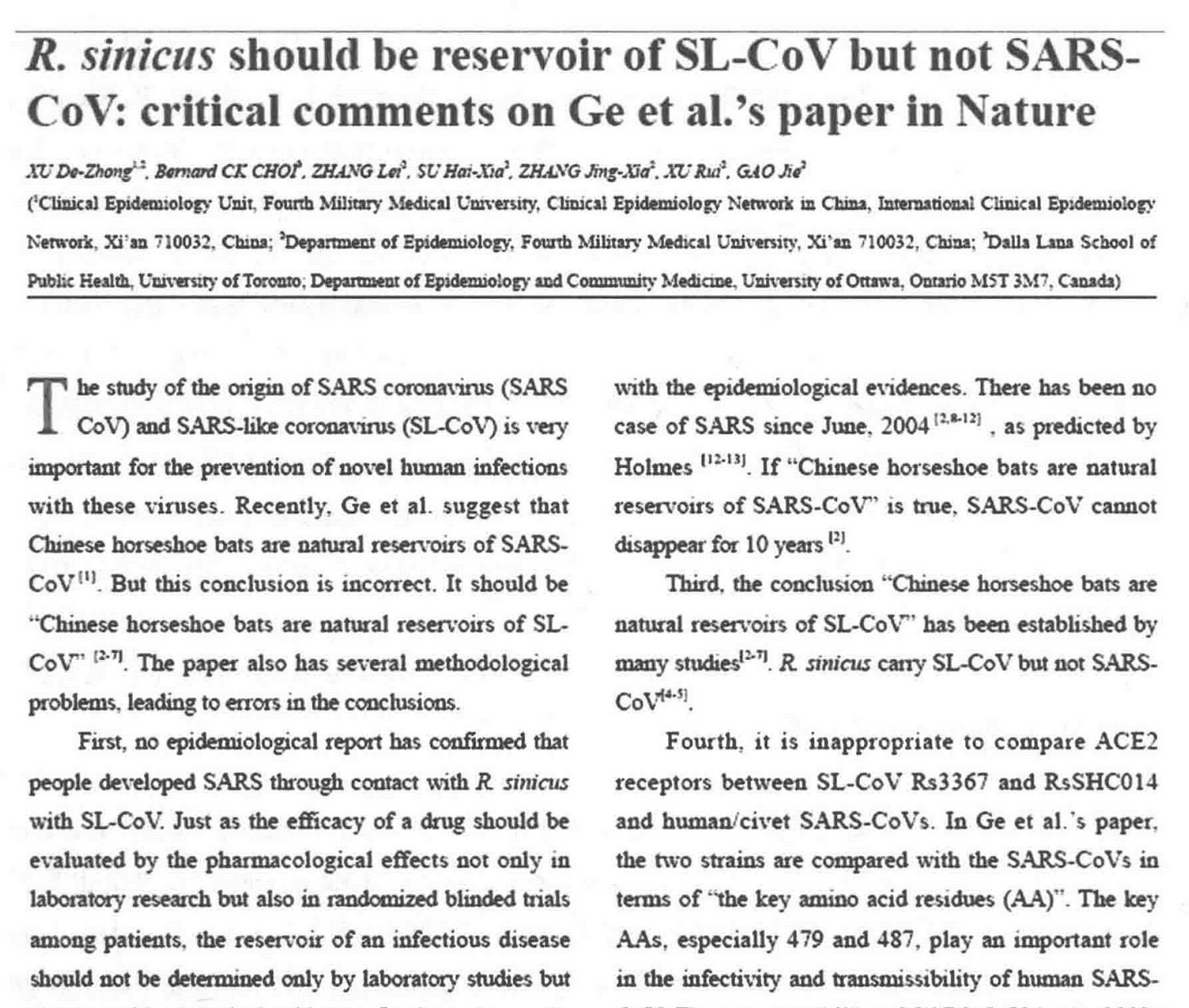
Xu Dezhong didn’t back down. He responded to WIV’s new discoveries with further reasonable objections. But it became impossible to get heard by western scientists, or the WHO. I’ve since shown that Ge et al appears to be a work of fraud (for other reasons).
Former US Navy Captain Gregory Gray had a long and distinguished career as an epidemiologist at the Naval Health Research Center where he led programs and centers funded by GEIS, the DoD’s infectious disease surveillance program. After transitioning to civilian academia he became interested in One Health and championed its international spread.
Gray became involved in China in 2011, and started collaborating with Wuchun Cao and AMMS. Together they published a military-themed call for Chinese institutions to adopt One Health.
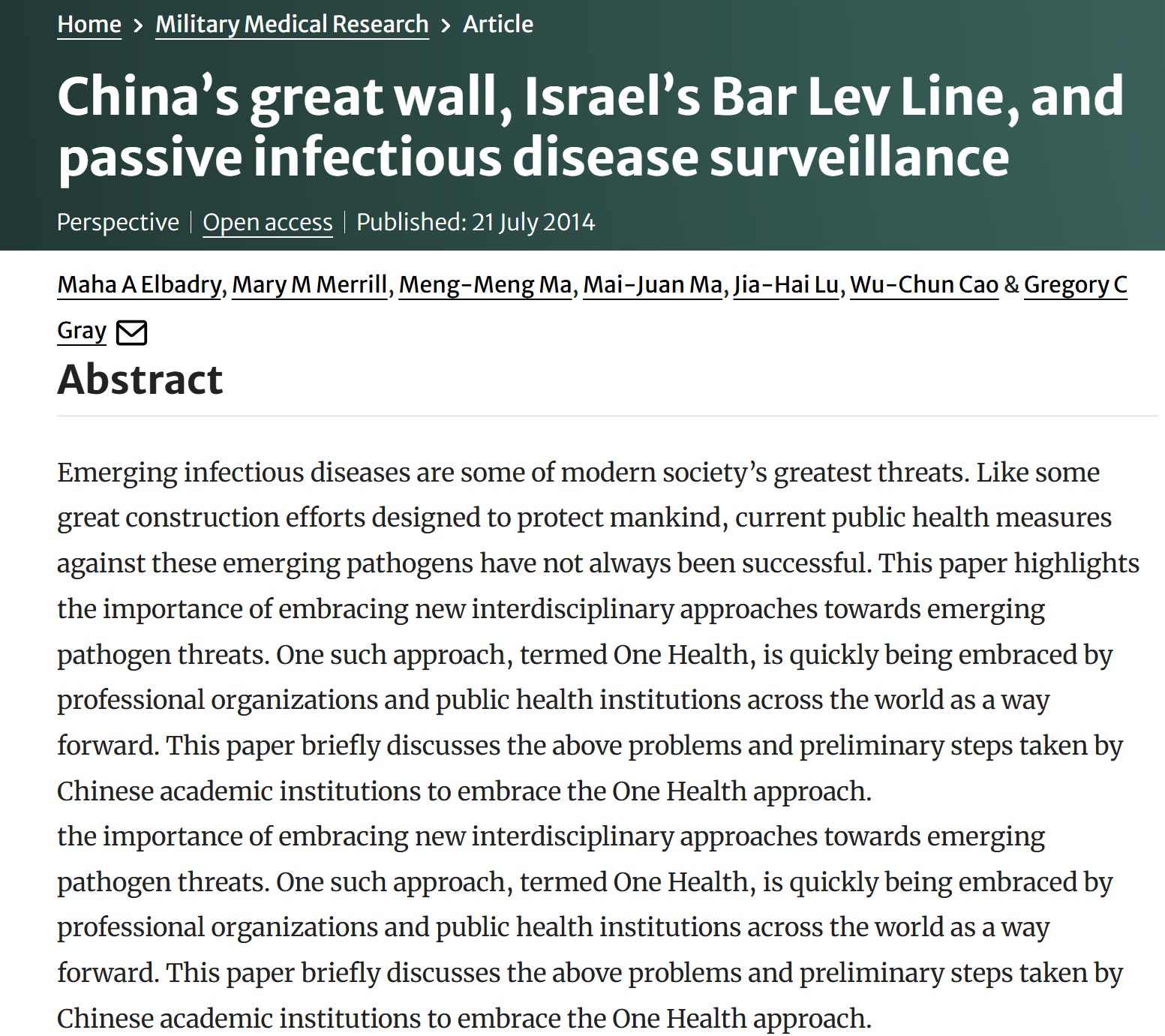
Gray proposed holding a symposium to promote the One Health approach in China. The first of these was held in 2014 in Guangzhou, and was sponsored by Sun Yat-Sen University (SYSU), South China Agricultural University (SCAU) and AMMS. Participants included key SARS origin figures Nanshan Zhong, Guoping Zhao. Xu Jianguo - the leader of the joint pathogen discovery project, was also present.
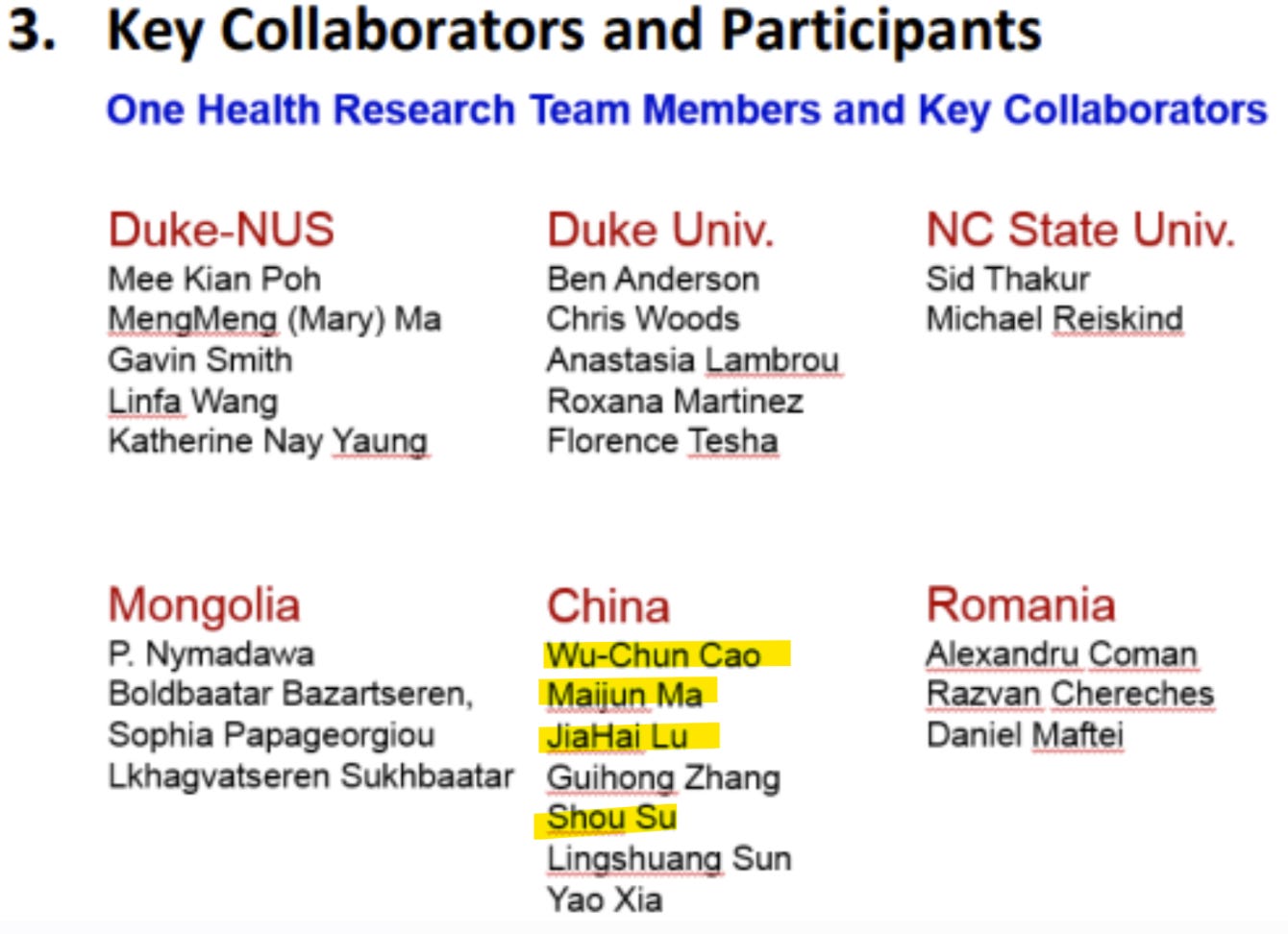
Gray and AMMS produced papers highlighting risks posed by live animal markets and proposing more active surveillance - a theme echoed by the PREDICT/EHA group.

Today, One Health reigns supreme in academia and global institutions and is enshrined in the recent WHO treaty. All disease outbreaks are automatically declared natural, bioweapons are a “conspiracy theory”, no effort is expended to investigate the possibility. It is likely that there have been other disease outbreaks - impacting not only humans, but livestock and crops - that are misattributed as natural and touted as further support for One Health. And no-one questions the role of the PLA’s biowarfare unit in promoting this belief.
Gray even spent time at USAMRIID, if he couldn’t conceive of a realistic threat from offensive bioweapons - which US scientists could? In an early 2020 interview, Gray seemed appalled that people would accuse China of even an accidental lab leak. The people he dealt seemed professional and open - had western standards. The mastermind of the deception - Cao Wuchun - is well-educated and traveled, has worked and studied at Cambridge, Karolinska and Erasmus. But the PLA is steeped in ethno-nationalist, expansionist ideology of a type that many westerners wrongly assume went extinct last century. And deception is embedded in their doctrine.


What of the WIV?
WIV’s relationship with AMMS becomes clearer when reading the scientific literature and analyzing sequence data. In a future article I’ll explain the relationships between their respective “discoveries”. WIV’s primary role has been to build credibility and relationships with foreign institutions and influential scientists, so as to disseminate false science and sequence data. This is most evident in the composition of their scientific advisory committee.
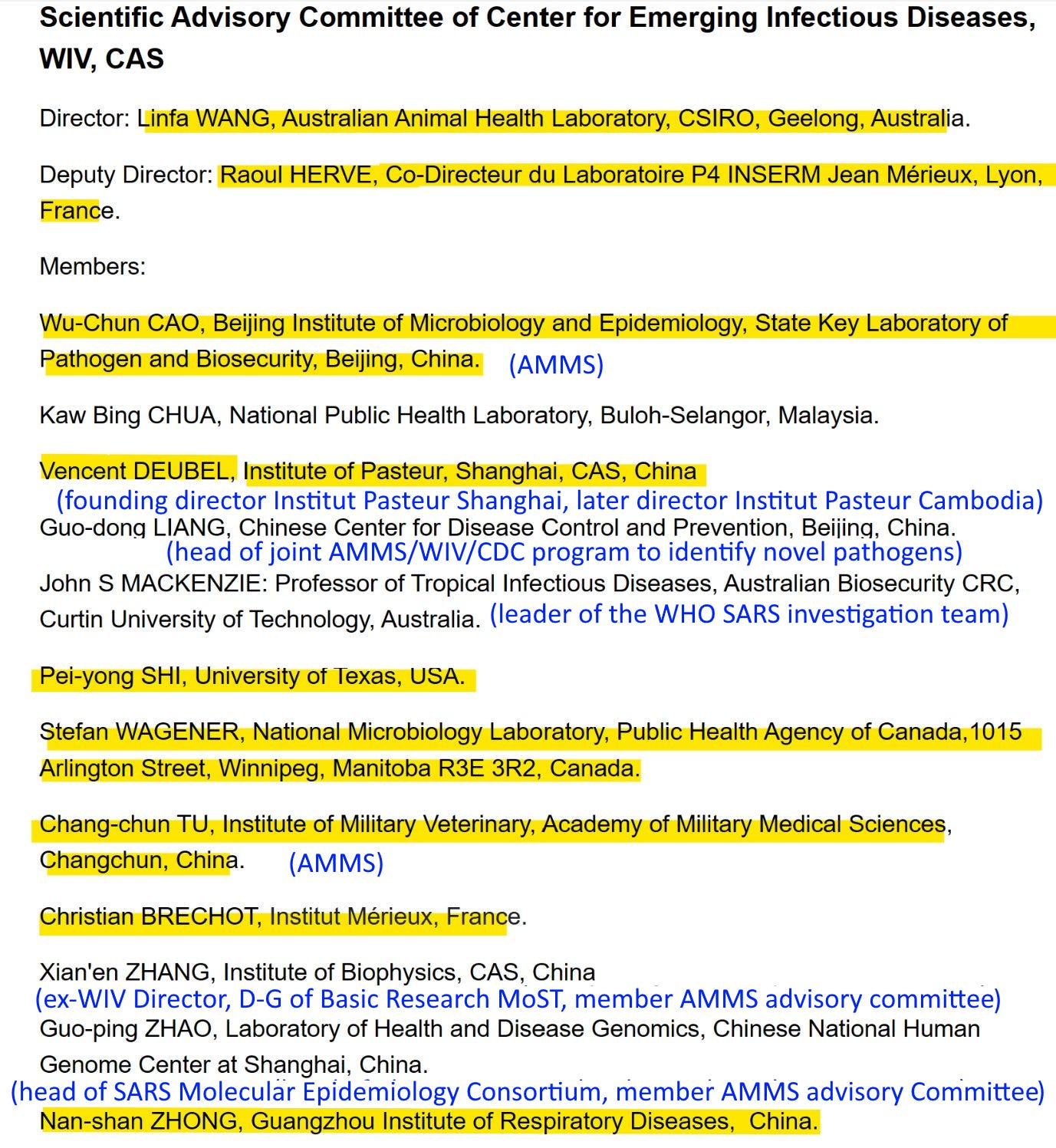
It’s clear that most western scientists are no wiser to WIV’s manipulations, and some prefer to blame our free press and open political discourse for Zhengli Shi’s discomfort. These are the strengths of our system. Attempts to stifle debate are signs of the erosion of liberal values within our institutions as China’s influence grows.
It’s also clear that many scientists place more weight on collegiate relationships and institutional reputations, than science. They’re unable to explain why certain sequences appear to violate established principles of molecular evolution. Nor are they bothered that they can’t reproduce results. They’ve made the mistake of trusting the scientist - not the science.
Interesting observations and unique collection of evidence/activities in this space. Thank you for sharing. I agree with the questionable veracity of Chinese official reports on all matters, including genomes reportedly sequenced, humans/animals surveyed, and more. There's ample potential for deception, although the potential for deception doesn't imply there was deception. Further analyses could clarify this, if only external countries had a reliable, verifiable pipeline for natural samples that could be used for forensic evolutionary analyses.
I do agree we should not assume natural origins of SARS. Barics early work on Coronaviruses is worthy of mention. I was in China during SARS early days although I spent much of the time in Hong Kong/Taiwan before returning when they reopened. Many in China believed it was a bioweapon created by US